
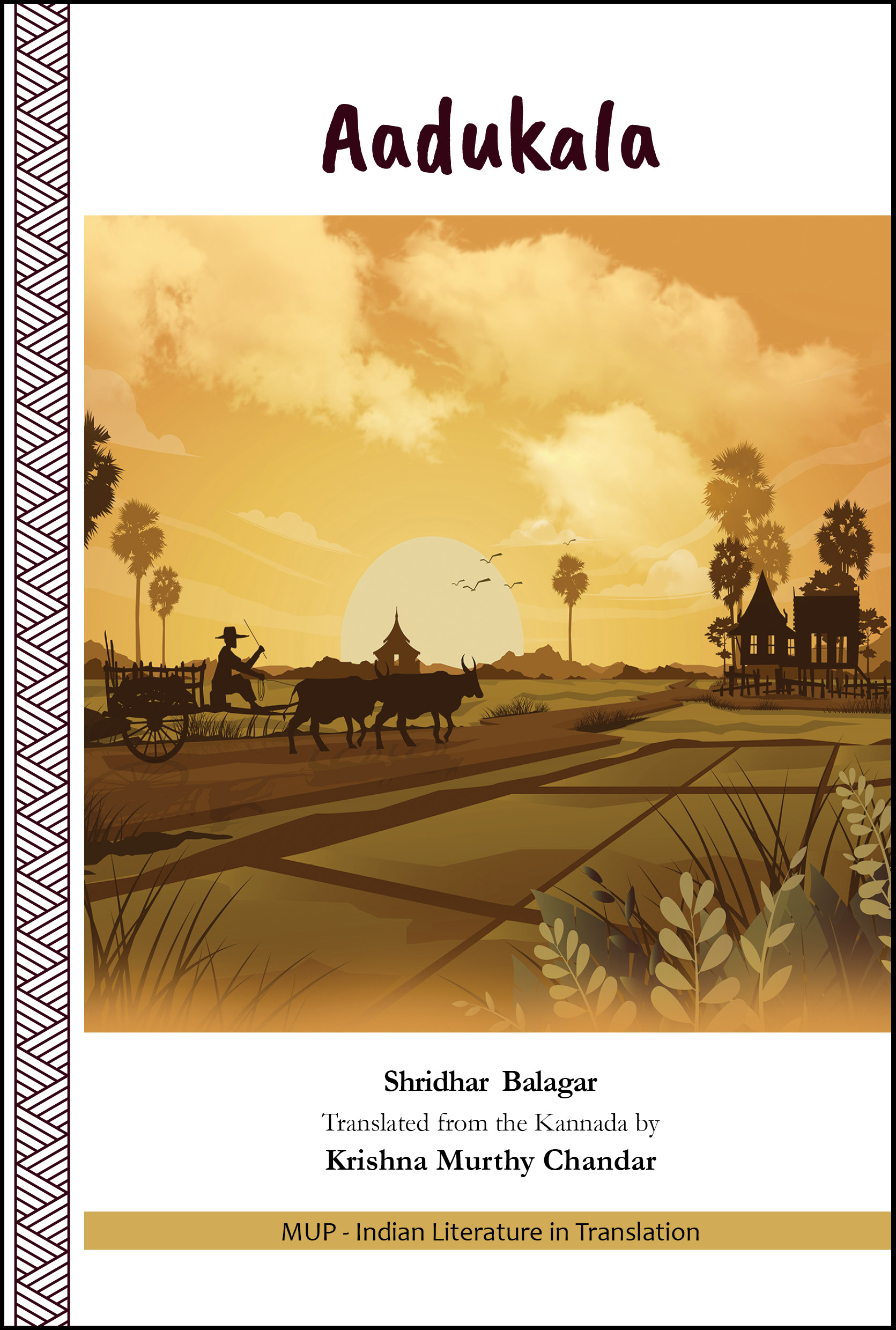
Aadukala
₹300.00
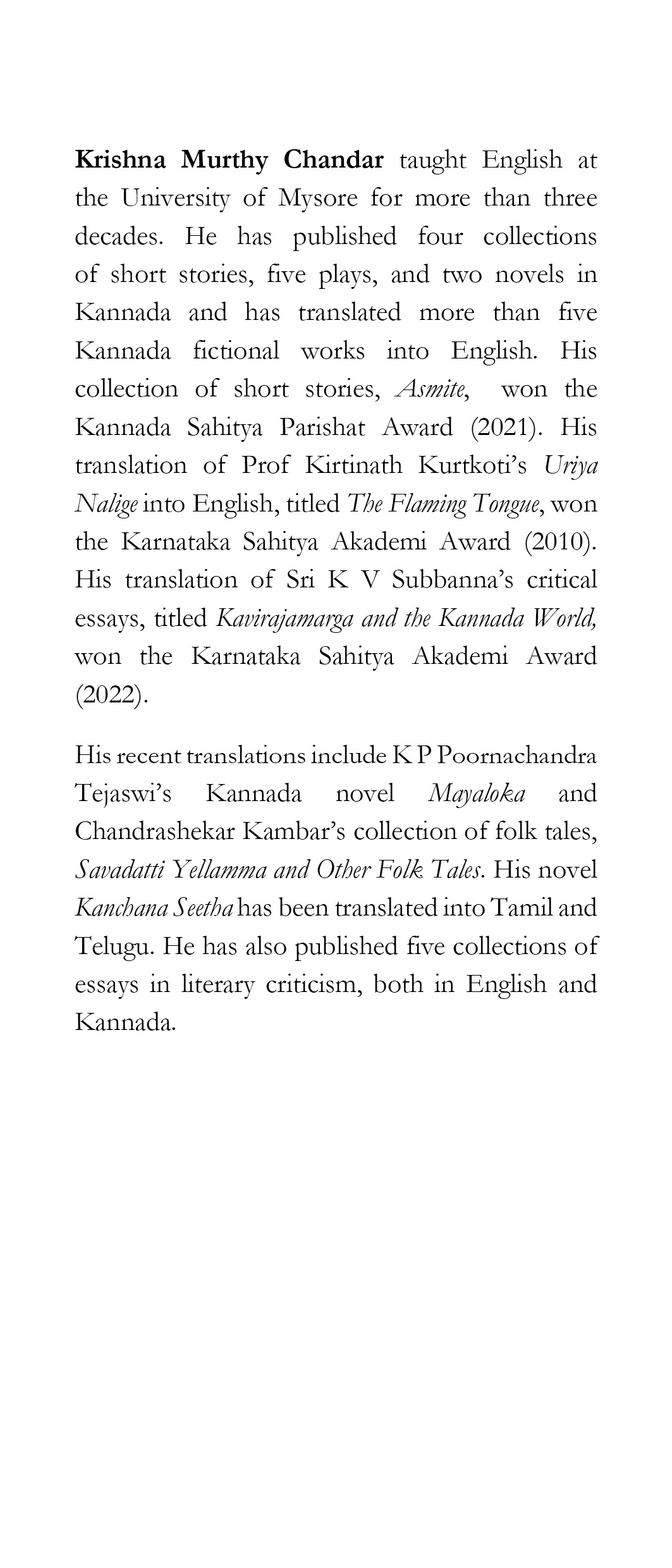
Author: Shridhar Balagar Translator: Krishna Murthy Chandar
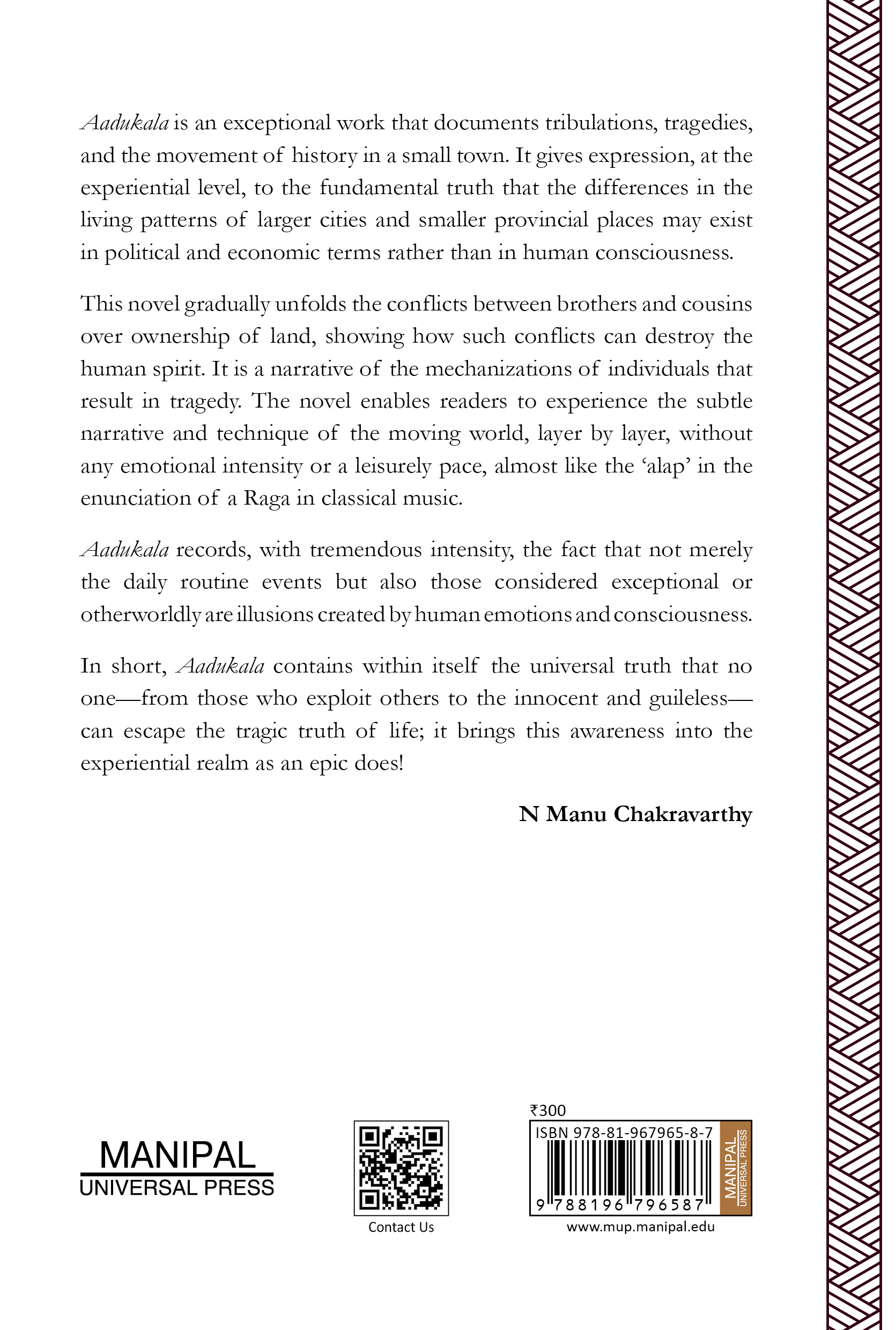
Aadukala is an exceptional work that documents tribulations, tragedies, and the movement of history in a small town. It gives expression, at the experiential level, to the fundamental truth that the differences in the living patterns of larger cities and smaller provincial places may exist in political and economic terms rather than in human consciousness.
This novel gradually unfolds the conflicts between brothers and cousins over ownership of land, showing how such conflicts can destroy the human spirit. It is a narrative of the mechanizations of individuals that result in tragedy. The novel enables readers to experience the subtle narrative and technique of the moving world, layer by layer, without any emotional intensity or a leisurely pace, almost like the ‘alap’ in the enunciation of a Raga in classical music.
Aadukala records, with tremendous intensity, the fact that not merely the daily routine events but also those considered exceptional or otherworldly are illusions created by human emotions and consciousness.
Interested readers may write to us at mup@manipal.edu about purchasing the book.
Also available on |
| Format |
|---|
Customer Reviews
There are no reviews yet.
Related products
-
Mahāmmāyi
₹195.00Author: Chandrasekhara Kambara, Translator: Kathyayini Kunjibettu
Mahāmmāyi is the story of the legend of Shatavithaayi – the Goddess of death, and her adopted son Sambhashiva. Out of affection for her son, Goddess Shatavithaayi blesses him with the “power of life”. The blessing was that death will evade the people who are treated by Sambashiva. But a certain condition set by Shatavithaayi forbade him from healing every ill man. The condition was that, if Shatavithaayi stood on the right side of the patient, Sambhashiva could treat that person and he would live; but, if she stood on the left side of the patient, he should not treat that person as his death was inevitable. Through a distinct method of story-telling, the story follows the life of Sambhashiva as he begins to question the ideas of fate and destiny. Thus, the conflict between fate and human efforts to change that fate is vividly described in this play.Interested readers may write to us at mup@manipal.edu about purchasing the book.
Also available on
-
Sati Kamale
₹240.00Author: S U Paniyadi Translators: B Surendra Rao, K Chinnappa Gowda
This eponymous novel is centred on Kamale, who is an embodiment of wifely virtue. For fifteen long years Kamale lives the life of a widow to the outside world, nurturing the hopes of reuniting with the husband one day. Alone in the room, each night she wears her marks of a married woman with the dagger gifted by Umesha next to her. It could be seen as an exposition on the then existing indigenous discourse in India in the 19th century and early 20th century. Kamale, in her rigorous commitment and in retrieving her husband from ‘death’, is fashioned after Savithri in an intertextual reference to Mahabharata’s episode of “Satyavan and Savithri”. The novel might look conservative for the present-day reader, but it is a representative literary work of the time when Paniyadi, among many others, wanted to regain the independent status of the Tulu language which had somehow slipped out of its pedestal.
Interested readers may write to us at mup@manipal.edu about purchasing the book.
Also available on
-
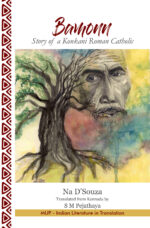
Bamonn: Story of a Konkani Roman Catholic
₹255.00Author: Na D’Souza Translator: S M Pejathaya
Konkani Roman Catholic Christians were converted from other groups by Goan Missionaries long back, keeping the caste system tradition to a large extent in layers such as the Bamonn, the Charodi, the Gawdi, the Nendar, the Shudra, etc. At the time of marriages and other social gatherings they continue to consider caste system norms and customs in the community. Caste system in Indian Christians is vividly described in the novel Bamonn. Christopher Pai of Kalyanpura hails from a Bamonn family and takes great pride in his ancestry. He believes in the stories about his Konkani Roman Catholic ancestors from his elders and about their being true Christians, holding on to their faith despite tremendous pressure to convert to Islam during Tipu Sultan’s regime. He also believes Bamonns are superior to other Christians in the community. After retiring from his job of a Headmaster, he refuels his obsession to retrace his roots and find out the truth about his ancestors. In his journey of self-assurance and faith, will he succeed in his mission to convince his family, his children and the community at large of his glorious ancestry and in still pride in the next generation? . . .
Interested readers may write to us at mup@manipal.edu about purchasing the book.
Also available on
-
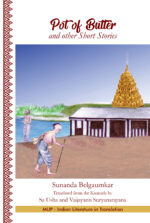
Pot of Butter and other short stories
₹250.00Author: Sunanda Belgaumkar Translator: Sa Usha, Vaijayanti Suryanarayana
Pot of Butter and other Short Stories is a collection of nine short stories, originally composed by Sunanda Belgaumkar in Kannada, handpicked and translated from her collections – Kajjaya and Koduvudenu Kombudenu. The bulk of her literary work including the stories in this book are inspired by the experiences in her early life, in the rustic and robust atmosphere of Dharwad. Her stories are predominantly semiautobiographical, laced with a liberal dose of artistic freedom.
This collection weaves together her writings on the underprivileged and marginalized as seen from the comfort of her palatial home, but rendered with compassion and empathy. Often, we find her narrative infused with self-directed questions such as, “What if I was in her shoes? ” or “Could that have been me? ” These stories are reflections on human nature, suffering, and destiny. There is hope, there is despair. There is love, there is longing. There is defeat, and there is triumph. In her stories, an oft-recurring metaphor for picking up one’s life after loss is a scorching summer followed by a torrential downpour and subsequently a plant springing to life.
As a translation, this book attempts to introduce Sunanda Belgaumkar’s literary and artistic creations to the non-Kannada reader, retaining as much of the indigenous elements of the original writings as possible. In doing so, it seeks to preserve the cultural climate of North Karnataka as it was around fifty years ago.
Interested readers may write to us at mup@manipal.edu about purchasing the book.
Also available on
-
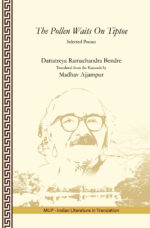
The Pollen Waits on Tiptoe- Selected Poems
₹310.00Author: Dattatreya Ramachandra Bendre, Translator: Madhav Ajjampur
The book presents English translations of 26 selected poems of 20th-century Kannada literature’s varakavi (heaven-touched poet) and one of the greatest lyric poets to have lived: Dattatreya Ramachandra Bendre.
Although no selection of Bendre’s poems, even in the original Kannada, can ever be representative of the astonishing range of his poetry, the poems in this book give the reader a sampling of some of the different types of poems Bendre wrote – including the blank verse of his sonnets, the free verse of some of his later poetry, and the overwhelmingly-euphonic lyric poems of his first period. Several of the included poems are also acknowledged classics.
A standout feature of this book is its character as a multimedia presentation. Given the exceptional aural quality of Bendre’s poetry, a provision has been made for the reader to listen to audio recordings of each poem, in both its original and translated forms. Also included are Afterwords which, among other things, contain stories about Bendre, interesting anecdotes related to the poems, and reflections on the process of translation.
Interested overseas customers may write to us at mup@manipal.edu about purchasing the book.
Also available on
eBook available on

-
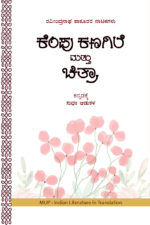
Kempu Kanagile and Chitra
₹160.00Author: Rabindranath Tagore, Translator: Sudha Adukkala
ಕೆಂಪು ಕಣಗಿಲೆ: ಅದೆಂಥ ಗಾಢಾಂಧಕಾರವೇ ಇರಲಿ, ಪುಟ್ಟ ಹಣತೆಯೊಂದು ಅದನ್ನು ತೊಡೆಯಬಲ್ಲುದೆಂಬುದು ಸಾರ್ವಕಾಲಿಕ ಸತ್ಯ. ಅಂಥದೊAದು ಸಂಘರ್ಷದ ಕಥನವನ್ನು ಗುರುದೇವ ರವೀಂದ್ರರು ತಮ್ಮ ಈ ನಾಟಕದಲ್ಲಿ ಹೇಳಿದ್ದಾರೆ. ‘ಕೆಂಪು ಕಣಗಿಲೆ’ ತೆರೆದಿಡುವ ಕೌರ್ಯದ ಜಗತ್ತು ಇಂದು ಈ ಕಾಲಘಟ್ಟದಲ್ಲಿ ನಿಂತು ಬರೆದರೇನೋ ಎಂಬಷ್ಟು ತಾಜಾ ಆಗಿದೆ. ಇಲ್ಲಿಯ ರಂಜನ ಕೇವಲ ಒಂದು ಪಾತ್ರವಲ್ಲ; ನಾವೆಲ್ಲರೂ ನಮ್ಮೊಳಗೆ ತುಂಬಿಸಿಕೊಳ್ಳಬೇಕಾದ ಜೀವನ ಪ್ರೀತಿಯ ವಿವಿಧ ಆಯಾಮಗಳ ಪ್ರತಿನಿಧಿ. ಇಲ್ಲಿಯ ನಂದಿನಿ ಇಂದು ಜಗವ ಸಂತೈಸಬೇಕಾದ ತಾಯಿಹೃದಯದ ಪ್ರತೀಕವಾಗಿದ್ದಾಳೆ.
ಚಿತ್ರಾ: ಪೌರಾಣಿಕ ಕಥಾನಕವೊಂದರ ಪುನರ್ಲೇಖನದ ಈ ನಾಟಕವು ಹೆಣ್ಣು ಮತ್ತು ರಾಷ್ಟçವನ್ನು ಒಂದು ಸಂಕಥನವನ್ನಾಗಿ ಚರ್ಚಿಸುತ್ತದೆ. ಹೆಣ್ಣು-ಗಂಡಿನ ಘನತೆಯ ಬದುಕನ್ನು ಕನಸುವ ನಿರೂಪಣೆ ನಾವು ಕಟ್ಟಬೇಕಾಗಿರುವ ರಾಷ್ಟçದ ರೂಪುರೇಷೆಗಳನ್ನೂ ತನ್ನೊಳಗೆ ಆಡಕ ಮಾಡಿಕೊಂಡಿದೆ. ನಮ್ಮ ಅನನ್ಯತೆಯನ್ನು ಉಳಿಸಿಕೊಳ್ಳುತ್ತಲೇ ಇನ್ನೊಬ್ಬರೊಂದಿಗೆ ಸಹಬಾಳ್ವೆಯನ್ನು ನಡೆಸುವ ಬಗೆಯನ್ನು ಮಂಡಿಸುತ್ತದೆ. ತಾನು ಆರೋಪಿಸಿಕೊಂಡ ಕೃತಕ ತೆರೆಯನ್ನು ಸರಿಸುವ ಚಿತ್ರಾ ನಮ್ಮೊಳಗಿನ ಅರಿವಿಗೆ ತೊಡಕಾಗಿರುವ ಸಂಕುಚಿತತೆಯ ಪರದೆಯನ್ನೂ ಸರಿಸುತ್ತಾಳೆ.
Interested overseas readers may write to us at mup@manipal.edu about purchasing the book.Also available on
-
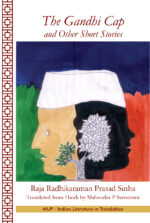
The Gandhi Cap and Other Short Stories
₹345.00Author: Raja Radhikaraman Prasad Sinha, Translator: Mahendra P Srivastava
The book The Gandhi Cap and Other Short Stories offers a glimpse into the lifetime of work of a forgotten pioneer of Hindi fiction, Raja Radhikaraman Prasad Sinha. It is ironic that one cannot find a single book by this author who was so dedicated to Hindi literature. The stories in this collection are a testament not only to the contributions of Sinha to Hindi fiction but also, reflect the depth of political and social milieu of the times. Many readers will be moved by the elements patriotism, feminism, secularism, and spiritualism in these stories. Strong female characters are common in most of these stories. These characters provide both a moral fulcrum to the stories as well as reflect the struggle of women to balance prevailing customs with modernity. Some of these stories provide sharp political and social commentary that still have currency (The Gandhi Cap). Sinha incorporates a unique style of writing that uses lyrical prose and poetry together. He even employs a dialogue between the storyteller and a social gathering in the form of an epilogue, to offer a discourse on social dilemma about women’s plight to become modern while admonishing them to retain their Indian essence (An Expensive Bargain). We hope the readers will enjoy this wonderful collection.
Interested readers may write to us at mup@manipal.edu about purchasing the book.
Also available on
-
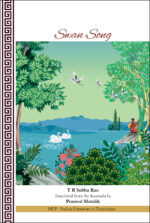
Swan Song
₹320.00Author: T R Subba Rao| Translator: Pramod Mutalik
Swan Song is the poignant tale of Venkatasubbiah, a legendary musician from 18th century Chitradurga. Written by renowned Kannada author Late Shri T R Subba Rao (TaRaSu) and translated into English by Prof Pramod Mutalik, the novel explores the extraordinary journey of an artist whose unwavering dedication to his craft defines his life.
The author weaves together perspectives from people of varied backgrounds to reconstruct Venkatasubbiah’s story, revealing his innate musical genius and determination. It narrates the tale of a musician’s steadfast devotion to art against all odds.
The narrative takes a dramatic turn when Venkatasubbiah defies Tippu Sultan’s order to perform in his palace. To protect the dignity of his art, he sacrifices his ability to sing by cutting off his tongue. Undeterred, he continues to produce swaras through his nose, earning him the metaphorical title of the swan. His life ends while performing, leaving an unforgettable legacy of self-respect and artistic integrity.
Interested readers may write to us at mup@manipal.edu about purchasing the book.Also available on
Be the first to review “Aadukala”
You must be logged in to post a review.