
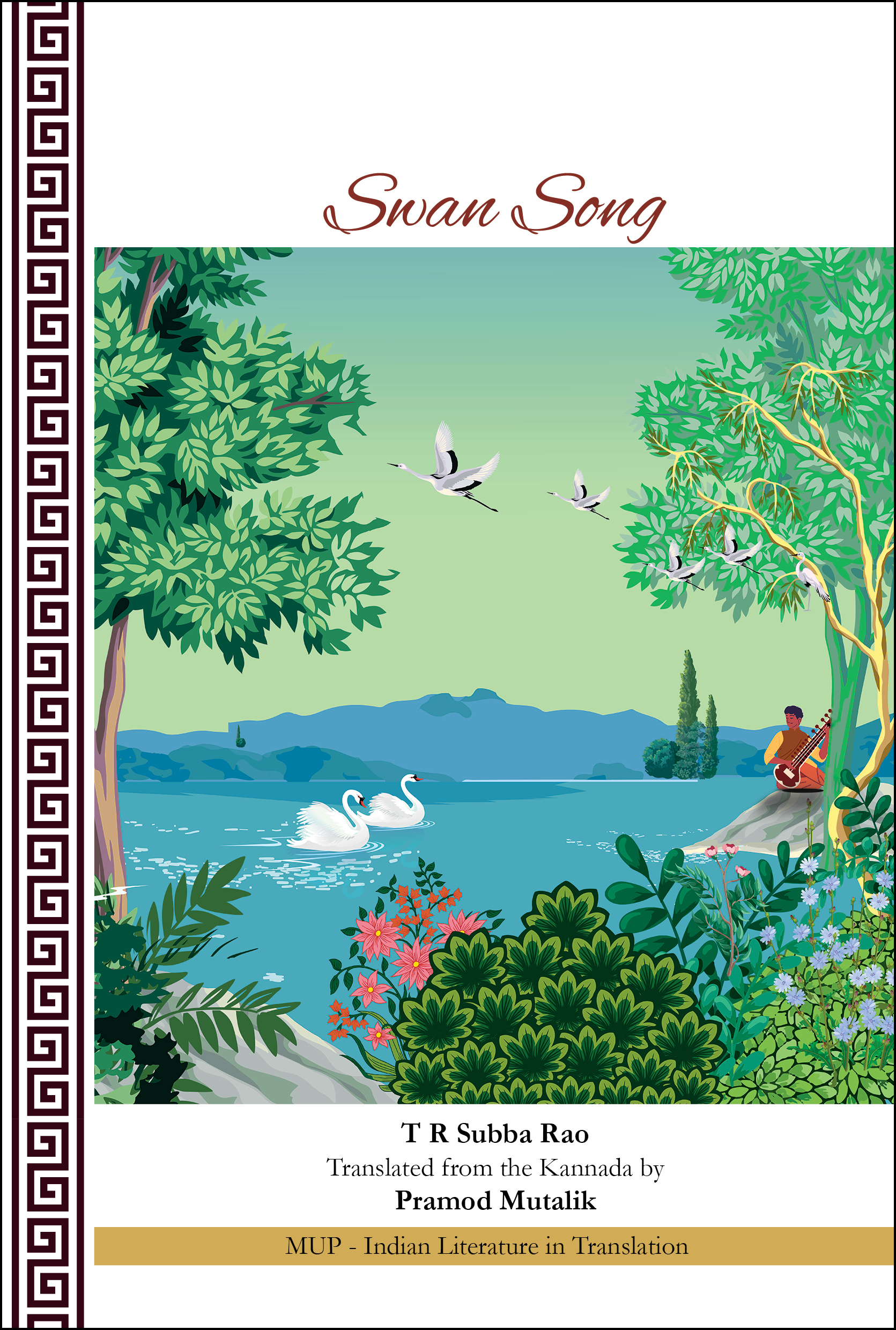
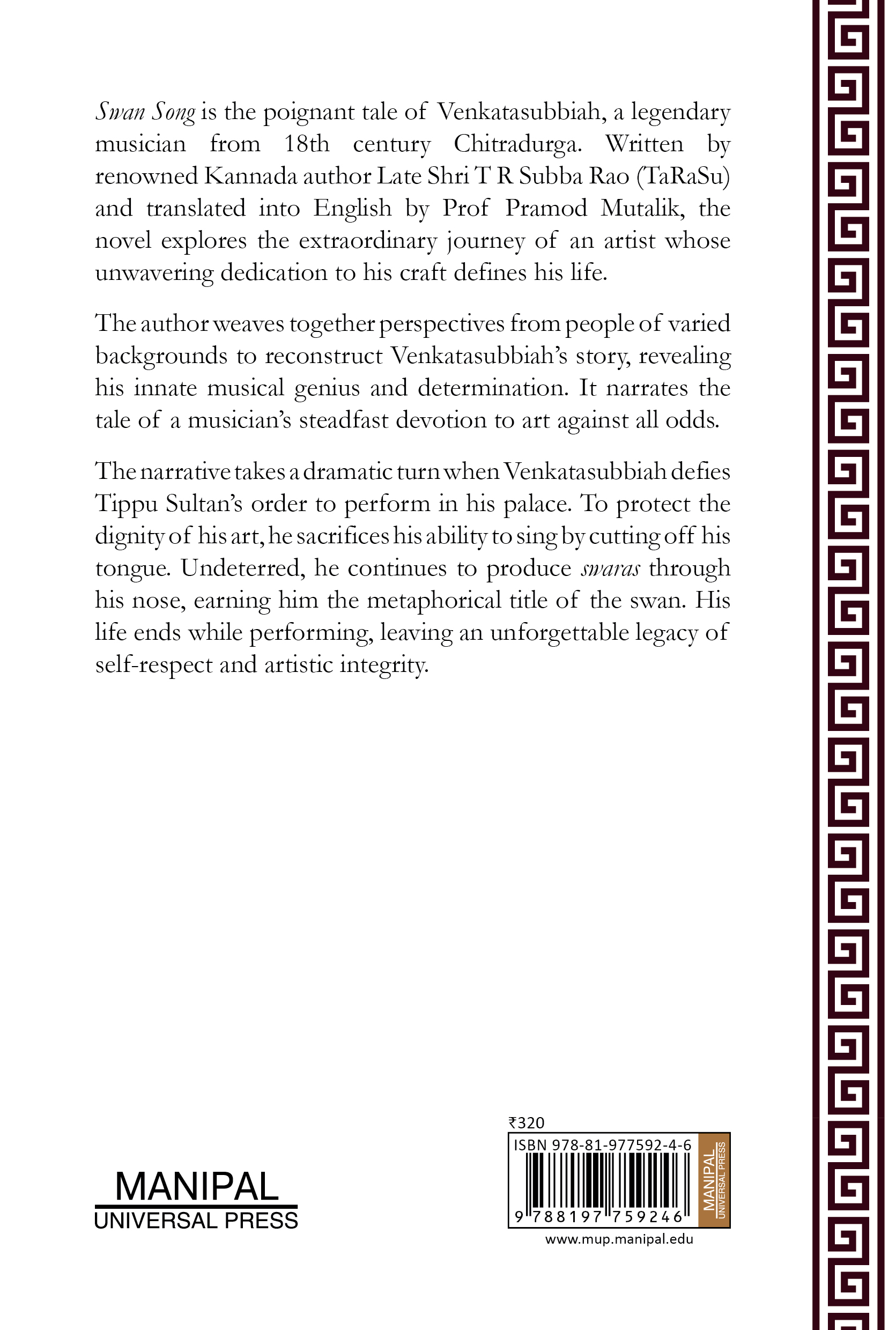
Swan Song
₹320.00
Author: T R Subba Rao| Translator: Pramod Mutalik
Swan Song is the poignant tale of Venkatasubbiah, a legendary musician from 18th century Chitradurga. Written by renowned Kannada author Late Shri T R Subba Rao (TaRaSu) and translated into English by Prof Pramod Mutalik, the novel explores the extraordinary journey of an artist whose unwavering dedication to his craft defines his life.
The author weaves together perspectives from people of varied backgrounds to reconstruct Venkatasubbiah’s story, revealing his innate musical genius and determination. It narrates the tale of a musician’s steadfast devotion to art against all odds.
The narrative takes a dramatic turn when Venkatasubbiah defies Tippu Sultan’s order to perform in his palace. To protect the dignity of his art, he sacrifices his ability to sing by cutting off his tongue. Undeterred, he continues to produce swaras through his nose, earning him the metaphorical title of the swan. His life ends while performing, leaving an unforgettable legacy of self-respect and artistic integrity.
|
Also available on
 |
| Format |
|---|
Customer Reviews
There are no reviews yet.
Related products
-
Anurakte- The Enamoured
₹390.00Author: Vyasaraya Ballal Translator: Poornima Hebbar
There are many rags-to-riches stories around the city of Mumbai. However, here is a story of transformation of a woman and her true self in the city of dreams. Set in Mangalore and Mumbai of the late 1940s, Anurakte- The Enamoured is an elegantly written story of a woman and her changing worldview over a period of time. Sumithra, a young woman with ordinary dreams and aspirations, comes to the then Bombay in search of livelihood. Little did she know that her experiences in the city and her zest for an independent life would transform her into a different person. She breaks the shell and resolves not to look back. The book is a poignant tale of love, loss, betrayal, family, relationships and traditions. The culturescape of Mumbai beautifully intertwines with her dreams. It is as much a story of the vibrancy of Mumbai as it is about Sumithra’s journey towards freedom.
Interested readers may write to us at mup@manipal.edu about purchasing the book.
Also available on
-
The Gandhi Cap and Other Short Stories
₹345.00Author: Raja Radhikaraman Prasad Sinha, Translator: Mahendra P Srivastava
The book The Gandhi Cap and Other Short Stories offers a glimpse into the lifetime of work of a forgotten pioneer of Hindi fiction, Raja Radhikaraman Prasad Sinha. It is ironic that one cannot find a single book by this author who was so dedicated to Hindi literature. The stories in this collection are a testament not only to the contributions of Sinha to Hindi fiction but also, reflect the depth of political and social milieu of the times. Many readers will be moved by the elements patriotism, feminism, secularism, and spiritualism in these stories. Strong female characters are common in most of these stories. These characters provide both a moral fulcrum to the stories as well as reflect the struggle of women to balance prevailing customs with modernity. Some of these stories provide sharp political and social commentary that still have currency (The Gandhi Cap). Sinha incorporates a unique style of writing that uses lyrical prose and poetry together. He even employs a dialogue between the storyteller and a social gathering in the form of an epilogue, to offer a discourse on social dilemma about women’s plight to become modern while admonishing them to retain their Indian essence (An Expensive Bargain). We hope the readers will enjoy this wonderful collection.
Interested readers may write to us at mup@manipal.edu about purchasing the book.
Also available on
-
Madhavi Kathana Kavya
₹195.00Author: ONV Kurup, Translator: Parvathi G Aithal
ವ್ಯಾಸ ಮಹಾಭಾರತದ ಉದ್ಯೋಗ ಪರ್ವದಲ್ಲಿ ಬರುವ ಒಂದು ಉಪಾಖ್ಯಾನವನ್ನಾಧರಿಸಿ ಬರೆದ ಒಂದು ಕಾವ್ಯವಿದು. ಮೂಲಕಥೆಯಲ್ಲಿ ಮಾಧವಿಯ ಶೋಷಣೆ ಎದ್ದು ಕಾಣುವುದಿಲ್ಲ. ವಿಶ್ವಾಮಿತ್ರ ಶಿಷ್ಯನಾದ ಗಾಲವನು ತನ್ನ ವಿದ್ಯಾಭ್ಯಾಸವನ್ನು ಮುಗಿಸಿ ಹೊರಡುವಾಗ ‘ಗುರುದಕ್ಷಿಣೆಯಾಗಿ ಏನನ್ನು ಕೊಡಲಿ?’ ಎಂದು ಕೇಳುತ್ತಾನೆ. ವಿಶ್ವಾಮಿತ್ರರು ಗುರುದಕ್ಷಿಣೆ ಬೇಡವೆಂದರೂ ಕೇಳುವುದಿಲ್ಲ. ಕೊನೆಗೆ ವಿಶ್ವಾಮಿತ್ರರು, ‘ಒಂದು ಕಿವಿ ಮಾತ್ರ ಕಪ್ಪಾಗಿರುವ ಎಂಟುನೂರು ಶ್ವೇತಾಶ್ವಗಳನ್ನು ಕಾಣಿಕೆಯಾಗಿ ತೆಗೆದುಕೊಂಡು ಬಾ’ ಎಂದು ಹೇಳುತ್ತಾರೆ. ಆದರೆ, ಅಂಥ ವಿಶೇಷ ಗುಣದ ಕುದುರೆಗಳು ಬಹಳ ದುರ್ಲಭವಾದುವೆಂಬುದನ್ನು ಅರಿತಾಗ ಗಾಲವ ದಾನಶೂರ ಯಯಾತಿ ಮಹಾರಾಜನ ಬಳಿ ಸಹಾಯ ಬೇಡಲು ಹೋಗುತ್ತಾನೆ. ಆಗಷ್ಟೇ ದೊಡ್ಡದೊಂದು ಯಾಗ ಮುಗಿಸಿದ ಯಯಾತಿಯ ಬಳಿ ಅಶ್ವಗಳಿಲ್ಲ. ಆದರೆ, ತನ್ನ ಪ್ರತಿಷ್ಠೆಯನ್ನು ಉಳಿಸಿಕೊಳ್ಳುವುದಕ್ಕೋಸ್ಕರ ಯಯಾತಿ ತನ್ನ ಮಗಳು ಮಾಧವಿಯನ್ನು ಗಾಲವನ ವಶಕ್ಕೆ ಬಿಟ್ಟು ‘ರೂಪಸಿಯಾದ ಈಕೆಯನ್ನು ಬೇಕಾದ ಹಾಗೆ ಬಳಸಿಕೊಂಡು ನಿನಗೆ ಬೇಕಾದ ಅಶ್ವಗಳನ್ನು ಪಡೆ’ ಅನ್ನುತ್ತಾನೆ. ಹಾಗೆ ಗಾಲವನು ಮಾಧವಿಯನ್ನು ಮೂರು ಮಂದಿ ರಾಜರ ಬಳಿಗೆ ಕರೆದೊಯ್ದು ಅವರಿಂದ ತಲಾ ಇನ್ನೂರು ಅಶ್ವಗಳನ್ನು ಪಡೆದು ಆ ರಾಜರುಗಳಿಗೆ ಒಂದು ವರ್ಷದ ಮಟ್ಟಿಗೆ ಉಪಯೋಗಿಸಿಕೊಳ್ಳಲು ಮಾಧವಿಯನ್ನು ಒಪ್ಪಿಸುತ್ತಾನೆ. ಮೂಲ ಕಥೆಯಲ್ಲಿ ಮಾಧವಿಯ ಮನಸ್ಸಿನ ಸಂಘರ್ಷಗಳು ವ್ಯಕ್ತವಾಗಿಲ್ಲ. ‘ಪುರುಷರಿಂದ ಲೈಂಗಿಕವಾಗಿ ಎಷ್ಟು ಸಾರಿ ಬಳಸಲ್ಪಟ್ಟರೂ ನನ್ನ ಕನ್ಯತ್ವ ಉಳಿಯುವಂಥ ವರ ನನಗಿದೆಯಾದ್ದರಿಂದ ನಾನು ನಿನಗೆ ಸಹಾಯ ಮಾಡಬಲ್ಲೆ’ ಎಂದು ಗಾಲವನ ಬಳಿ ಅವಳೇ ಹೇಳುತ್ತಾಳೆ . ಓಎನ್ವಿ ಕುರುಪ್ ಬರೆದ ಈ ಕೃತಿಯಲ್ಲಿ ಅವರು ಕೆಲವು ಬದಲಾವಣೆಗಳನ್ನು ಮಾಡಿಕೊಂಡಿದ್ದಾರೆ. ಇಲ್ಲಿ ಇಡೀ ಕಥೆಯನ್ನು ಪುರುಷರಿಂದ ಘೋರ ಅನ್ಯಾಯಕ್ಕೊಳಗಾಗಿ ಮಾನಸಿಕ ಯಾತನೆಯನ್ನು ಅನುಭವಿಸಿರಬಹುದಾದ ಮಾಧವಿಯ ದೃಷ್ಟಿಯಿಂದ ಬರೆಯಲಾಗಿದೆ. ಆದ್ದರಿಂದ ಇದರ ಸ್ತ್ರೀವಾದಿ ಓದು ಒಂದು ವಿಶಿಷ್ಟ ಅನುಭವವನ್ನು ನೀಡುತ್ತದೆ.ಮಲಯಾಳದ ಜ್ಞಾನಪೀಠ ಪ್ರಶಸ್ತಿ ವಿಜೇತ ಸಾಹಿತಿ ಓಎನ್ವಿಕುರುಪ್ ಅವರ ‘ಸ್ವಯಂವರಂ’ ಎಂಬ ಖಂಡಕಾವ್ಯದ ಭಾವಾನುವಾದವಿದು. ಮಹಾಭಾರತದ `ಉದ್ಯೋಗ ಪರ್ವ’ ದಲ್ಲಿ ಬರುವ ಒಂದು ಉಪಾಖ್ಯಾನದಲ್ಲಿ ಪುರುಷ ವರ್ಗದಿಂದ ಘೋರವಾಗಿ ಶೋಷಣೆಗೊಳಗಾದ ಮಾಧವಿ ಈ ಕಥೆಯ ನಾಯಕಿಯಾಗಿದ್ದು ಇಡೀ ಕಾವ್ಯವೇ ಅವಳ ದೃಷ್ಟಿಕೋನದಿಂದ ರಚಿತವಾಗಿದ್ದರಿಂದ ಸ್ತ್ರೀವಾದಿ ಓದಿಗೆ ಒಳಪಡಿಸಲು ಅತ್ಯಂತ ಸೂಕ್ತವಾದ ಕೃತಿಯಿದು ಎಂದೆನ್ನಿಸಿ ಅನುವಾದಕಿ ಅದರ ಶೀರ್ಷಿಕೆಯನ್ನು ‘ಮಾಧವಿ ಕಥನ ಕಾವ್ಯ’ವೆಂದು ಬದಲಾಯಿಸಿದ್ದಾರೆ . ಇದನ್ನು ಓದಿದಾಗೆಲ್ಲ ರಾಮಾಯಣದ ಸೀತೆಯ ನೆನಪಾಗುತ್ತದೆ.
Interested customers may write to us at mup@manipal.edu about purchasing the book.
Also available on
-
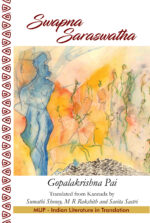
Swapna Saraswatha
₹530.00Author: Gopalakrishna Pai Translator: Sumathi Shenoy, M R Rakshith, Savita Sastri
Swapna Saraswatha is the saga of migration of a community called Saraswaths in the west coast of India, extending from Goa to the south of Mangalore. It captures the dominance of a colonial power over the region that began with the entry of the Portuguese about four hundred years ago. The novel is a graphic description of the displacement of this strongly-rooted community which saw its resurrection in a new area. In the course of its narrative, the novel traces the gradual changes in the structure of the family that moved from a closely knit joint family of the bygone era to the nuclear family. It also deals with the factors that are responsible for the change in value systems of individuals in the wake of such paradigm shifts. With its vast canvas, it remarkably weaves fiction with myth and history, peppered with cultural details and linguistic nuances. The narration in Swapna Saraswatha progresses in the form of an epic detailing the story of nine generations spread over a period of two hundred and fifty years from 1510 to about 1760. It encompasses more than a hundred and fifty characters which include Hindus, Muslims, Christians, chieftains, traders, farmers, priests and black magicians, and covers a range of themes spread across folk tales, legends, armies, myths and a sprinkling of history.
-
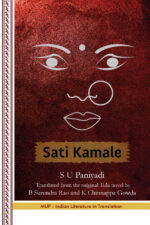
Sati Kamale
₹240.00Author: S U Paniyadi Translators: B Surendra Rao, K Chinnappa Gowda
This eponymous novel is centred on Kamale, who is an embodiment of wifely virtue. For fifteen long years Kamale lives the life of a widow to the outside world, nurturing the hopes of reuniting with the husband one day. Alone in the room, each night she wears her marks of a married woman with the dagger gifted by Umesha next to her. It could be seen as an exposition on the then existing indigenous discourse in India in the 19th century and early 20th century. Kamale, in her rigorous commitment and in retrieving her husband from ‘death’, is fashioned after Savithri in an intertextual reference to Mahabharata’s episode of “Satyavan and Savithri”. The novel might look conservative for the present-day reader, but it is a representative literary work of the time when Paniyadi, among many others, wanted to regain the independent status of the Tulu language which had somehow slipped out of its pedestal.
Interested readers may write to us at mup@manipal.edu about purchasing the book.
Also available on
-
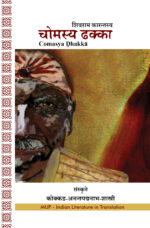
Comasya Dhakka
₹195.00Author: Shivarama Karanth Translator: Ananthapadmanabha Shastri
Set in the coastal Karavali region of Karnataka, Chomasya Dakka is the story of Coma, a Dalit bonded-laborer. Set in the pre-independent India, Comasya Dakka tells a poignant tale of dalit lives, and the suppression of their fundamental rights and identity through the character of Coma. Denied the right to even till and cultivate their own land due to their caste and identity, Coma and his children work as bonded-labourers for their landlord, Sankappayya. The plot of the novel follows the lives of Coma and his children and the tragedies that befall them. The original work in Kannada, Comana Dudi, was adapted into a well-acclaimed, national award-winning film in the year 1975. Directed by B V Karanth, it won the Swarna Kamal, Indias National Award for the Best Film in the year 1976.
Interested readers may write to us at mup@manipal.edu about purchasing the book.
Also available on
-
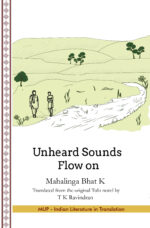
Unheard Sounds Flow On
₹315.00Author: K Mahalinga, Translator: T K Ravindran
In spite of being one of the oldest members of the Dravidian family of languages, Tulu, unfortunately, has not yet found the recognition that it richly deserves in the modern world. Since modernity privileges the written over the spoken, the Tulu language that is abundantly blessed with oral literature has been placed on the fringes of modern literary world. Ironically, Tulu is still engaged in a desperate fight for official status in a country that boasts of its cultural and linguistic diversity. The motives behind the translation of Nanajjer Sude Tirgayer, hailed as the first modern Tulu novel, into English refuse to remain apolitical in this context.
The novel, which has already been translated into Kannada, Konkani and Malayalam, beautifully captures the pulse of rusticity that characterizes the life of a village community that lived its life with its love-hate relationship with nature, more than 75 years ago in a Tulu speaking village in the south-western part of Karnataka. Besides bringing alive the socio-cultural practices that find their articulation through the natural linguistic plurality ingrained in the village psyche, the novel touches upon the duality of human nature that leaves man perennially condemned to an inner crisis.
Interested customers may write to us at mup@manipal.edu about purchasing the book.
Also available on
-
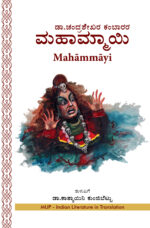
Mahāmmāyi
₹195.00Author: Chandrasekhara Kambara, Translator: Kathyayini Kunjibettu
Mahāmmāyi is the story of the legend of Shatavithaayi – the Goddess of death, and her adopted son Sambhashiva. Out of affection for her son, Goddess Shatavithaayi blesses him with the “power of life”. The blessing was that death will evade the people who are treated by Sambashiva. But a certain condition set by Shatavithaayi forbade him from healing every ill man. The condition was that, if Shatavithaayi stood on the right side of the patient, Sambhashiva could treat that person and he would live; but, if she stood on the left side of the patient, he should not treat that person as his death was inevitable. Through a distinct method of story-telling, the story follows the life of Sambhashiva as he begins to question the ideas of fate and destiny. Thus, the conflict between fate and human efforts to change that fate is vividly described in this play.Interested readers may write to us at mup@manipal.edu about purchasing the book.
Also available on
Be the first to review “Swan Song”
You must be logged in to post a review.