
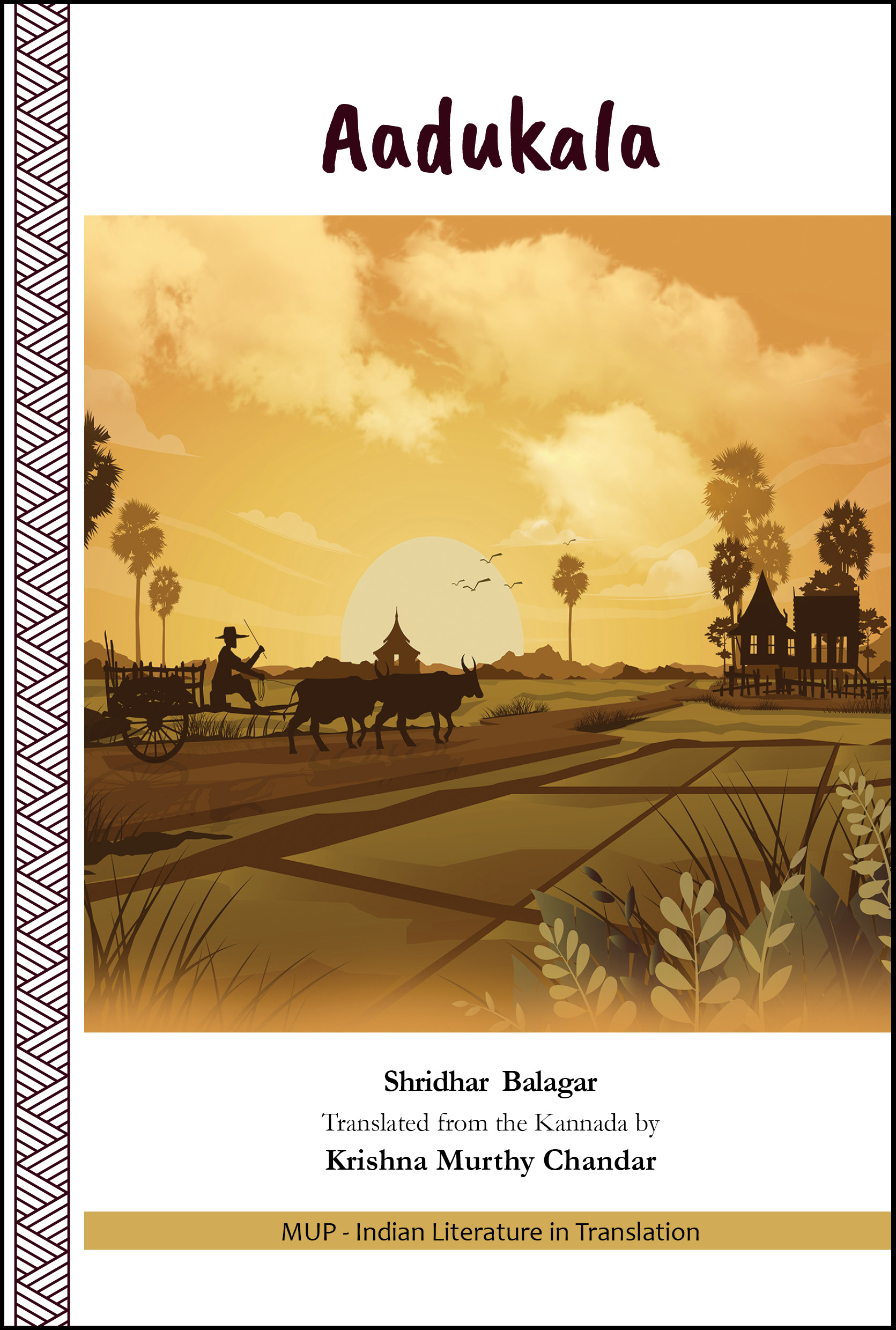
Aadukala
₹300.00
Author: Shridhar Balagar Translator: Krishna Murthy Chandar
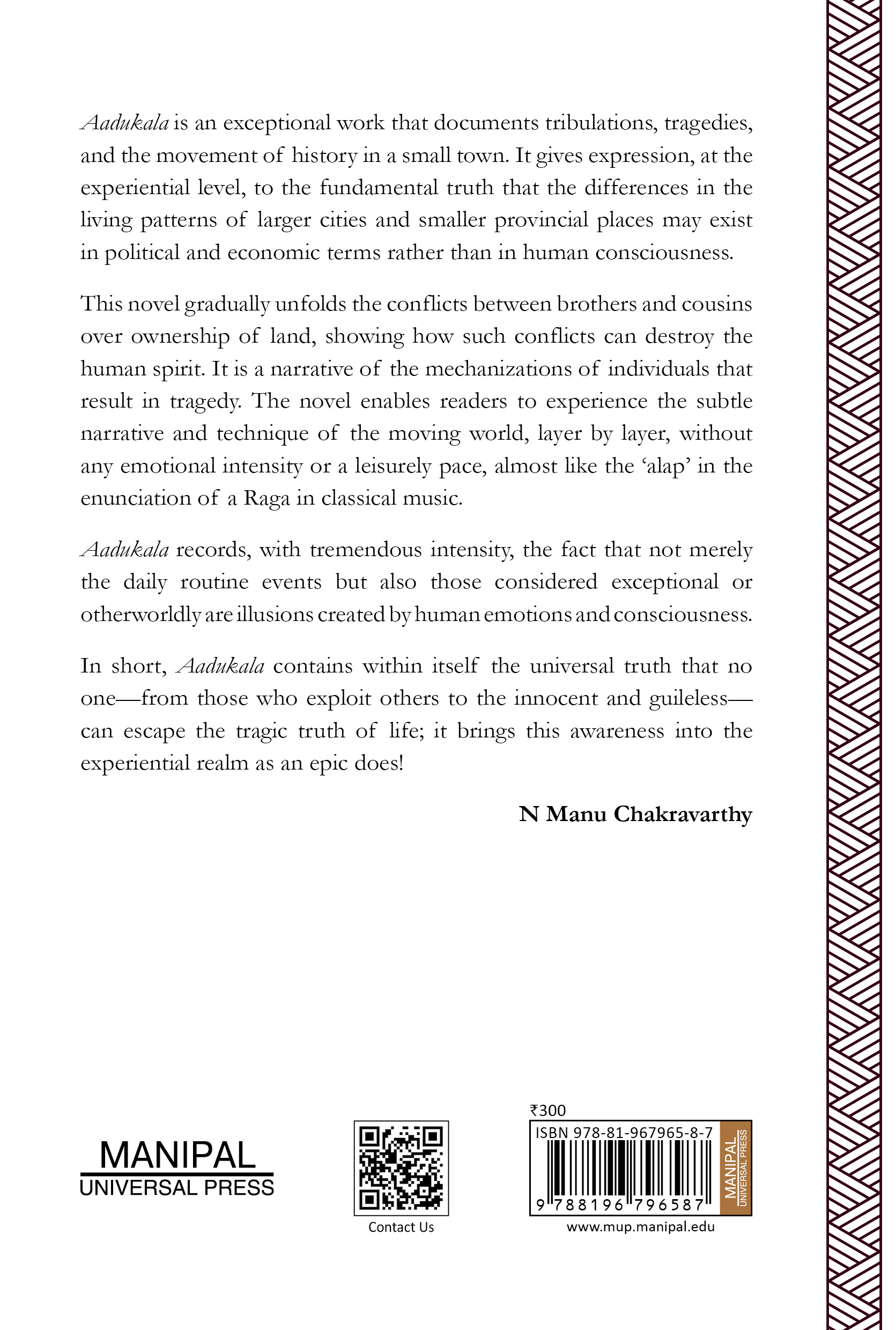
Aadukala is an exceptional work that documents tribulations, tragedies, and the movement of history in a small town. It gives expression, at the experiential level, to the fundamental truth that the differences in the living patterns of larger cities and smaller provincial places may exist in political and economic terms rather than in human consciousness.
This novel gradually unfolds the conflicts between brothers and cousins over ownership of land, showing how such conflicts can destroy the human spirit. It is a narrative of the mechanizations of individuals that result in tragedy. The novel enables readers to experience the subtle narrative and technique of the moving world, layer by layer, without any emotional intensity or a leisurely pace, almost like the ‘alap’ in the enunciation of a Raga in classical music.
Aadukala records, with tremendous intensity, the fact that not merely the daily routine events but also those considered exceptional or otherworldly are illusions created by human emotions and consciousness.
Interested readers may write to us at mup@manipal.edu about purchasing the book.
Also available on |
| Author | |
|---|---|
| Format |
Related products
-
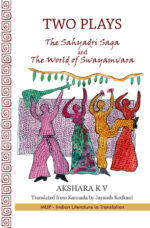
Two Plays – The Sahyadri Saga and The World of Swayamvara
₹199.00Author: Akshara K V Translator: Jayanth Kodkani
These two plays negotiate with the real problems of contemporary India. If Sahyadri Kanda is about the ripples caused in the life of the people in a village on the Western Coast which will soon have a nuclear plant, Swayamvaraloka, is an allegorical narrative set in a small village that extends to include the larger contemporary world. Both the plays dwell on the seeming binaries of village-city, success-failure, modern-traditional while examining the nature of human relationships in the changing world. These plays also reflect an ambition to elevate the real experience to a mythical level. While most playwrights attempt to echo contemporary concerns by reinterpreting history and mythology, for these plays, the epics, their grandeur, the struggle, the wars are not episodes that happen in kingdoms and palaces and battlefields, they are also that which takes place in the microworld of one’s consciousness. Each character in these plays find their own dharma, yet it offers no model for the reader, and remains only a pointer to the complex process of finding it.
Interested readers may write to us at mup@manipal.edu about purchasing the book.
Also available on
eBook available on

-
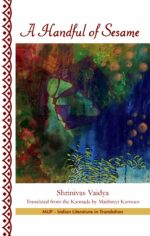
A Handful of Sesame
₹310.00Author: Srinivas B Vaidya, Translator: Maithreyi Karnoor
With a captivating start, A Handful of Sesame plunges us into the heart of the dying years of the 1857 mutiny. But the mutiny is largely a backdrop to the novel. When Kamalanabh of Kashi is manipulated by an impoverished Brahmin of Navalgund into marrying his daughter, the novel becomes basically the story of an internal migration. This is rare, and it remains one of the strengths of the novel. We are so used to speaking of migration across the postcolonial bridge and accredited national borders that we forget that India is a country of endless internal migrations – in the past and the present.
Interested readers may write to us at mup@manipal.edu about purchasing the book.
Also available on
-
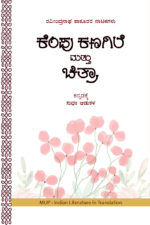
Kempu Kanagile and Chitra
₹160.00Author: Rabindranath Tagore, Translator: Sudha Adukkala
ಕೆಂಪು ಕಣಗಿಲೆ: ಅದೆಂಥ ಗಾಢಾಂಧಕಾರವೇ ಇರಲಿ, ಪುಟ್ಟ ಹಣತೆಯೊಂದು ಅದನ್ನು ತೊಡೆಯಬಲ್ಲುದೆಂಬುದು ಸಾರ್ವಕಾಲಿಕ ಸತ್ಯ. ಅಂಥದೊAದು ಸಂಘರ್ಷದ ಕಥನವನ್ನು ಗುರುದೇವ ರವೀಂದ್ರರು ತಮ್ಮ ಈ ನಾಟಕದಲ್ಲಿ ಹೇಳಿದ್ದಾರೆ. ‘ಕೆಂಪು ಕಣಗಿಲೆ’ ತೆರೆದಿಡುವ ಕೌರ್ಯದ ಜಗತ್ತು ಇಂದು ಈ ಕಾಲಘಟ್ಟದಲ್ಲಿ ನಿಂತು ಬರೆದರೇನೋ ಎಂಬಷ್ಟು ತಾಜಾ ಆಗಿದೆ. ಇಲ್ಲಿಯ ರಂಜನ ಕೇವಲ ಒಂದು ಪಾತ್ರವಲ್ಲ; ನಾವೆಲ್ಲರೂ ನಮ್ಮೊಳಗೆ ತುಂಬಿಸಿಕೊಳ್ಳಬೇಕಾದ ಜೀವನ ಪ್ರೀತಿಯ ವಿವಿಧ ಆಯಾಮಗಳ ಪ್ರತಿನಿಧಿ. ಇಲ್ಲಿಯ ನಂದಿನಿ ಇಂದು ಜಗವ ಸಂತೈಸಬೇಕಾದ ತಾಯಿಹೃದಯದ ಪ್ರತೀಕವಾಗಿದ್ದಾಳೆ.
ಚಿತ್ರಾ: ಪೌರಾಣಿಕ ಕಥಾನಕವೊಂದರ ಪುನರ್ಲೇಖನದ ಈ ನಾಟಕವು ಹೆಣ್ಣು ಮತ್ತು ರಾಷ್ಟçವನ್ನು ಒಂದು ಸಂಕಥನವನ್ನಾಗಿ ಚರ್ಚಿಸುತ್ತದೆ. ಹೆಣ್ಣು-ಗಂಡಿನ ಘನತೆಯ ಬದುಕನ್ನು ಕನಸುವ ನಿರೂಪಣೆ ನಾವು ಕಟ್ಟಬೇಕಾಗಿರುವ ರಾಷ್ಟçದ ರೂಪುರೇಷೆಗಳನ್ನೂ ತನ್ನೊಳಗೆ ಆಡಕ ಮಾಡಿಕೊಂಡಿದೆ. ನಮ್ಮ ಅನನ್ಯತೆಯನ್ನು ಉಳಿಸಿಕೊಳ್ಳುತ್ತಲೇ ಇನ್ನೊಬ್ಬರೊಂದಿಗೆ ಸಹಬಾಳ್ವೆಯನ್ನು ನಡೆಸುವ ಬಗೆಯನ್ನು ಮಂಡಿಸುತ್ತದೆ. ತಾನು ಆರೋಪಿಸಿಕೊಂಡ ಕೃತಕ ತೆರೆಯನ್ನು ಸರಿಸುವ ಚಿತ್ರಾ ನಮ್ಮೊಳಗಿನ ಅರಿವಿಗೆ ತೊಡಕಾಗಿರುವ ಸಂಕುಚಿತತೆಯ ಪರದೆಯನ್ನೂ ಸರಿಸುತ್ತಾಳೆ.
Interested overseas readers may write to us at mup@manipal.edu about purchasing the book.Also available on
-
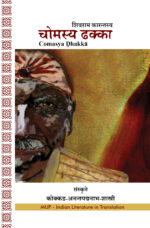
Comasya Dhakka
₹195.00Author: Shivarama Karanth Translator: Ananthapadmanabha Shastri
Set in the coastal Karavali region of Karnataka, Chomasya Dakka is the story of Coma, a Dalit bonded-laborer. Set in the pre-independent India, Comasya Dakka tells a poignant tale of dalit lives, and the suppression of their fundamental rights and identity through the character of Coma. Denied the right to even till and cultivate their own land due to their caste and identity, Coma and his children work as bonded-labourers for their landlord, Sankappayya. The plot of the novel follows the lives of Coma and his children and the tragedies that befall them. The original work in Kannada, Comana Dudi, was adapted into a well-acclaimed, national award-winning film in the year 1975. Directed by B V Karanth, it won the Swarna Kamal, Indias National Award for the Best Film in the year 1976.
Interested readers may write to us at mup@manipal.edu about purchasing the book.
Also available on
-

U-Turn
₹180.00Author: Anand Mhasvekar, Translator: Neeta Inamdar
ಮರಾಠಿ ನಾಟಕ. ಯು-ಟರ್ನ್ ಮಹಾರಾಷ್ಟ್ರ ಮತ್ತು ಅದರಾಚೆಗೆ 585 ಕ್ಕೂ ಹೆಚ್ಚು ಪ್ರದರ್ಶನಗಳೊಂದಿಗೆ ಲಕ್ಷಾಂತರ ಹೃದಯಗಳನ್ನು ಗೆದ್ದಿದೆ. ಗುಜರಾತಿಯಲ್ಲಿ ಇದರ ಅನುವಾದವು 115 ಕ್ಕೂ ಹೆಚ್ಚು ಪ್ರದರ್ಶನಗಳನ್ನು ಕಂಡಿದೆ ಮತ್ತು ಹಿಂದಿಯಲ್ಲಿ 50 ಕ್ಕೂ ಹೆಚ್ಚು ಪ್ರದರ್ಶನಗಳನ್ನು ಕಂಡಿದೆ. ಈ ಯಶಸ್ಸು ಶ್ರೀಮತಿ ಸವಿತಾ ಶಾಸ್ತ್ರಿಯವರ ಬೆಂಬಲದೊಂದಿಗೆ ಕನ್ನಡದಲ್ಲಿ ಈ ಕೃತಿಯನ್ನು ಅನುವಾದಿಸಲು ಪ್ರೊ.ನೀತಾ ಇನಾಮದಾರ್ ಅವರನ್ನು ಪ್ರೋತ್ಸಾಹಿಸಿತು. ನಾಟಕವು ಉದ್ದಕ್ಕೂ ಕೇವಲ ಎರಡು ಪಾತ್ರಗಳನ್ನು ಹೊಂದಿದೆ ಮತ್ತು ಇಡೀ ಅವಧಿಗೆ ವೇದಿಕೆಯ ಮೇಲಿರುವ ಇಬ್ಬರನ್ನು ಹೊರತುಪಡಿಸಿ ಒಂದೆರಡು ಧ್ವನಿಗಳನ್ನು ಹೊಂದಿದೆ. ನಾಟಕದ ಕೇಂದ್ರ ಕಲ್ಪನೆಯು ಆಧುನಿಕತೆಯನ್ನು ಒಪ್ಪಿಕೊಳ್ಳುವಲ್ಲಿನ ವ್ಯತ್ಯಾಸಗಳು ಮತ್ತು ಎರಡು ವಿಭಿನ್ನ ತಲೆಮಾರುಗಳಲ್ಲಿ ಇದಕ್ಕೆ ಸಂಬಂಧಿಸಿದ ಸಂಘರ್ಷಗಳು. ವಿಚ್ಛೇದಿತ ಸೇನೆಯ ಮೇಜರ್ ಮತ್ತು 50 ರ ದಶಕದ ಅಂತ್ಯದಲ್ಲಿರುವ ವಿಧವೆಯ ನಡುವಿನ ಒಡನಾಟವನ್ನು ಅವರ ಮಕ್ಕಳು ವಿರೋಧಿಸುತ್ತಾರೆ ಮತ್ತು ಅವರು ತಮ್ಮನ್ನು ತಾವು ಆಧುನಿಕತೆಯನ್ನು ಅಳವಡಿಸಿಕೊಂಡರೂ ವಿಭಿನ್ನ ರೀತಿಯಲ್ಲಿ ವ್ಯಕ್ತಪಡಿಸುತ್ತಾರೆ. ನೀತಾ ಇನಾಮದಾರ್ ಅವರು ಮಣಿಪಾಲ್ ವಿಶ್ವವಿದ್ಯಾನಿಲಯದಲ್ಲಿ (MU) ಯುರೋಪಿಯನ್ ಅಧ್ಯಯನ ವಿಭಾಗದ (DES) ಮುಖ್ಯಸ್ಥರಾಗಿದ್ದಾರೆ ಮತ್ತು ಮಣಿಪಾಲ್ ಯೂನಿವರ್ಸಲ್ ಪ್ರೆಸ್ ನ (MUP) ಮುಖ್ಯ ಸಂಪಾದಕರಾಗಿದ್ದಾರೆ. ಸಂಗೀತ ಮತ್ತು ರಂಗಭೂಮಿ ಅವರ ಆಸಕ್ತಿಗಳಾಗಿದ್ದು, ಶ್ರೀಮತಿ ಸವಿತಾ ಶಾಸ್ತ್ರಿ ಅವರ ನೆರವಿನೊಂದಿಗೆ ಈ ಕೆಲಸವನ್ನು ಕೈಗೊಳ್ಳುವಂತೆ ಮಾಡಿತು. ಸವಿತಾ ಶಾಸ್ತ್ರಿ ಅವರು ಮಣಿಪಾಲದ ಮಹಿಳಾ ಉದ್ಯಮಿಯಾಗಿದ್ದು, ಅವರು ಬಾಬಾ ಆಮ್ಟೆ ಅವರ ಆನಂದವನಕ್ಕೆ ಧನಸಹಾಯವನ್ನೂ ಮಾಡುತ್ತಾರೆ. ಅವರು ಮರಾಠಿ, ಹಿಂದಿ ಮತ್ತು ಇಂಗ್ಲಿಷ್ನಲ್ಲಿ ಪುಸ್ತಕಗಳು ಮತ್ತು ನಾಟಕಗಳ ಓದುಗರಾಗಿದ್ದಾರೆ, ಅವರು ಈ ಅನುವಾದ ಯೋಜನೆಗೆ ತಮ್ಮ ಬೆಂಬಲವನ್ನು ನೀಡಿದರು.
Interested readers may write to us at mup@manipal.edu about purchasing the book.
Also available on
-
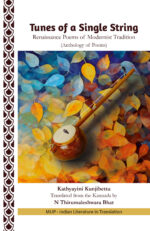
Tunes of a Single String
₹200.00Author:
Dive into the enchanting poetry of Dr Kathyayini Kunjibettu through Tunes of a Single String, a captivating translation of her anthology Ekthari Sanchari. Kathyayini’s verses defy convention with unrhymed lines and free verse, reflecting a profound liberation of spirit and language. Each poem brings rural landscapes and Indian mythological scenes to life with remarkable freshness and emotional depth.
This collection invites readers to explore why Kathyayini’s works align with Renaissance Poems of a Modernist Tradition. Her poetic voice resonates with freshness and depth, deftly blending familiar themes into uniquely unconventional settings. Tunes of a Single String invites readers to delve into the vibrant world of modern Kannada poetry through Kathyayini’s fearless exploration of life, culture, and language.
Interested customers may write to us at mup@manipal.edu about purchasing the book.
Also available on
-
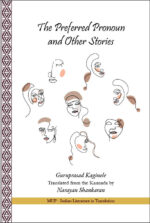
The Preferred Pronoun and Other Stories
₹400.00Author: Guruprasad Kaginele, Translator: Narayan Shankaran
The Preferred Pronoun and Other Stories is a unique collection of twelve short stories by Guruprasad Kaginele. These stories arise from the restless tension of being away from one’s roots, the haunting nostalgia for the home left behind, and the interplay of diverse cultures, while also exploring the process of integrating into a new environment. Set against the backdrop of America and within the medical world, the stories reflect the author’s thoughts and experiences.
From Osama, who nervously sweats after discovering a semiautomatic pistol in a schoolteacher’s house, to Morris, a middle aged individual on a quest for the perfect pronoun after gender transformation, the collection brings a wide array of characters and situations to life. The Nesting, a story that triggers many thoughts with its metaphorical allusions to a home blooming over the doom of another, and The Big Save, a story about a doctor yearning to regain his lost mojo despite realizing that it requires jeopardizing a life to save another, along with other stories, amply illustrate the author’s uncanny prowess in the dramatic presentation of compassion, love, jealousy, torts and their befitting punishments, the thin line between good and evil, and other subtle nuances.The stories depict three phases of a migrant’s life: the naiveté and challenges of a new immigrant, the process of assimilation, and the adaptation to American culture, seamlessly woven together to create a cohesive narrative of diverse experiences. Stemming from the choice to build a life in a foreign land, the narratives explore the politics and ethnic consciousness tied to that journey. Through the lens of a doctor’s work and family life in America, Kaginele captures the dynamic political changes in the country, while revealing subtle shifts in ethnic sensibilities and the evolving nature of interpersonal relationships in the migrant experience.
Interested customers may write to us at mup@manipal.edu about purchasing the book.
Also available on
-
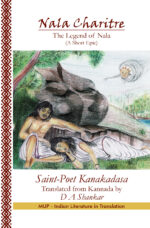
Nala Charitre: The Legend of Nala(A Short Epic)
₹295.00This book presents the mythological narrative of Nala-Damayanti as an epic poem in English. Among the luminaries of sixteenth century Bhakti tradition, Kanakadasa’s literary and musical compositions (kirtanes) are imbued with philosophical meanings, which show immense formative influence on the cultural and literary scene of Karnataka. Also, Kanakadasa’s literary works such as Mohana Tarangini, Haribhaktisara, and the eminent allegorical masterpiece Ramadhanya Charitre incorporate metaphors taken from everyday life, which fascinate the commoners and offers them respite from mundane life-struggles. While such metaphorical expressions represent a remarkable trend in Bhakti poetry, in Kanakadasa?s depiction of Nala and Damayanti’s misfortunes, the toilsome life of common men and women stares forth. Hauled out of their palatial leisurely living, a curious turn of events compels them to survive amidst endless suffering. On one hand Nala Charitre is a poignant story of love, and on the other, it thematizes human existence, humandivine relationship and simplifies poetry to reach the audience beyond the limited circle of literates. As the Bhakti Literature assimilates the vernacular into devotional poetry, Kanakadasa?s epic poem interweaves mythological themes from Mahabharata with struggles of medieval Indian society, thus overcoming the binaries of human and divine.