
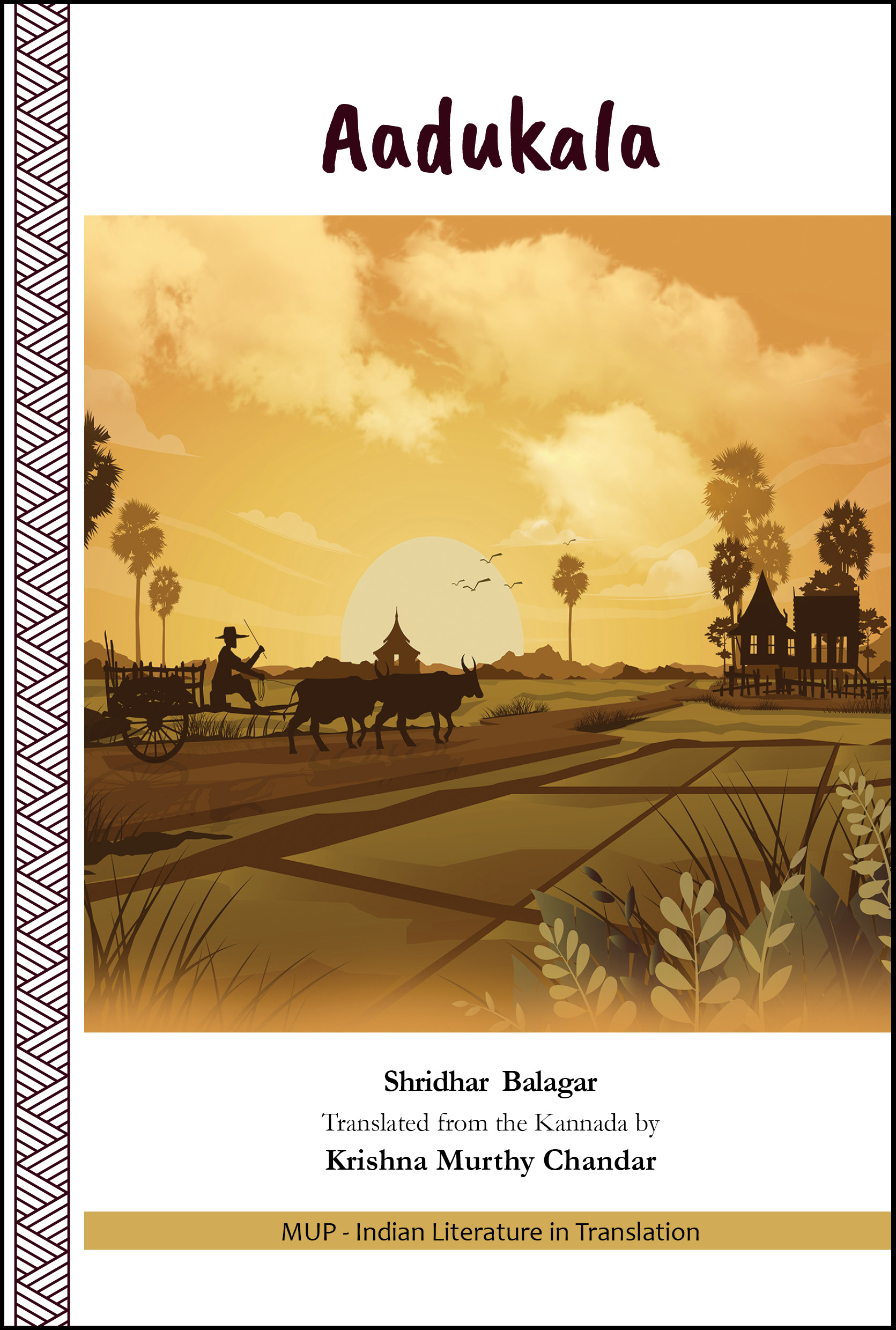
Aadukala
₹300.00
Author: Shridhar Balagar Translator: Krishna Murthy Chandar
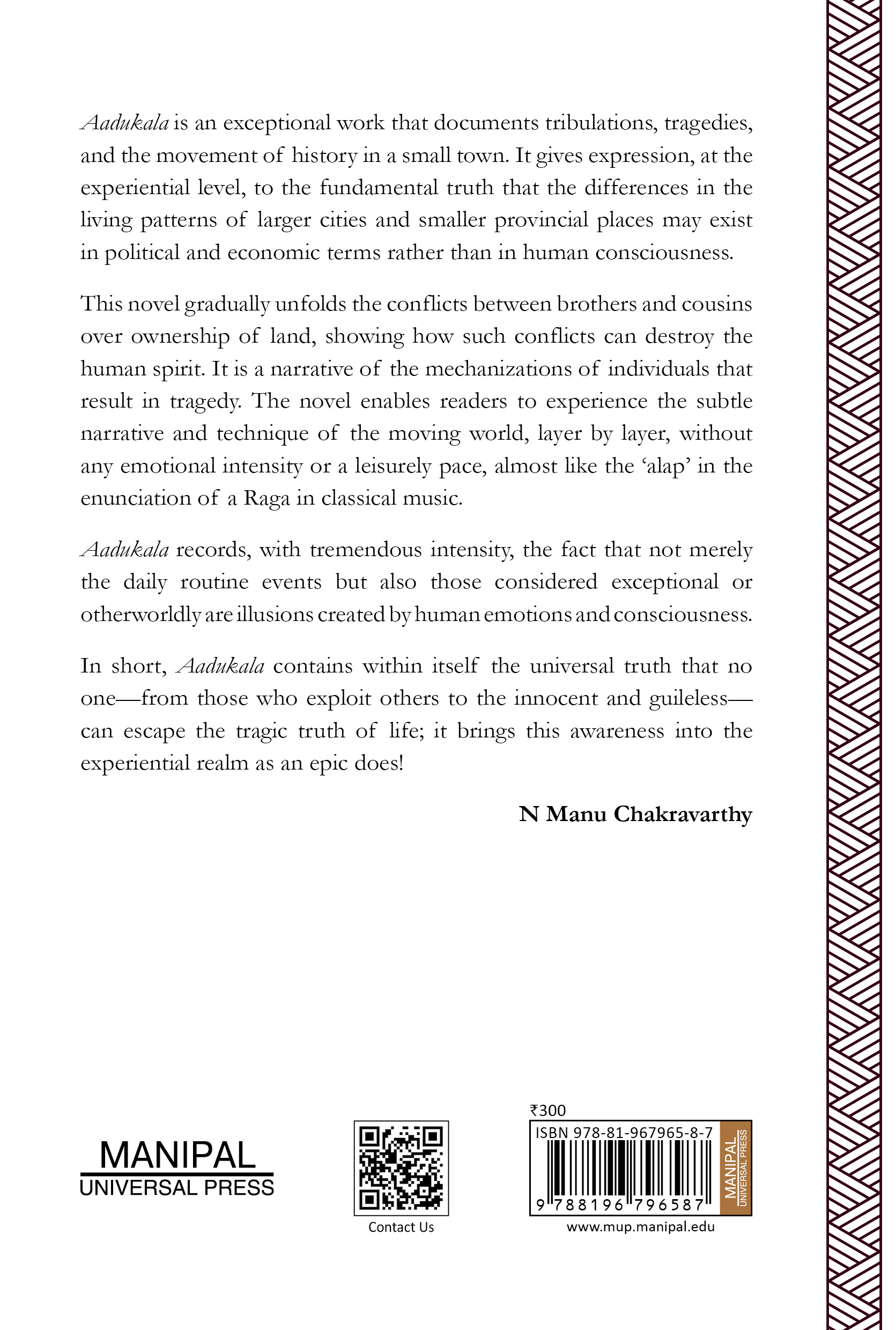
Aadukala is an exceptional work that documents tribulations, tragedies, and the movement of history in a small town. It gives expression, at the experiential level, to the fundamental truth that the differences in the living patterns of larger cities and smaller provincial places may exist in political and economic terms rather than in human consciousness.
This novel gradually unfolds the conflicts between brothers and cousins over ownership of land, showing how such conflicts can destroy the human spirit. It is a narrative of the mechanizations of individuals that result in tragedy. The novel enables readers to experience the subtle narrative and technique of the moving world, layer by layer, without any emotional intensity or a leisurely pace, almost like the ‘alap’ in the enunciation of a Raga in classical music.
Aadukala records, with tremendous intensity, the fact that not merely the daily routine events but also those considered exceptional or otherworldly are illusions created by human emotions and consciousness.
Interested readers may write to us at mup@manipal.edu about purchasing the book.
Also available on |
| Author | |
|---|---|
| Format |
Related products
-
Bamonn: Story of a Konkani Roman Catholic
₹255.00Author: Na D’Souza Translator: S M Pejathaya
Konkani Roman Catholic Christians were converted from other groups by Goan Missionaries long back, keeping the caste system tradition to a large extent in layers such as the Bamonn, the Charodi, the Gawdi, the Nendar, the Shudra, etc. At the time of marriages and other social gatherings they continue to consider caste system norms and customs in the community. Caste system in Indian Christians is vividly described in the novel Bamonn. Christopher Pai of Kalyanpura hails from a Bamonn family and takes great pride in his ancestry. He believes in the stories about his Konkani Roman Catholic ancestors from his elders and about their being true Christians, holding on to their faith despite tremendous pressure to convert to Islam during Tipu Sultan’s regime. He also believes Bamonns are superior to other Christians in the community. After retiring from his job of a Headmaster, he refuels his obsession to retrace his roots and find out the truth about his ancestors. In his journey of self-assurance and faith, will he succeed in his mission to convince his family, his children and the community at large of his glorious ancestry and in still pride in the next generation? . . .
Interested readers may write to us at mup@manipal.edu about purchasing the book.
Also available on
-
Comasya Dhakka
₹195.00Author: Shivarama Karanth Translator: Ananthapadmanabha Shastri
Set in the coastal Karavali region of Karnataka, Chomasya Dakka is the story of Coma, a Dalit bonded-laborer. Set in the pre-independent India, Comasya Dakka tells a poignant tale of dalit lives, and the suppression of their fundamental rights and identity through the character of Coma. Denied the right to even till and cultivate their own land due to their caste and identity, Coma and his children work as bonded-labourers for their landlord, Sankappayya. The plot of the novel follows the lives of Coma and his children and the tragedies that befall them. The original work in Kannada, Comana Dudi, was adapted into a well-acclaimed, national award-winning film in the year 1975. Directed by B V Karanth, it won the Swarna Kamal, Indias National Award for the Best Film in the year 1976.
Interested readers may write to us at mup@manipal.edu about purchasing the book.
Also available on
-
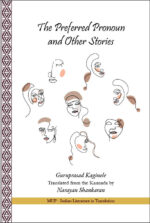
The Preferred Pronoun and Other Stories
₹400.00Author: Guruprasad Kaginele, Translator: Narayan Shankaran
The Preferred Pronoun and Other Stories is a unique collection of twelve short stories by Guruprasad Kaginele. These stories arise from the restless tension of being away from one’s roots, the haunting nostalgia for the home left behind, and the interplay of diverse cultures, while also exploring the process of integrating into a new environment. Set against the backdrop of America and within the medical world, the stories reflect the author’s thoughts and experiences.
From Osama, who nervously sweats after discovering a semiautomatic pistol in a schoolteacher’s house, to Morris, a middle aged individual on a quest for the perfect pronoun after gender transformation, the collection brings a wide array of characters and situations to life. The Nesting, a story that triggers many thoughts with its metaphorical allusions to a home blooming over the doom of another, and The Big Save, a story about a doctor yearning to regain his lost mojo despite realizing that it requires jeopardizing a life to save another, along with other stories, amply illustrate the author’s uncanny prowess in the dramatic presentation of compassion, love, jealousy, torts and their befitting punishments, the thin line between good and evil, and other subtle nuances.The stories depict three phases of a migrant’s life: the naiveté and challenges of a new immigrant, the process of assimilation, and the adaptation to American culture, seamlessly woven together to create a cohesive narrative of diverse experiences. Stemming from the choice to build a life in a foreign land, the narratives explore the politics and ethnic consciousness tied to that journey. Through the lens of a doctor’s work and family life in America, Kaginele captures the dynamic political changes in the country, while revealing subtle shifts in ethnic sensibilities and the evolving nature of interpersonal relationships in the migrant experience.
Interested customers may write to us at mup@manipal.edu about purchasing the book.
Also available on
-
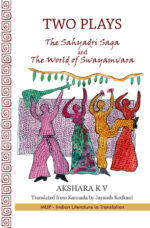
Two Plays – The Sahyadri Saga and The World of Swayamvara
₹199.00Author: Akshara K V Translator: Jayanth Kodkani
These two plays negotiate with the real problems of contemporary India. If Sahyadri Kanda is about the ripples caused in the life of the people in a village on the Western Coast which will soon have a nuclear plant, Swayamvaraloka, is an allegorical narrative set in a small village that extends to include the larger contemporary world. Both the plays dwell on the seeming binaries of village-city, success-failure, modern-traditional while examining the nature of human relationships in the changing world. These plays also reflect an ambition to elevate the real experience to a mythical level. While most playwrights attempt to echo contemporary concerns by reinterpreting history and mythology, for these plays, the epics, their grandeur, the struggle, the wars are not episodes that happen in kingdoms and palaces and battlefields, they are also that which takes place in the microworld of one’s consciousness. Each character in these plays find their own dharma, yet it offers no model for the reader, and remains only a pointer to the complex process of finding it.
Interested readers may write to us at mup@manipal.edu about purchasing the book.
Also available on
eBook available on

-
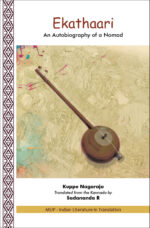
Ekathaari: An Autobiography of a Nomad
₹320.00Author: Kuppe Nagaraja, Translator: Sadananda R
Kuppe Nagaraja’s autobiography is of social importance as it covers the life of a nomadic community. Its uniqueness comes from the fact that the nomadic and semi-nomadic lifestyle is markedly different from that of other communities in the lower socioeconomic strata of society. This autobiography does not glorify the life of its author; it narrates the story of a community through the lens of an individual’s life. It begins as the story of an individual, then becomes the story of a family, and finally transforms into the story of a community. The autobiography grows beyond the traps of self-glorification by providing equal space to all these aspects in a balancedmanner.
– Baraguru Ramachandrappa
Noted Kannada writer, critic and film directorJust as birds migrate to greener pastures, nomadic people move towards regions that have received good rains. Kuppe Nagaraja’s autobiography meaningfully captures their traditions, beliefs, social interactions, and superstitions. This book can also be considered a free gift to social scientists as it provides insights into the life of nomads. It should be noted that it is very difficult to study nomads, as they keep to themselves and often dodge any probing questions. Moreover,
the book provides an answer to all those people who often stand on the footpaths of cities debating the relevance of caste-based reservation in Indian society.
– Krupakara-Senani
The Green Oscar winning wildlife photographersinterested customers may write to us at mup@manipal.edu about purchasing the book.
Also available on
-
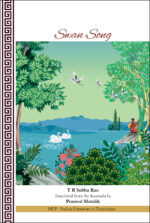
Swan Song
₹320.00Author: T R Subba Rao| Translator: Pramod Mutalik
Swan Song is the poignant tale of Venkatasubbiah, a legendary musician from 18th century Chitradurga. Written by renowned Kannada author Late Shri T R Subba Rao (TaRaSu) and translated into English by Prof Pramod Mutalik, the novel explores the extraordinary journey of an artist whose unwavering dedication to his craft defines his life.
The author weaves together perspectives from people of varied backgrounds to reconstruct Venkatasubbiah’s story, revealing his innate musical genius and determination. It narrates the tale of a musician’s steadfast devotion to art against all odds.
The narrative takes a dramatic turn when Venkatasubbiah defies Tippu Sultan’s order to perform in his palace. To protect the dignity of his art, he sacrifices his ability to sing by cutting off his tongue. Undeterred, he continues to produce swaras through his nose, earning him the metaphorical title of the swan. His life ends while performing, leaving an unforgettable legacy of self-respect and artistic integrity.
Interested readers may write to us at mup@manipal.edu about purchasing the book.Also available on
-
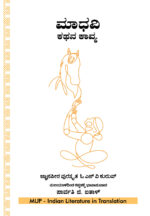
Madhavi Kathana Kavya
₹195.00Author: ONV Kurup Translator: Parvathi G Aithal
ವ್ಯಾಸ ಮಹಾಭಾರತದ ಉದ್ಯೋಗ ಪರ್ವದಲ್ಲಿ ಬರುವ ಒಂದು ಉಪಾಖ್ಯಾನವನ್ನಾಧರಿಸಿ ಬರೆದ ಒಂದು ಕಾವ್ಯವಿದು. ಮೂಲಕಥೆಯಲ್ಲಿ ಮಾಧವಿಯ ಶೋಷಣೆ ಎದ್ದು ಕಾಣುವುದಿಲ್ಲ. ವಿಶ್ವಾಮಿತ್ರ ಶಿಷ್ಯನಾದ ಗಾಲವನು ತನ್ನ ವಿದ್ಯಾಭ್ಯಾಸವನ್ನು ಮುಗಿಸಿ ಹೊರಡುವಾಗ ‘ಗುರುದಕ್ಷಿಣೆಯಾಗಿ ಏನನ್ನು ಕೊಡಲಿ?’ ಎಂದು ಕೇಳುತ್ತಾನೆ. ವಿಶ್ವಾಮಿತ್ರರು ಗುರುದಕ್ಷಿಣೆ ಬೇಡವೆಂದರೂ ಕೇಳುವುದಿಲ್ಲ. ಕೊನೆಗೆ ವಿಶ್ವಾಮಿತ್ರರು, ‘ಒಂದು ಕಿವಿ ಮಾತ್ರ ಕಪ್ಪಾಗಿರುವ ಎಂಟುನೂರು ಶ್ವೇತಾಶ್ವಗಳನ್ನು ಕಾಣಿಕೆಯಾಗಿ ತೆಗೆದುಕೊಂಡು ಬಾ’ ಎಂದು ಹೇಳುತ್ತಾರೆ. ಆದರೆ, ಅಂಥ ವಿಶೇಷ ಗುಣದ ಕುದುರೆಗಳು ಬಹಳ ದುರ್ಲಭವಾದುವೆಂಬುದನ್ನು ಅರಿತಾಗ ಗಾಲವ ದಾನಶೂರ ಯಯಾತಿ ಮಹಾರಾಜನ ಬಳಿ ಸಹಾಯ ಬೇಡಲು ಹೋಗುತ್ತಾನೆ. ಆಗಷ್ಟೇ ದೊಡ್ಡದೊಂದು ಯಾಗ ಮುಗಿಸಿದ ಯಯಾತಿಯ ಬಳಿ ಅಶ್ವಗಳಿಲ್ಲ. ಆದರೆ, ತನ್ನ ಪ್ರತಿಷ್ಠೆಯನ್ನು ಉಳಿಸಿಕೊಳ್ಳುವುದಕ್ಕೋಸ್ಕರ ಯಯಾತಿ ತನ್ನ ಮಗಳು ಮಾಧವಿಯನ್ನು ಗಾಲವನ ವಶಕ್ಕೆ ಬಿಟ್ಟು ‘ರೂಪಸಿಯಾದ ಈಕೆಯನ್ನು ಬೇಕಾದ ಹಾಗೆ ಬಳಸಿಕೊಂಡು ನಿನಗೆ ಬೇಕಾದ ಅಶ್ವಗಳನ್ನು ಪಡೆ’ ಅನ್ನುತ್ತಾನೆ. ಹಾಗೆ ಗಾಲವನು ಮಾಧವಿಯನ್ನು ಮೂರು ಮಂದಿ ರಾಜರ ಬಳಿಗೆ ಕರೆದೊಯ್ದು ಅವರಿಂದ ತಲಾ ಇನ್ನೂರು ಅಶ್ವಗಳನ್ನು ಪಡೆದು ಆ ರಾಜರುಗಳಿಗೆ ಒಂದು ವರ್ಷದ ಮಟ್ಟಿಗೆ ಉಪಯೋಗಿಸಿಕೊಳ್ಳಲು ಮಾಧವಿಯನ್ನು ಒಪ್ಪಿಸುತ್ತಾನೆ. ಮೂಲ ಕಥೆಯಲ್ಲಿ ಮಾಧವಿಯ ಮನಸ್ಸಿನ ಸಂಘರ್ಷಗಳು ವ್ಯಕ್ತವಾಗಿಲ್ಲ. ‘ಪುರುಷರಿಂದ ಲೈಂಗಿಕವಾಗಿ ಎಷ್ಟು ಸಾರಿ ಬಳಸಲ್ಪಟ್ಟರೂ ನನ್ನ ಕನ್ಯತ್ವ ಉಳಿಯುವಂಥ ವರ ನನಗಿದೆಯಾದ್ದರಿಂದ ನಾನು ನಿನಗೆ ಸಹಾಯ ಮಾಡಬಲ್ಲೆ’ ಎಂದು ಗಾಲವನ ಬಳಿ ಅವಳೇ ಹೇಳುತ್ತಾಳೆ . ಓಎನ್ವಿ ಕುರುಪ್ ಬರೆದ ಈ ಕೃತಿಯಲ್ಲಿ ಅವರು ಕೆಲವು ಬದಲಾವಣೆಗಳನ್ನು ಮಾಡಿಕೊಂಡಿದ್ದಾರೆ. ಇಲ್ಲಿ ಇಡೀ ಕಥೆಯನ್ನು ಪುರುಷರಿಂದ ಘೋರ ಅನ್ಯಾಯಕ್ಕೊಳಗಾಗಿ ಮಾನಸಿಕ ಯಾತನೆಯನ್ನು ಅನುಭವಿಸಿರಬಹುದಾದ ಮಾಧವಿಯ ದೃಷ್ಟಿಯಿಂದ ಬರೆಯಲಾಗಿದೆ. ಆದ್ದರಿಂದ ಇದರ ಸ್ತ್ರೀವಾದಿ ಓದು ಒಂದು ವಿಶಿಷ್ಟ ಅನುಭವವನ್ನು ನೀಡುತ್ತದೆ.ಮಲಯಾಳದ ಜ್ಞಾನಪೀಠ ಪ್ರಶಸ್ತಿ ವಿಜೇತ ಸಾಹಿತಿ ಓಎನ್ವಿಕುರುಪ್ ಅವರ ‘ಸ್ವಯಂವರಂ’ ಎಂಬ ಖಂಡಕಾವ್ಯದ ಭಾವಾನುವಾದವಿದು. ಮಹಾಭಾರತದ `ಉದ್ಯೋಗ ಪರ್ವ’ ದಲ್ಲಿ ಬರುವ ಒಂದು ಉಪಾಖ್ಯಾನದಲ್ಲಿ ಪುರುಷ ವರ್ಗದಿಂದ ಘೋರವಾಗಿ ಶೋಷಣೆಗೊಳಗಾದ ಮಾಧವಿ ಈ ಕಥೆಯ ನಾಯಕಿಯಾಗಿದ್ದು ಇಡೀ ಕಾವ್ಯವೇ ಅವಳ ದೃಷ್ಟಿಕೋನದಿಂದ ರಚಿತವಾಗಿದ್ದರಿಂದ ಸ್ತ್ರೀವಾದಿ ಓದಿಗೆ ಒಳಪಡಿಸಲು ಅತ್ಯಂತ ಸೂಕ್ತವಾದ ಕೃತಿಯಿದು ಎಂದೆನ್ನಿಸಿ ಅನುವಾದಕಿ ಅದರ ಶೀರ್ಷಿಕೆಯನ್ನು ‘ಮಾಧವಿ ಕಥನ ಕಾವ್ಯ’ವೆಂದು ಬದಲಾಯಿಸಿದ್ದಾರೆ . ಇದನ್ನು ಓದಿದಾಗೆಲ್ಲ ರಾಮಾಯಣದ ಸೀತೆಯ ನೆನಪಾಗುತ್ತದೆ.
Interested customers may write to us at mup@manipal.edu about purchasing the book.
Also available on
-
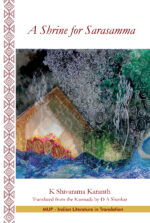
A Shrine for Sarasamma
₹180.00Author: Shivarama Karanth Translator: D A Shankar
A Shrine for Sarasamma is the English translation of Sarasammana Samadhi written by K Shivarama Karanth in 1937, in his early thirties. It offers one of the most authentic and searing accounts of Indian womanhood, which consistently, and through the ages, has suffered deep anguish, humiliation and crushing insult from the oppressive patriarchal culture prevalent in all parts of India and among all castes and classes. The novel is a classic in Kannada and the English translation is an attempt to bring to the English reading audience a taste of the regional classic.
Interested readers may write to us at mup@manipal.edu about purchasing the book.
Also available on