
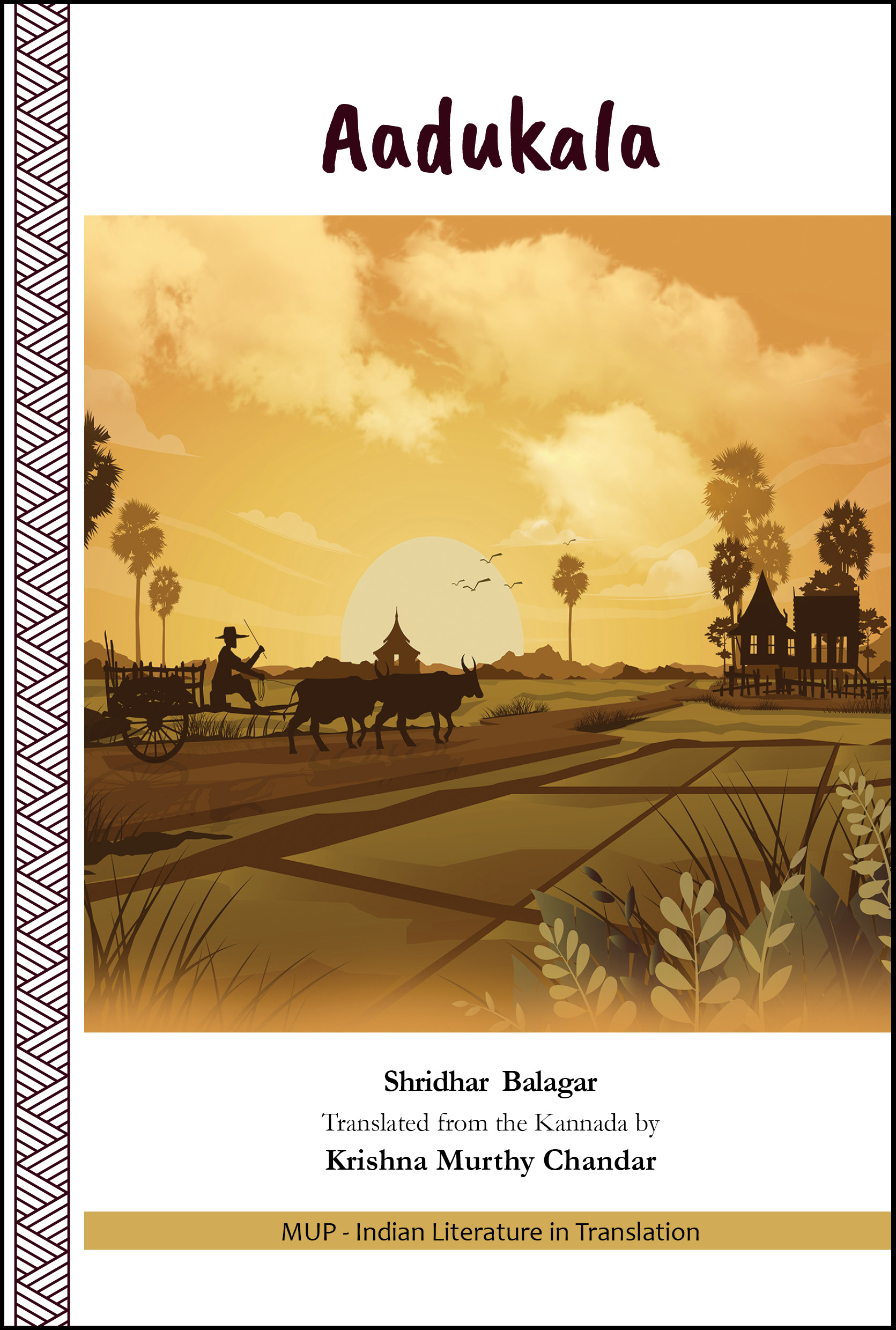
Aadukala
₹300.00
Author: Shridhar Balagar Translator: Krishna Murthy Chandar
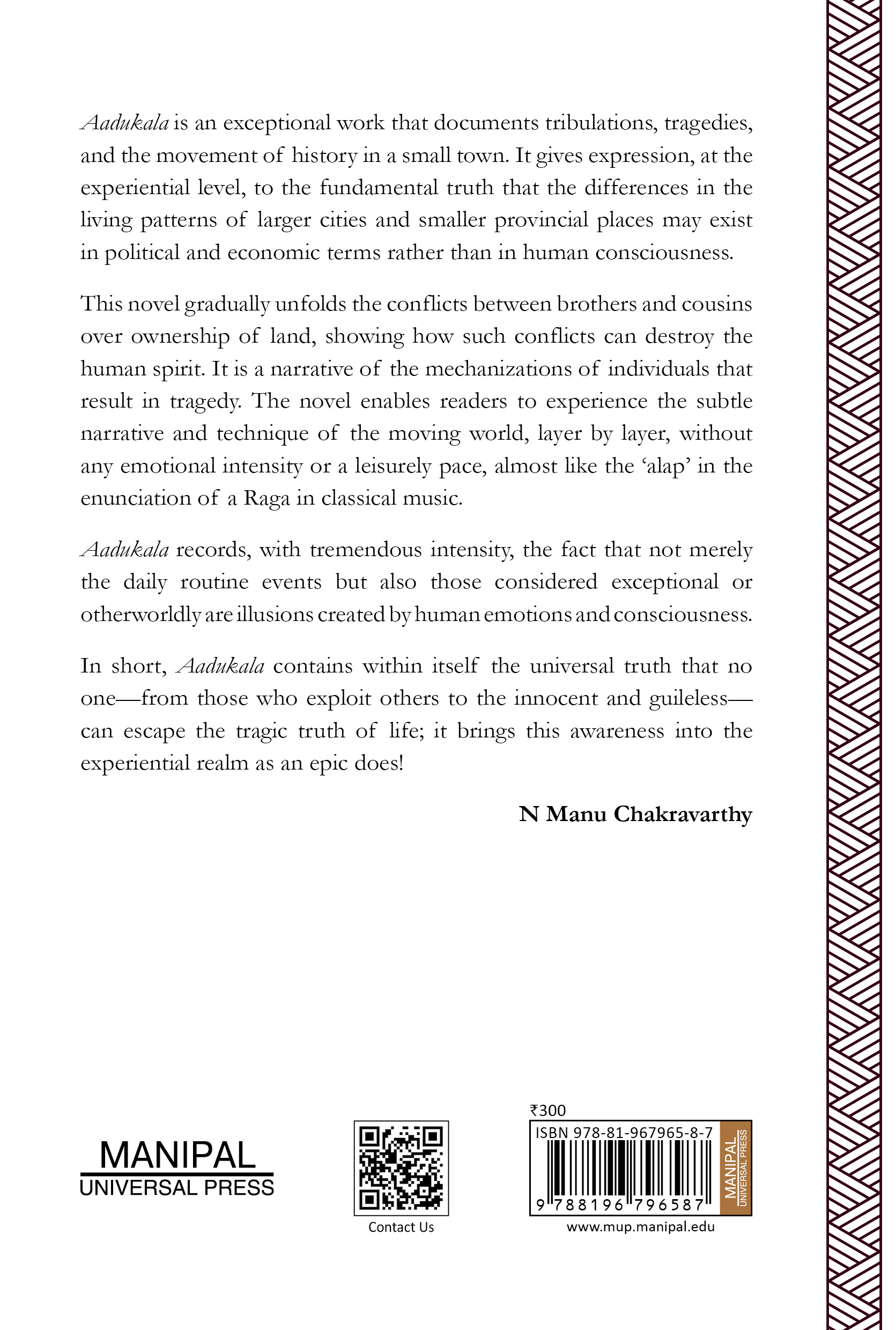
Aadukala is an exceptional work that documents tribulations, tragedies, and the movement of history in a small town. It gives expression, at the experiential level, to the fundamental truth that the differences in the living patterns of larger cities and smaller provincial places may exist in political and economic terms rather than in human consciousness.
This novel gradually unfolds the conflicts between brothers and cousins over ownership of land, showing how such conflicts can destroy the human spirit. It is a narrative of the mechanizations of individuals that result in tragedy. The novel enables readers to experience the subtle narrative and technique of the moving world, layer by layer, without any emotional intensity or a leisurely pace, almost like the ‘alap’ in the enunciation of a Raga in classical music.
Aadukala records, with tremendous intensity, the fact that not merely the daily routine events but also those considered exceptional or otherworldly are illusions created by human emotions and consciousness.
Interested readers may write to us at mup@manipal.edu about purchasing the book.
Also available on |
| Author | |
|---|---|
| Format |
Related products
-
Pot of Butter and other short stories
₹250.00Author: Sunanda Belgaumkar Translator: Sa Usha, Vaijayanti Suryanarayana
Pot of Butter and other Short Stories is a collection of nine short stories, originally composed by Sunanda Belgaumkar in Kannada, handpicked and translated from her collections – Kajjaya and Koduvudenu Kombudenu. The bulk of her literary work including the stories in this book are inspired by the experiences in her early life, in the rustic and robust atmosphere of Dharwad. Her stories are predominantly semiautobiographical, laced with a liberal dose of artistic freedom.
This collection weaves together her writings on the underprivileged and marginalized as seen from the comfort of her palatial home, but rendered with compassion and empathy. Often, we find her narrative infused with self-directed questions such as, “What if I was in her shoes? ” or “Could that have been me? ” These stories are reflections on human nature, suffering, and destiny. There is hope, there is despair. There is love, there is longing. There is defeat, and there is triumph. In her stories, an oft-recurring metaphor for picking up one’s life after loss is a scorching summer followed by a torrential downpour and subsequently a plant springing to life.
As a translation, this book attempts to introduce Sunanda Belgaumkar’s literary and artistic creations to the non-Kannada reader, retaining as much of the indigenous elements of the original writings as possible. In doing so, it seeks to preserve the cultural climate of North Karnataka as it was around fifty years ago.
Interested readers may write to us at mup@manipal.edu about purchasing the book.
Also available on
-
A Handful of Sesame
₹310.00Author: Srinivas B Vaidya, Translator: Maithreyi Karnoor
With a captivating start, A Handful of Sesame plunges us into the heart of the dying years of the 1857 mutiny. But the mutiny is largely a backdrop to the novel. When Kamalanabh of Kashi is manipulated by an impoverished Brahmin of Navalgund into marrying his daughter, the novel becomes basically the story of an internal migration. This is rare, and it remains one of the strengths of the novel. We are so used to speaking of migration across the postcolonial bridge and accredited national borders that we forget that India is a country of endless internal migrations – in the past and the present.
Interested readers may write to us at mup@manipal.edu about purchasing the book.
Also available on
-
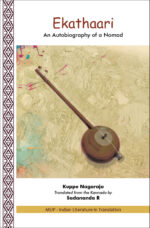
Ekathaari: An Autobiography of a Nomad
₹320.00Author: Kuppe Nagaraja, Translator: Sadananda R
Kuppe Nagaraja’s autobiography is of social importance as it covers the life of a nomadic community. Its uniqueness comes from the fact that the nomadic and semi-nomadic lifestyle is markedly different from that of other communities in the lower socioeconomic strata of society. This autobiography does not glorify the life of its author; it narrates the story of a community through the lens of an individual’s life. It begins as the story of an individual, then becomes the story of a family, and finally transforms into the story of a community. The autobiography grows beyond the traps of self-glorification by providing equal space to all these aspects in a balancedmanner.
– Baraguru Ramachandrappa
Noted Kannada writer, critic and film directorJust as birds migrate to greener pastures, nomadic people move towards regions that have received good rains. Kuppe Nagaraja’s autobiography meaningfully captures their traditions, beliefs, social interactions, and superstitions. This book can also be considered a free gift to social scientists as it provides insights into the life of nomads. It should be noted that it is very difficult to study nomads, as they keep to themselves and often dodge any probing questions. Moreover,
the book provides an answer to all those people who often stand on the footpaths of cities debating the relevance of caste-based reservation in Indian society.
– Krupakara-Senani
The Green Oscar winning wildlife photographersinterested customers may write to us at mup@manipal.edu about purchasing the book.
Also available on
-
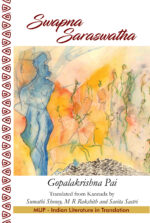
Swapna Saraswatha
₹530.00Author: Gopalakrishna Pai Translator: Sumathi Shenoy, M R Rakshith, Savita Sastri
Swapna Saraswatha is the saga of migration of a community called Saraswaths in the west coast of India, extending from Goa to the south of Mangalore. It captures the dominance of a colonial power over the region that began with the entry of the Portuguese about four hundred years ago. The novel is a graphic description of the displacement of this strongly-rooted community which saw its resurrection in a new area. In the course of its narrative, the novel traces the gradual changes in the structure of the family that moved from a closely knit joint family of the bygone era to the nuclear family. It also deals with the factors that are responsible for the change in value systems of individuals in the wake of such paradigm shifts. With its vast canvas, it remarkably weaves fiction with myth and history, peppered with cultural details and linguistic nuances. The narration in Swapna Saraswatha progresses in the form of an epic detailing the story of nine generations spread over a period of two hundred and fifty years from 1510 to about 1760. It encompasses more than a hundred and fifty characters which include Hindus, Muslims, Christians, chieftains, traders, farmers, priests and black magicians, and covers a range of themes spread across folk tales, legends, armies, myths and a sprinkling of history.
-
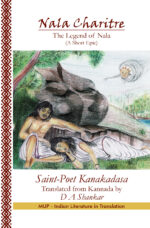
Nala Charitre: The Legend of Nala(A Short Epic)
₹295.00This book presents the mythological narrative of Nala-Damayanti as an epic poem in English. Among the luminaries of sixteenth century Bhakti tradition, Kanakadasa’s literary and musical compositions (kirtanes) are imbued with philosophical meanings, which show immense formative influence on the cultural and literary scene of Karnataka. Also, Kanakadasa’s literary works such as Mohana Tarangini, Haribhaktisara, and the eminent allegorical masterpiece Ramadhanya Charitre incorporate metaphors taken from everyday life, which fascinate the commoners and offers them respite from mundane life-struggles. While such metaphorical expressions represent a remarkable trend in Bhakti poetry, in Kanakadasa?s depiction of Nala and Damayanti’s misfortunes, the toilsome life of common men and women stares forth. Hauled out of their palatial leisurely living, a curious turn of events compels them to survive amidst endless suffering. On one hand Nala Charitre is a poignant story of love, and on the other, it thematizes human existence, humandivine relationship and simplifies poetry to reach the audience beyond the limited circle of literates. As the Bhakti Literature assimilates the vernacular into devotional poetry, Kanakadasa?s epic poem interweaves mythological themes from Mahabharata with struggles of medieval Indian society, thus overcoming the binaries of human and divine.
-
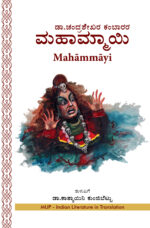
Mahāmmāyi
₹195.00Author: Chandrasekhara Kambara, Translator: Kathyayini Kunjibettu
Mahāmmāyi is the story of the legend of Shatavithaayi – the Goddess of death, and her adopted son Sambhashiva. Out of affection for her son, Goddess Shatavithaayi blesses him with the “power of life”. The blessing was that death will evade the people who are treated by Sambashiva. But a certain condition set by Shatavithaayi forbade him from healing every ill man. The condition was that, if Shatavithaayi stood on the right side of the patient, Sambhashiva could treat that person and he would live; but, if she stood on the left side of the patient, he should not treat that person as his death was inevitable. Through a distinct method of story-telling, the story follows the life of Sambhashiva as he begins to question the ideas of fate and destiny. Thus, the conflict between fate and human efforts to change that fate is vividly described in this play.Interested readers may write to us at mup@manipal.edu about purchasing the book.
Also available on
-
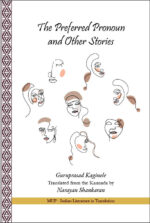
The Preferred Pronoun and Other Stories
₹400.00Author: Guruprasad Kaginele, Translator: Narayan Shankaran
The Preferred Pronoun and Other Stories is a unique collection of twelve short stories by Guruprasad Kaginele. These stories arise from the restless tension of being away from one’s roots, the haunting nostalgia for the home left behind, and the interplay of diverse cultures, while also exploring the process of integrating into a new environment. Set against the backdrop of America and within the medical world, the stories reflect the author’s thoughts and experiences.
From Osama, who nervously sweats after discovering a semiautomatic pistol in a schoolteacher’s house, to Morris, a middle aged individual on a quest for the perfect pronoun after gender transformation, the collection brings a wide array of characters and situations to life. The Nesting, a story that triggers many thoughts with its metaphorical allusions to a home blooming over the doom of another, and The Big Save, a story about a doctor yearning to regain his lost mojo despite realizing that it requires jeopardizing a life to save another, along with other stories, amply illustrate the author’s uncanny prowess in the dramatic presentation of compassion, love, jealousy, torts and their befitting punishments, the thin line between good and evil, and other subtle nuances.The stories depict three phases of a migrant’s life: the naiveté and challenges of a new immigrant, the process of assimilation, and the adaptation to American culture, seamlessly woven together to create a cohesive narrative of diverse experiences. Stemming from the choice to build a life in a foreign land, the narratives explore the politics and ethnic consciousness tied to that journey. Through the lens of a doctor’s work and family life in America, Kaginele captures the dynamic political changes in the country, while revealing subtle shifts in ethnic sensibilities and the evolving nature of interpersonal relationships in the migrant experience.
Interested customers may write to us at mup@manipal.edu about purchasing the book.
Also available on
-

BAKA – Collection of Two Plays
₹340.00Author: M S Keshava Prabhu, Translator: L V Shantakumari
Baka dramatizes the episode of Bakasura, from the Indian epic, Mahabharata. Baka is a cannibal demon that terrorizes a village with its horrifying attacks. The king of the village strikes an agreement with the demon, putting its people in peril. They live in constant fear for years until the sudden arrival of a hero changes everything.
A theatrical and evocative narration, this play satirically mirrors society’s greed and irresponsibility. It depicts power struggles through the conflict that arises between Baka the demon, the cowardly king, and the oppressed people.Interested customers may write to us at mup@manipal.edu about purchasing the book.Also available on