
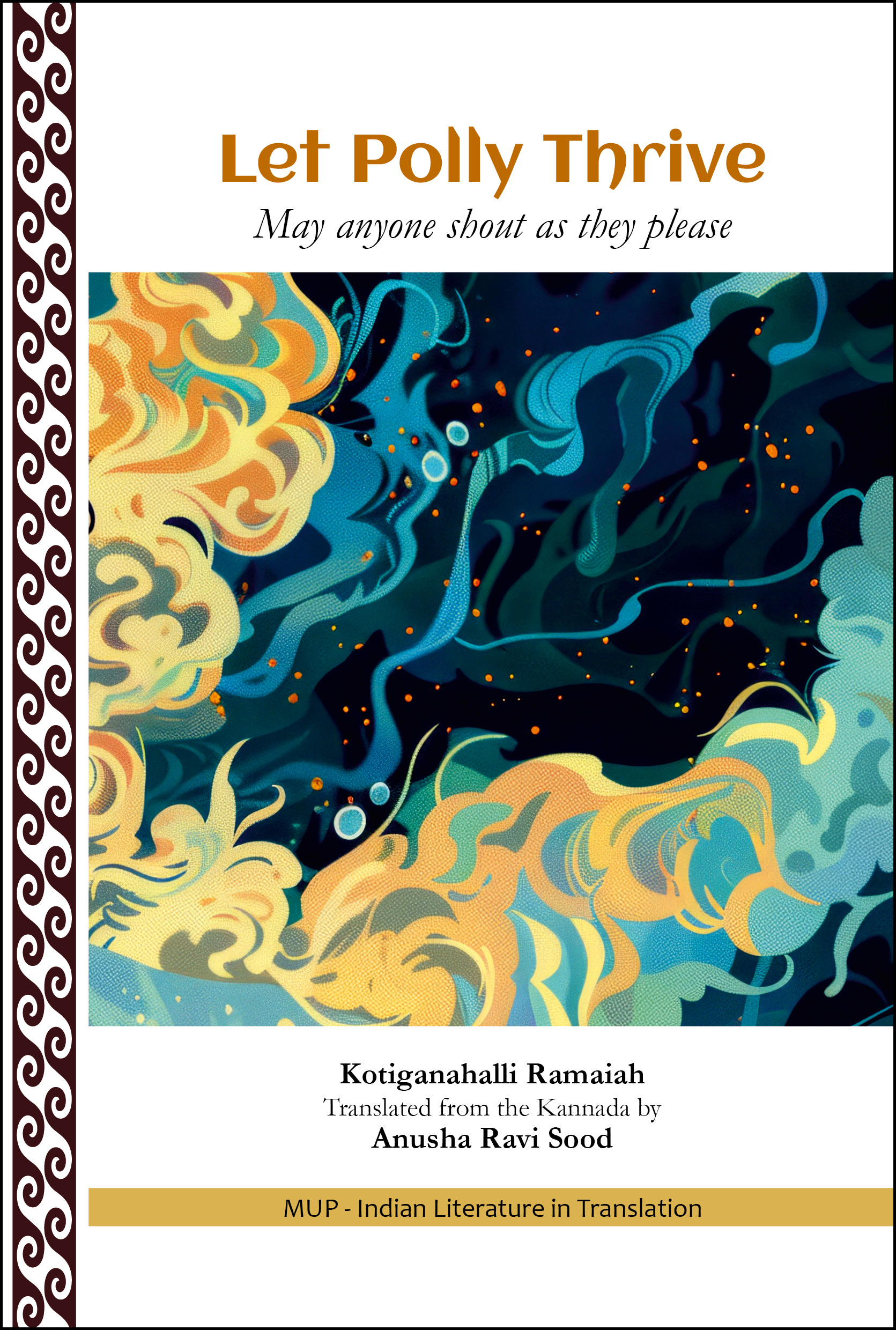
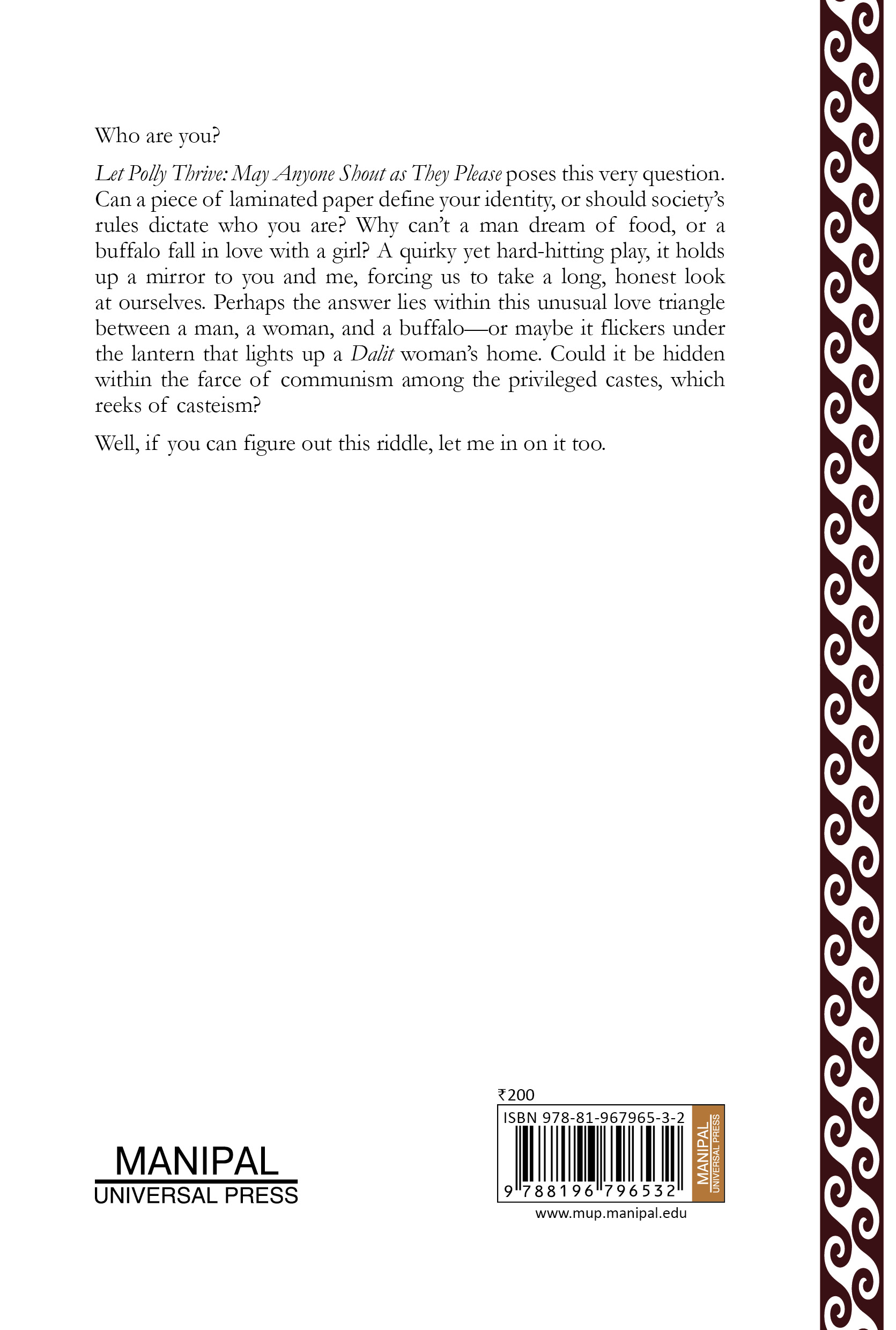
Let Polly Thrive: May anyone shout as they please
₹200.00
Author: Kotiganahalli Ramaiah, Translator: Anusha Ravi Sood
Who are you?
Let Polly Thrive: May anyone shout as they please poses this very question. Can a piece of laminated paper define your identity, or should society’s rules dictate who you are? Why can’t a man dream of food, or a buffalo fall in love with a girl? A quirky yet hard-hitting play, it holds up a mirror to you and me, forcing us to take a long, honest look at ourselves. Perhaps the answer lies within this unusual love triangle between a man, a woman, and a buffalo—or maybe it flickers under the lantern that lights up a Dalit woman’s home. Could it be hidden within the farce of communism among the privileged castes, which reeks of casteism?
Well, if you can figure out this riddle, let me in on it too.
Interested readers may write to us at mup@manipal.edu about purchasing the book.
Also available on

| Format |
|---|
Customer Reviews
There are no reviews yet.
Related products
-
Unheard Sounds Flow On
₹315.00Author: K Mahalinga, Translator: T K Ravindran
In spite of being one of the oldest members of the Dravidian family of languages, Tulu, unfortunately, has not yet found the recognition that it richly deserves in the modern world. Since modernity privileges the written over the spoken, the Tulu language that is abundantly blessed with oral literature has been placed on the fringes of modern literary world. Ironically, Tulu is still engaged in a desperate fight for official status in a country that boasts of its cultural and linguistic diversity. The motives behind the translation of Nanajjer Sude Tirgayer, hailed as the first modern Tulu novel, into English refuse to remain apolitical in this context.
The novel, which has already been translated into Kannada, Konkani and Malayalam, beautifully captures the pulse of rusticity that characterizes the life of a village community that lived its life with its love-hate relationship with nature, more than 75 years ago in a Tulu speaking village in the south-western part of Karnataka. Besides bringing alive the socio-cultural practices that find their articulation through the natural linguistic plurality ingrained in the village psyche, the novel touches upon the duality of human nature that leaves man perennially condemned to an inner crisis.
Interested customers may write to us at mup@manipal.edu about purchasing the book.
Also available on
-
Kaitan Gandhi’s Freedom Struggle
₹280.00Author: Na D’Souza Translator: B Gangadharamurthy
Kaitan Gandhiya Swatantrya Horata is one of the very few novels written in Kannada on the Gandhian phase of the Indian freedom struggle. It is not globally unknown that Gandhi not only changed the idiom of the struggle and successfully experimented his lifetime-belief in non-violence on the vast canvas but also made it decisively inclusive. Kaitan Gandhi’s Freedom Struggle thematically illuminates these two crucial aspects of the great struggle and grapples with the naked truth as Charles, the priest in the novel revealingly says,The rulers, whosoever it is, are rulers. Caste, colour, or country does not matter to them. All are wicked. Like in all true works of realist literature, the author, here too, creatively blends the individual, the social, and the historical in such a way that the novel poignantly unfolds the true spirit of quest for freedom and humanity.
Interested readers may write to us at mup@manipal.edu about purchasing the book.
Also available on
-
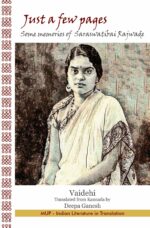
Just a few pages: Some Memories of Saraswatibai Rajwade
₹210.00Author: Vaidehi, Translator: Deepa Ganesh
This book is a coming together of two women writers of modern Kannada literature; one from its early period, the other, a contemporary. Saraswati Bai Rajwade, the early writer, became a fable, a mythology, leaving behind only the shadows of her writing. Vaidehi, the contemporary writer, reinvents Rajwade from the folds of history and gives her a life in the present. Saraswati Bai Rajwade was born into a poor family in the Dakshina Kannada of yore. By chance, she stepped into theatre and later into films. But all the glory that came to her unexpectedly, vanished just as suddenly. She later became the wife of a rich and high official, travelled abroad and underwent immense suffering. In her pain and loneliness, she took to books and also began to write and attained glory as a writer. In the last years of her life, she returned to a life of austerity and anonymity. Vaidehi has collected bits and pieces from her life and writing, presenting before us a unique tapestry. In this tapestry, Vaidehi?s perceptions criss-cross with Rajwade?s life and writing. Art does not reside in the object, but in its close encounter with life. This work unfolds before us as a grand illustration of such twin narratives.
Interested readers may write to us at mup@manipal.edu about purchasing the book.
Also available on
-
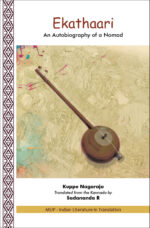
Ekathaari: An Autobiography of a Nomad
₹320.00Author: Kuppe Nagaraja, Translator: Sadananda R
Kuppe Nagaraja’s autobiography is of social importance as it covers the life of a nomadic community. Its uniqueness comes from the fact that the nomadic and semi-nomadic lifestyle is markedly different from that of other communities in the lower socioeconomic strata of society. This autobiography does not glorify the life of its author; it narrates the story of a community through the lens of an individual’s life. It begins as the story of an individual, then becomes the story of a family, and finally transforms into the story of a community. The autobiography grows beyond the traps of self-glorification by providing equal space to all these aspects in a balancedmanner.
– Baraguru Ramachandrappa
Noted Kannada writer, critic and film directorJust as birds migrate to greener pastures, nomadic people move towards regions that have received good rains. Kuppe Nagaraja’s autobiography meaningfully captures their traditions, beliefs, social interactions, and superstitions. This book can also be considered a free gift to social scientists as it provides insights into the life of nomads. It should be noted that it is very difficult to study nomads, as they keep to themselves and often dodge any probing questions.
Moreover, the book provides an answer to all those people who often stand on the footpaths of cities debating the relevance of caste-based reservation in Indian society.– Krupakara-Senani
The Green Oscar winning wildlife photographersInterested customers may write to us at mup@manipal.edu about purchasing the book.
Also available on
-
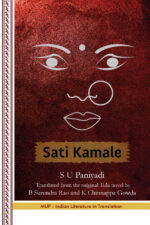
Sati Kamale
₹240.00Author: S U Paniyadi Translators: B Surendra Rao, K Chinnappa Gowda
This eponymous novel is centred on Kamale, who is an embodiment of wifely virtue. For fifteen long years Kamale lives the life of a widow to the outside world, nurturing the hopes of reuniting with the husband one day. Alone in the room, each night she wears her marks of a married woman with the dagger gifted by Umesha next to her. It could be seen as an exposition on the then existing indigenous discourse in India in the 19th century and early 20th century. Kamale, in her rigorous commitment and in retrieving her husband from ‘death’, is fashioned after Savithri in an intertextual reference to Mahabharata’s episode of “Satyavan and Savithri”. The novel might look conservative for the present-day reader, but it is a representative literary work of the time when Paniyadi, among many others, wanted to regain the independent status of the Tulu language which had somehow slipped out of its pedestal.
Interested readers may write to us at mup@manipal.edu about purchasing the book.
Also available on
-
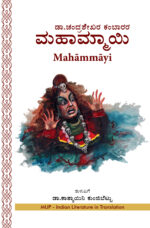
Mahāmmāyi
₹195.00Author: Chandrasekhara Kambara, Translator: Kathyayini Kunjibettu
Mahāmmāyi is the story of the legend of Shatavithaayi – the Goddess of death, and her adopted son Sambhashiva. Out of affection for her son, Goddess Shatavithaayi blesses him with the “power of life”. The blessing was that death will evade the people who are treated by Sambashiva. But a certain condition set by Shatavithaayi forbade him from healing every ill man. The condition was that, if Shatavithaayi stood on the right side of the patient, Sambhashiva could treat that person and he would live; but, if she stood on the left side of the patient, he should not treat that person as his death was inevitable. Through a distinct method of story-telling, the story follows the life of Sambhashiva as he begins to question the ideas of fate and destiny. Thus, the conflict between fate and human efforts to change that fate is vividly described in this play.Interested readers may write to us at mup@manipal.edu about purchasing the book.
Also available on
-
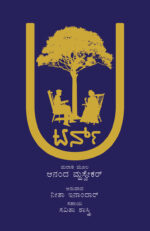
U-Turn
₹180.00Author: Anand Mhasvekar, Translator: Neeta Inamdar
ಮರಾಠಿ ನಾಟಕ. ಯು-ಟರ್ನ್ ಮಹಾರಾಷ್ಟ್ರ ಮತ್ತು ಅದರಾಚೆಗೆ 585 ಕ್ಕೂ ಹೆಚ್ಚು ಪ್ರದರ್ಶನಗಳೊಂದಿಗೆ ಲಕ್ಷಾಂತರ ಹೃದಯಗಳನ್ನು ಗೆದ್ದಿದೆ. ಗುಜರಾತಿಯಲ್ಲಿ ಇದರ ಅನುವಾದವು 115 ಕ್ಕೂ ಹೆಚ್ಚು ಪ್ರದರ್ಶನಗಳನ್ನು ಕಂಡಿದೆ ಮತ್ತು ಹಿಂದಿಯಲ್ಲಿ 50 ಕ್ಕೂ ಹೆಚ್ಚು ಪ್ರದರ್ಶನಗಳನ್ನು ಕಂಡಿದೆ. ಈ ಯಶಸ್ಸು ಶ್ರೀಮತಿ ಸವಿತಾ ಶಾಸ್ತ್ರಿಯವರ ಬೆಂಬಲದೊಂದಿಗೆ ಕನ್ನಡದಲ್ಲಿ ಈ ಕೃತಿಯನ್ನು ಅನುವಾದಿಸಲು ಪ್ರೊ.ನೀತಾ ಇನಾಮದಾರ್ ಅವರನ್ನು ಪ್ರೋತ್ಸಾಹಿಸಿತು. ನಾಟಕವು ಉದ್ದಕ್ಕೂ ಕೇವಲ ಎರಡು ಪಾತ್ರಗಳನ್ನು ಹೊಂದಿದೆ ಮತ್ತು ಇಡೀ ಅವಧಿಗೆ ವೇದಿಕೆಯ ಮೇಲಿರುವ ಇಬ್ಬರನ್ನು ಹೊರತುಪಡಿಸಿ ಒಂದೆರಡು ಧ್ವನಿಗಳನ್ನು ಹೊಂದಿದೆ. ನಾಟಕದ ಕೇಂದ್ರ ಕಲ್ಪನೆಯು ಆಧುನಿಕತೆಯನ್ನು ಒಪ್ಪಿಕೊಳ್ಳುವಲ್ಲಿನ ವ್ಯತ್ಯಾಸಗಳು ಮತ್ತು ಎರಡು ವಿಭಿನ್ನ ತಲೆಮಾರುಗಳಲ್ಲಿ ಇದಕ್ಕೆ ಸಂಬಂಧಿಸಿದ ಸಂಘರ್ಷಗಳು. ವಿಚ್ಛೇದಿತ ಸೇನೆಯ ಮೇಜರ್ ಮತ್ತು 50 ರ ದಶಕದ ಅಂತ್ಯದಲ್ಲಿರುವ ವಿಧವೆಯ ನಡುವಿನ ಒಡನಾಟವನ್ನು ಅವರ ಮಕ್ಕಳು ವಿರೋಧಿಸುತ್ತಾರೆ ಮತ್ತು ಅವರು ತಮ್ಮನ್ನು ತಾವು ಆಧುನಿಕತೆಯನ್ನು ಅಳವಡಿಸಿಕೊಂಡರೂ ವಿಭಿನ್ನ ರೀತಿಯಲ್ಲಿ ವ್ಯಕ್ತಪಡಿಸುತ್ತಾರೆ. ನೀತಾ ಇನಾಮದಾರ್ ಅವರು ಮಣಿಪಾಲ್ ವಿಶ್ವವಿದ್ಯಾನಿಲಯದಲ್ಲಿ (MU) ಯುರೋಪಿಯನ್ ಅಧ್ಯಯನ ವಿಭಾಗದ (DES) ಮುಖ್ಯಸ್ಥರಾಗಿದ್ದಾರೆ ಮತ್ತು ಮಣಿಪಾಲ್ ಯೂನಿವರ್ಸಲ್ ಪ್ರೆಸ್ ನ (MUP) ಮುಖ್ಯ ಸಂಪಾದಕರಾಗಿದ್ದಾರೆ. ಸಂಗೀತ ಮತ್ತು ರಂಗಭೂಮಿ ಅವರ ಆಸಕ್ತಿಗಳಾಗಿದ್ದು, ಶ್ರೀಮತಿ ಸವಿತಾ ಶಾಸ್ತ್ರಿ ಅವರ ನೆರವಿನೊಂದಿಗೆ ಈ ಕೆಲಸವನ್ನು ಕೈಗೊಳ್ಳುವಂತೆ ಮಾಡಿತು. ಸವಿತಾ ಶಾಸ್ತ್ರಿ ಅವರು ಮಣಿಪಾಲದ ಮಹಿಳಾ ಉದ್ಯಮಿಯಾಗಿದ್ದು, ಅವರು ಬಾಬಾ ಆಮ್ಟೆ ಅವರ ಆನಂದವನಕ್ಕೆ ಧನಸಹಾಯವನ್ನೂ ಮಾಡುತ್ತಾರೆ. ಅವರು ಮರಾಠಿ, ಹಿಂದಿ ಮತ್ತು ಇಂಗ್ಲಿಷ್ನಲ್ಲಿ ಪುಸ್ತಕಗಳು ಮತ್ತು ನಾಟಕಗಳ ಓದುಗರಾಗಿದ್ದಾರೆ, ಅವರು ಈ ಅನುವಾದ ಯೋಜನೆಗೆ ತಮ್ಮ ಬೆಂಬಲವನ್ನು ನೀಡಿದರು.
Interested readers may write to us at mup@manipal.edu about purchasing the book.
Also available on
-
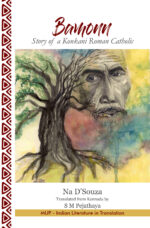
Bamonn: Story of a Konkani Roman Catholic
₹255.00Author: Na D’Souza Translator: S M Pejathaya
Konkani Roman Catholic Christians were converted from other groups by Goan Missionaries long back, keeping the caste system tradition to a large extent in layers such as the Bamonn, the Charodi, the Gawdi, the Nendar, the Shudra, etc. At the time of marriages and other social gatherings they continue to consider caste system norms and customs in the community. Caste system in Indian Christians is vividly described in the novel Bamonn. Christopher Pai of Kalyanpura hails from a Bamonn family and takes great pride in his ancestry. He believes in the stories about his Konkani Roman Catholic ancestors from his elders and about their being true Christians, holding on to their faith despite tremendous pressure to convert to Islam during Tipu Sultan’s regime. He also believes Bamonns are superior to other Christians in the community. After retiring from his job of a Headmaster, he refuels his obsession to retrace his roots and find out the truth about his ancestors. In his journey of self-assurance and faith, will he succeed in his mission to convince his family, his children and the community at large of his glorious ancestry and in still pride in the next generation? . . .
Interested readers may write to us at mup@manipal.edu about purchasing the book.
Also available on
Be the first to review “Let Polly Thrive: May anyone shout as they please”
You must be logged in to post a review.