
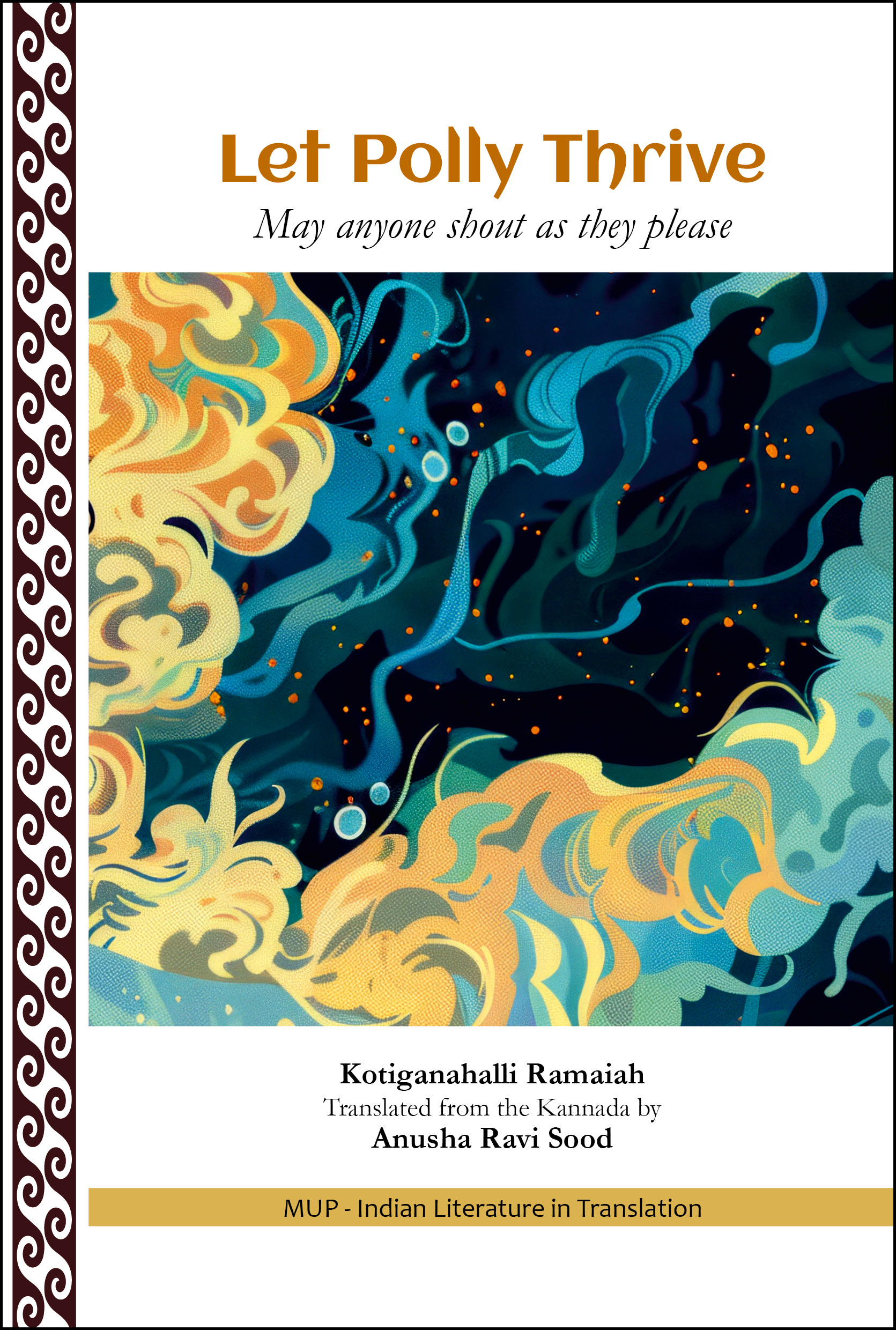
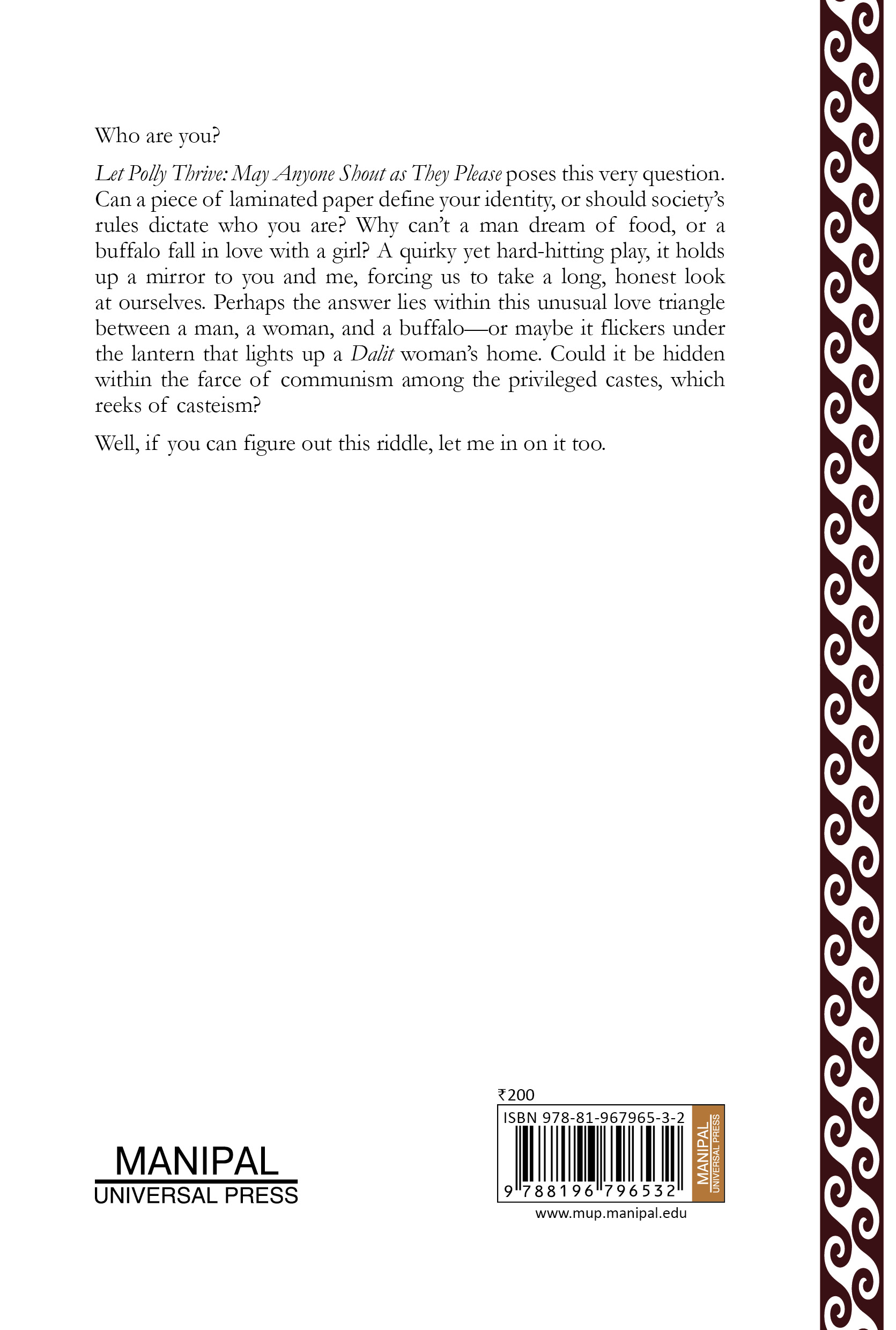
Let Polly Thrive: May anyone shout as they please
₹200.00
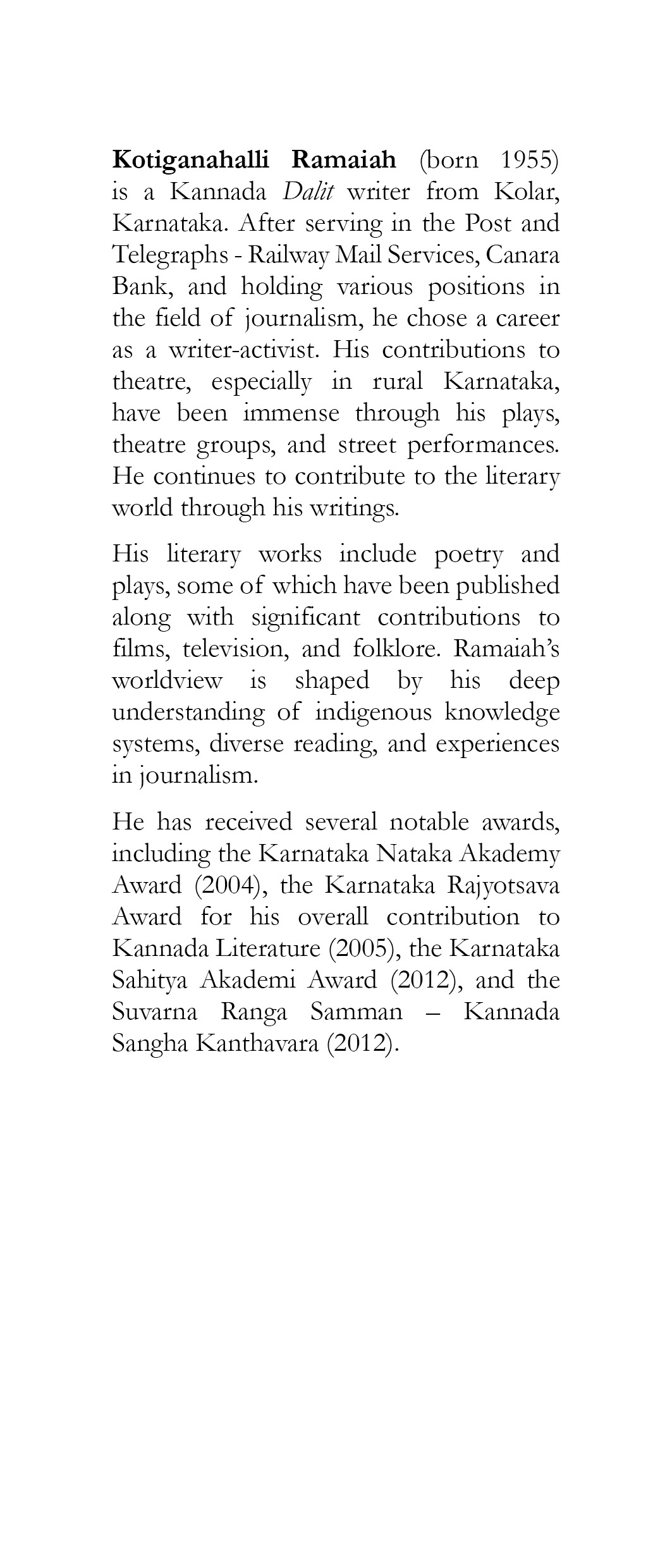
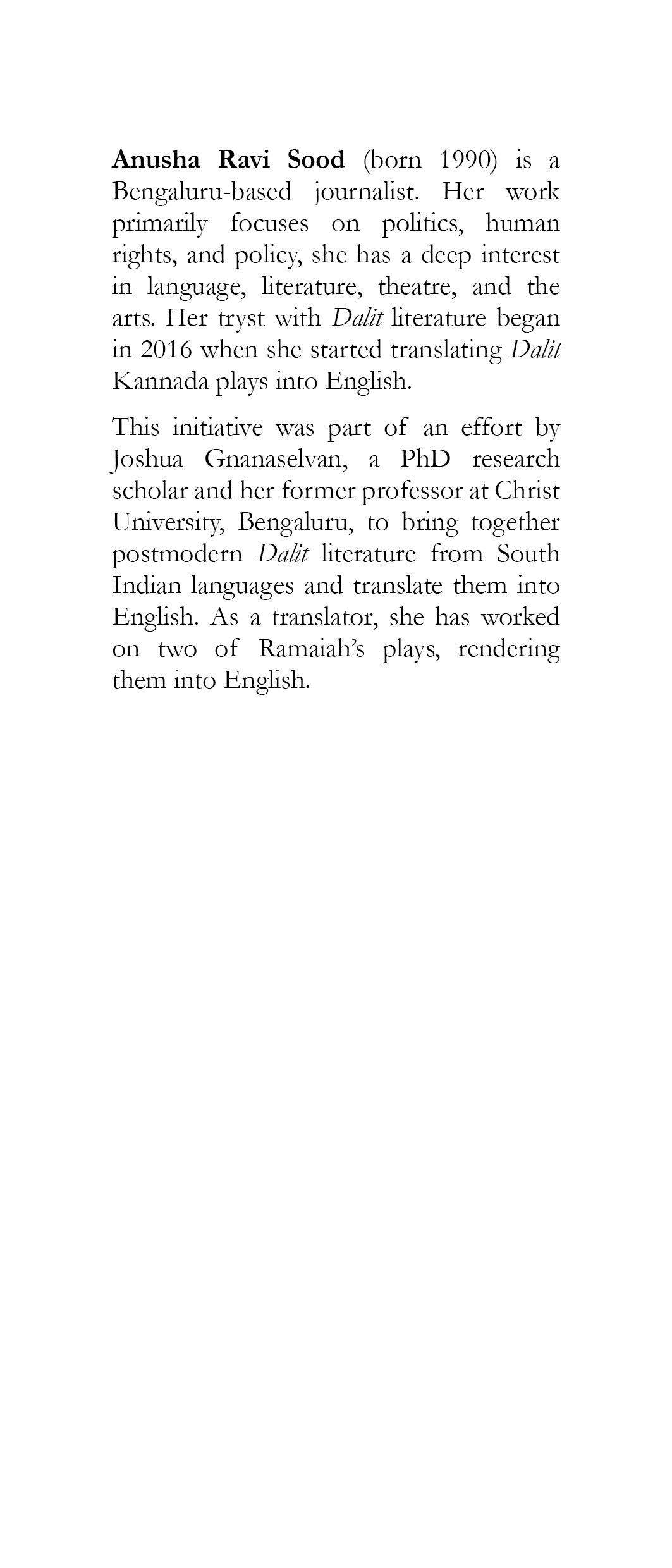
Author: Kotiganahalli Ramaiah, Translator: Anusha Ravi Sood
Who are you?
Let Polly Thrive: May anyone shout as they please poses this very question. Can a piece of laminated paper define your identity, or should society’s rules dictate who you are? Why can’t a man dream of food, or a buffalo fall in love with a girl? A quirky yet hard-hitting play, it holds up a mirror to you and me, forcing us to take a long, honest look at ourselves. Perhaps the answer lies within this unusual love triangle between a man, a woman, and a buffalo—or maybe it flickers under the lantern that lights up a Dalit woman’s home. Could it be hidden within the farce of communism among the privileged castes, which reeks of casteism?
Well, if you can figure out this riddle, let me in on it too.
Interested readers may write to us at mup@manipal.edu about purchasing the book.
Also available on

| Format |
|---|
Customer Reviews
There are no reviews yet.
Related products
-
A Shrine for Sarasamma
₹180.00Author: Shivarama Karanth Translator: D A Shankar
A Shrine for Sarasamma is the English translation of Sarasammana Samadhi written by K Shivarama Karanth in 1937, in his early thirties. It offers one of the most authentic and searing accounts of Indian womanhood, which consistently, and through the ages, has suffered deep anguish, humiliation and crushing insult from the oppressive patriarchal culture prevalent in all parts of India and among all castes and classes. The novel is a classic in Kannada and the English translation is an attempt to bring to the English reading audience a taste of the regional classic.
Interested readers may write to us at mup@manipal.edu about purchasing the book.
Also available on
-
Pot of Butter and other short stories
₹250.00Author: Sunanda Belgaumkar Translator: Sa Usha, Vaijayanti Suryanarayana
Pot of Butter and other Short Stories is a collection of nine short stories, originally composed by Sunanda Belgaumkar in Kannada, handpicked and translated from her collections – Kajjaya and Koduvudenu Kombudenu. The bulk of her literary work including the stories in this book are inspired by the experiences in her early life, in the rustic and robust atmosphere of Dharwad. Her stories are predominantly semiautobiographical, laced with a liberal dose of artistic freedom.
This collection weaves together her writings on the underprivileged and marginalized as seen from the comfort of her palatial home, but rendered with compassion and empathy. Often, we find her narrative infused with self-directed questions such as, “What if I was in her shoes? ” or “Could that have been me? ” These stories are reflections on human nature, suffering, and destiny. There is hope, there is despair. There is love, there is longing. There is defeat, and there is triumph. In her stories, an oft-recurring metaphor for picking up one’s life after loss is a scorching summer followed by a torrential downpour and subsequently a plant springing to life.
As a translation, this book attempts to introduce Sunanda Belgaumkar’s literary and artistic creations to the non-Kannada reader, retaining as much of the indigenous elements of the original writings as possible. In doing so, it seeks to preserve the cultural climate of North Karnataka as it was around fifty years ago.
Interested readers may write to us at mup@manipal.edu about purchasing the book.
Also available on
-
Swan Song
₹320.00Author: T R Subba Rao| Translator: Pramod Mutalik
Swan Song is the poignant tale of Venkatasubbiah, a legendary musician from 18th century Chitradurga. Written by renowned Kannada author Late Shri T R Subba Rao (TaRaSu) and translated into English by Prof Pramod Mutalik, the novel explores the extraordinary journey of an artist whose unwavering dedication to his craft defines his life.
The author weaves together perspectives from people of varied backgrounds to reconstruct Venkatasubbiah’s story, revealing his innate musical genius and determination. It narrates the tale of a musician’s steadfast devotion to art against all odds.
The narrative takes a dramatic turn when Venkatasubbiah defies Tippu Sultan’s order to perform in his palace. To protect the dignity of his art, he sacrifices his ability to sing by cutting off his tongue. Undeterred, he continues to produce swaras through his nose, earning him the metaphorical title of the swan. His life ends while performing, leaving an unforgettable legacy of self-respect and artistic integrity.
Interested readers may write to us at mup@manipal.edu about purchasing the book.Also available on
-
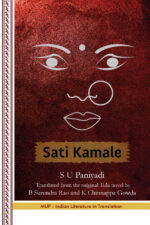
Sati Kamale
₹240.00Author: S U Paniyadi Translators: B Surendra Rao, K Chinnappa Gowda
This eponymous novel is centred on Kamale, who is an embodiment of wifely virtue. For fifteen long years Kamale lives the life of a widow to the outside world, nurturing the hopes of reuniting with the husband one day. Alone in the room, each night she wears her marks of a married woman with the dagger gifted by Umesha next to her. It could be seen as an exposition on the then existing indigenous discourse in India in the 19th century and early 20th century. Kamale, in her rigorous commitment and in retrieving her husband from ‘death’, is fashioned after Savithri in an intertextual reference to Mahabharata’s episode of “Satyavan and Savithri”. The novel might look conservative for the present-day reader, but it is a representative literary work of the time when Paniyadi, among many others, wanted to regain the independent status of the Tulu language which had somehow slipped out of its pedestal.
Interested readers may write to us at mup@manipal.edu about purchasing the book.
Also available on
-
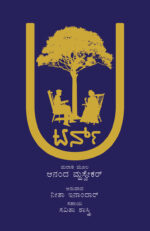
U-Turn
₹180.00Author: Anand Mhasvekar, Translator: Neeta Inamdar
ಮರಾಠಿ ನಾಟಕ. ಯು-ಟರ್ನ್ ಮಹಾರಾಷ್ಟ್ರ ಮತ್ತು ಅದರಾಚೆಗೆ 585 ಕ್ಕೂ ಹೆಚ್ಚು ಪ್ರದರ್ಶನಗಳೊಂದಿಗೆ ಲಕ್ಷಾಂತರ ಹೃದಯಗಳನ್ನು ಗೆದ್ದಿದೆ. ಗುಜರಾತಿಯಲ್ಲಿ ಇದರ ಅನುವಾದವು 115 ಕ್ಕೂ ಹೆಚ್ಚು ಪ್ರದರ್ಶನಗಳನ್ನು ಕಂಡಿದೆ ಮತ್ತು ಹಿಂದಿಯಲ್ಲಿ 50 ಕ್ಕೂ ಹೆಚ್ಚು ಪ್ರದರ್ಶನಗಳನ್ನು ಕಂಡಿದೆ. ಈ ಯಶಸ್ಸು ಶ್ರೀಮತಿ ಸವಿತಾ ಶಾಸ್ತ್ರಿಯವರ ಬೆಂಬಲದೊಂದಿಗೆ ಕನ್ನಡದಲ್ಲಿ ಈ ಕೃತಿಯನ್ನು ಅನುವಾದಿಸಲು ಪ್ರೊ.ನೀತಾ ಇನಾಮದಾರ್ ಅವರನ್ನು ಪ್ರೋತ್ಸಾಹಿಸಿತು. ನಾಟಕವು ಉದ್ದಕ್ಕೂ ಕೇವಲ ಎರಡು ಪಾತ್ರಗಳನ್ನು ಹೊಂದಿದೆ ಮತ್ತು ಇಡೀ ಅವಧಿಗೆ ವೇದಿಕೆಯ ಮೇಲಿರುವ ಇಬ್ಬರನ್ನು ಹೊರತುಪಡಿಸಿ ಒಂದೆರಡು ಧ್ವನಿಗಳನ್ನು ಹೊಂದಿದೆ. ನಾಟಕದ ಕೇಂದ್ರ ಕಲ್ಪನೆಯು ಆಧುನಿಕತೆಯನ್ನು ಒಪ್ಪಿಕೊಳ್ಳುವಲ್ಲಿನ ವ್ಯತ್ಯಾಸಗಳು ಮತ್ತು ಎರಡು ವಿಭಿನ್ನ ತಲೆಮಾರುಗಳಲ್ಲಿ ಇದಕ್ಕೆ ಸಂಬಂಧಿಸಿದ ಸಂಘರ್ಷಗಳು. ವಿಚ್ಛೇದಿತ ಸೇನೆಯ ಮೇಜರ್ ಮತ್ತು 50 ರ ದಶಕದ ಅಂತ್ಯದಲ್ಲಿರುವ ವಿಧವೆಯ ನಡುವಿನ ಒಡನಾಟವನ್ನು ಅವರ ಮಕ್ಕಳು ವಿರೋಧಿಸುತ್ತಾರೆ ಮತ್ತು ಅವರು ತಮ್ಮನ್ನು ತಾವು ಆಧುನಿಕತೆಯನ್ನು ಅಳವಡಿಸಿಕೊಂಡರೂ ವಿಭಿನ್ನ ರೀತಿಯಲ್ಲಿ ವ್ಯಕ್ತಪಡಿಸುತ್ತಾರೆ. ನೀತಾ ಇನಾಮದಾರ್ ಅವರು ಮಣಿಪಾಲ್ ವಿಶ್ವವಿದ್ಯಾನಿಲಯದಲ್ಲಿ (MU) ಯುರೋಪಿಯನ್ ಅಧ್ಯಯನ ವಿಭಾಗದ (DES) ಮುಖ್ಯಸ್ಥರಾಗಿದ್ದಾರೆ ಮತ್ತು ಮಣಿಪಾಲ್ ಯೂನಿವರ್ಸಲ್ ಪ್ರೆಸ್ ನ (MUP) ಮುಖ್ಯ ಸಂಪಾದಕರಾಗಿದ್ದಾರೆ. ಸಂಗೀತ ಮತ್ತು ರಂಗಭೂಮಿ ಅವರ ಆಸಕ್ತಿಗಳಾಗಿದ್ದು, ಶ್ರೀಮತಿ ಸವಿತಾ ಶಾಸ್ತ್ರಿ ಅವರ ನೆರವಿನೊಂದಿಗೆ ಈ ಕೆಲಸವನ್ನು ಕೈಗೊಳ್ಳುವಂತೆ ಮಾಡಿತು. ಸವಿತಾ ಶಾಸ್ತ್ರಿ ಅವರು ಮಣಿಪಾಲದ ಮಹಿಳಾ ಉದ್ಯಮಿಯಾಗಿದ್ದು, ಅವರು ಬಾಬಾ ಆಮ್ಟೆ ಅವರ ಆನಂದವನಕ್ಕೆ ಧನಸಹಾಯವನ್ನೂ ಮಾಡುತ್ತಾರೆ. ಅವರು ಮರಾಠಿ, ಹಿಂದಿ ಮತ್ತು ಇಂಗ್ಲಿಷ್ನಲ್ಲಿ ಪುಸ್ತಕಗಳು ಮತ್ತು ನಾಟಕಗಳ ಓದುಗರಾಗಿದ್ದಾರೆ, ಅವರು ಈ ಅನುವಾದ ಯೋಜನೆಗೆ ತಮ್ಮ ಬೆಂಬಲವನ್ನು ನೀಡಿದರು.
Interested readers may write to us at mup@manipal.edu about purchasing the book.
Also available on
-
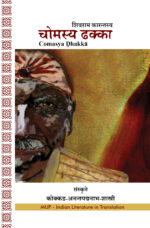
Comasya Dhakka
₹195.00Author: Shivarama Karanth Translator: Ananthapadmanabha Shastri
Set in the coastal Karavali region of Karnataka, Chomasya Dakka is the story of Coma, a Dalit bonded-laborer. Set in the pre-independent India, Comasya Dakka tells a poignant tale of dalit lives, and the suppression of their fundamental rights and identity through the character of Coma. Denied the right to even till and cultivate their own land due to their caste and identity, Coma and his children work as bonded-labourers for their landlord, Sankappayya. The plot of the novel follows the lives of Coma and his children and the tragedies that befall them. The original work in Kannada, Comana Dudi, was adapted into a well-acclaimed, national award-winning film in the year 1975. Directed by B V Karanth, it won the Swarna Kamal, Indias National Award for the Best Film in the year 1976.
Interested readers may write to us at mup@manipal.edu about purchasing the book.
Also available on
-
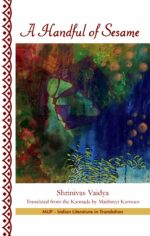
A Handful of Sesame
₹310.00Author: Srinivas B Vaidya, Translator: Maithreyi Karnoor
With a captivating start, A Handful of Sesame plunges us into the heart of the dying years of the 1857 mutiny. But the mutiny is largely a backdrop to the novel. When Kamalanabh of Kashi is manipulated by an impoverished Brahmin of Navalgund into marrying his daughter, the novel becomes basically the story of an internal migration. This is rare, and it remains one of the strengths of the novel. We are so used to speaking of migration across the postcolonial bridge and accredited national borders that we forget that India is a country of endless internal migrations – in the past and the present.
Interested readers may write to us at mup@manipal.edu about purchasing the book.
Also available on
-
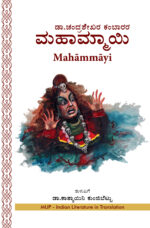
Mahāmmāyi
₹195.00Author: Chandrasekhara Kambara, Translator: Kathyayini Kunjibettu
Mahāmmāyi is the story of the legend of Shatavithaayi – the Goddess of death, and her adopted son Sambhashiva. Out of affection for her son, Goddess Shatavithaayi blesses him with the “power of life”. The blessing was that death will evade the people who are treated by Sambashiva. But a certain condition set by Shatavithaayi forbade him from healing every ill man. The condition was that, if Shatavithaayi stood on the right side of the patient, Sambhashiva could treat that person and he would live; but, if she stood on the left side of the patient, he should not treat that person as his death was inevitable. Through a distinct method of story-telling, the story follows the life of Sambhashiva as he begins to question the ideas of fate and destiny. Thus, the conflict between fate and human efforts to change that fate is vividly described in this play.Interested readers may write to us at mup@manipal.edu about purchasing the book.
Also available on
Be the first to review “Let Polly Thrive: May anyone shout as they please”
You must be logged in to post a review.