
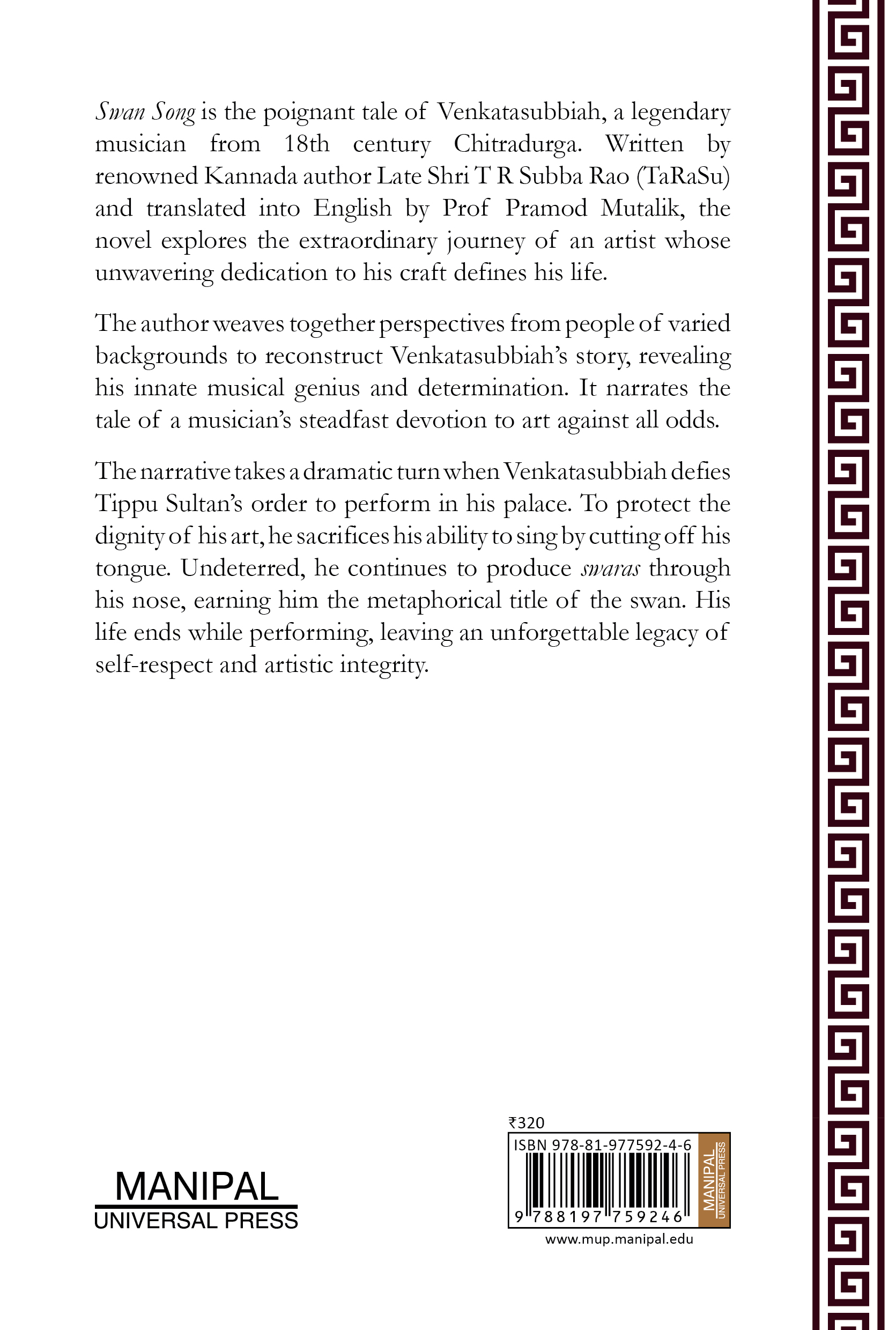
Swan Song
₹320.00
Author: T R Subba Rao| Translator: Pramod Mutalik
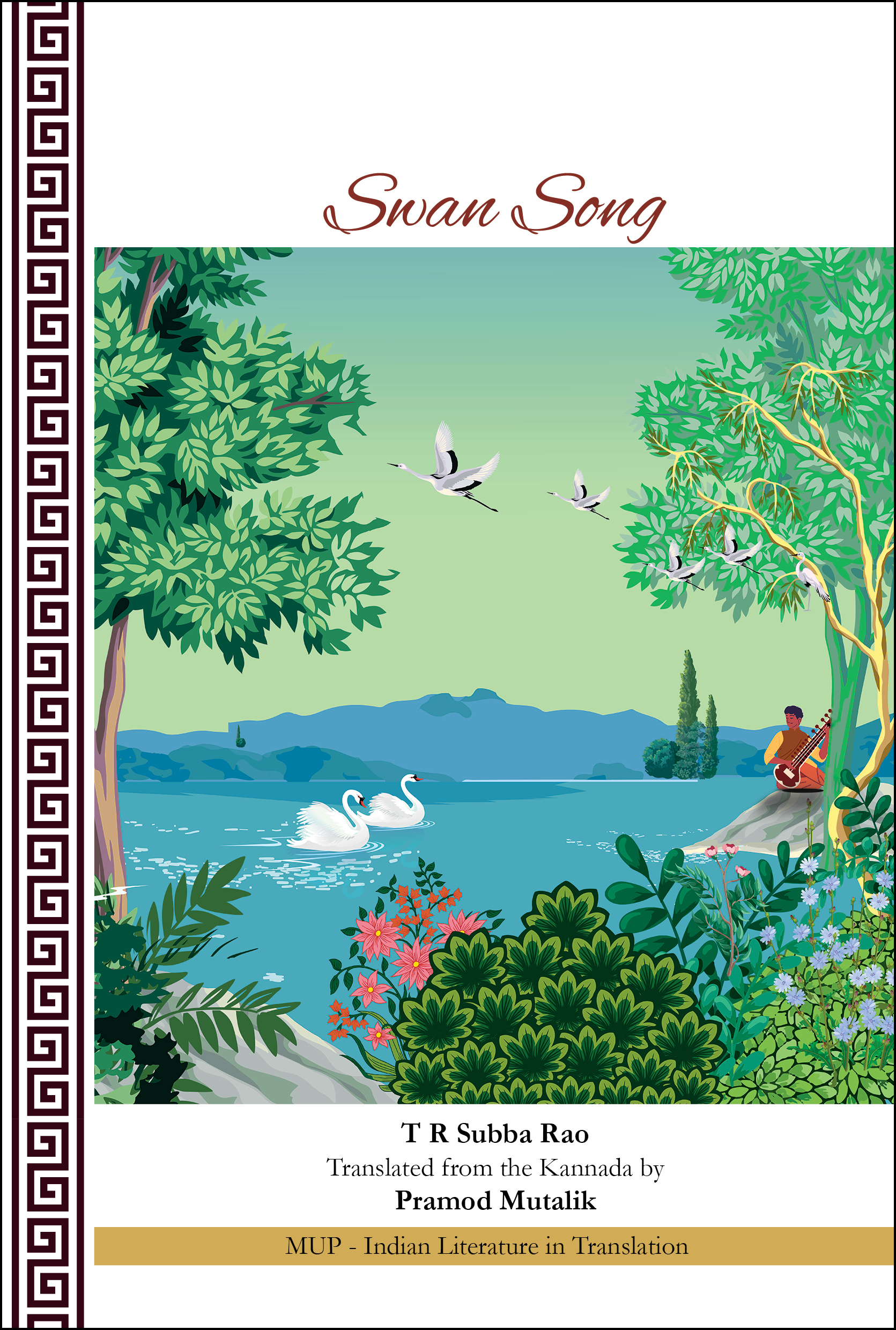
Swan Song is the poignant tale of Venkatasubbiah, a legendary musician from 18th century Chitradurga. Written by renowned Kannada author Late Shri T R Subba Rao (TaRaSu) and translated into English by Prof Pramod Mutalik, the novel explores the extraordinary journey of an artist whose unwavering dedication to his craft defines his life.
The author weaves together perspectives from people of varied backgrounds to reconstruct Venkatasubbiah’s story, revealing his innate musical genius and determination. It narrates the tale of a musician’s steadfast devotion to art against all odds.
The narrative takes a dramatic turn when Venkatasubbiah defies Tippu Sultan’s order to perform in his palace. To protect the dignity of his art, he sacrifices his ability to sing by cutting off his tongue. Undeterred, he continues to produce swaras through his nose, earning him the metaphorical title of the swan. His life ends while performing, leaving an unforgettable legacy of self-respect and artistic integrity.
|
Also available on
 |
| Format |
|---|
Related products
-

U-Turn
₹180.00Author: Anand Mhasvekar, Translator: Neeta Inamdar
ಮರಾಠಿ ನಾಟಕ. ಯು-ಟರ್ನ್ ಮಹಾರಾಷ್ಟ್ರ ಮತ್ತು ಅದರಾಚೆಗೆ 585 ಕ್ಕೂ ಹೆಚ್ಚು ಪ್ರದರ್ಶನಗಳೊಂದಿಗೆ ಲಕ್ಷಾಂತರ ಹೃದಯಗಳನ್ನು ಗೆದ್ದಿದೆ. ಗುಜರಾತಿಯಲ್ಲಿ ಇದರ ಅನುವಾದವು 115 ಕ್ಕೂ ಹೆಚ್ಚು ಪ್ರದರ್ಶನಗಳನ್ನು ಕಂಡಿದೆ ಮತ್ತು ಹಿಂದಿಯಲ್ಲಿ 50 ಕ್ಕೂ ಹೆಚ್ಚು ಪ್ರದರ್ಶನಗಳನ್ನು ಕಂಡಿದೆ. ಈ ಯಶಸ್ಸು ಶ್ರೀಮತಿ ಸವಿತಾ ಶಾಸ್ತ್ರಿಯವರ ಬೆಂಬಲದೊಂದಿಗೆ ಕನ್ನಡದಲ್ಲಿ ಈ ಕೃತಿಯನ್ನು ಅನುವಾದಿಸಲು ಪ್ರೊ.ನೀತಾ ಇನಾಮದಾರ್ ಅವರನ್ನು ಪ್ರೋತ್ಸಾಹಿಸಿತು. ನಾಟಕವು ಉದ್ದಕ್ಕೂ ಕೇವಲ ಎರಡು ಪಾತ್ರಗಳನ್ನು ಹೊಂದಿದೆ ಮತ್ತು ಇಡೀ ಅವಧಿಗೆ ವೇದಿಕೆಯ ಮೇಲಿರುವ ಇಬ್ಬರನ್ನು ಹೊರತುಪಡಿಸಿ ಒಂದೆರಡು ಧ್ವನಿಗಳನ್ನು ಹೊಂದಿದೆ. ನಾಟಕದ ಕೇಂದ್ರ ಕಲ್ಪನೆಯು ಆಧುನಿಕತೆಯನ್ನು ಒಪ್ಪಿಕೊಳ್ಳುವಲ್ಲಿನ ವ್ಯತ್ಯಾಸಗಳು ಮತ್ತು ಎರಡು ವಿಭಿನ್ನ ತಲೆಮಾರುಗಳಲ್ಲಿ ಇದಕ್ಕೆ ಸಂಬಂಧಿಸಿದ ಸಂಘರ್ಷಗಳು. ವಿಚ್ಛೇದಿತ ಸೇನೆಯ ಮೇಜರ್ ಮತ್ತು 50 ರ ದಶಕದ ಅಂತ್ಯದಲ್ಲಿರುವ ವಿಧವೆಯ ನಡುವಿನ ಒಡನಾಟವನ್ನು ಅವರ ಮಕ್ಕಳು ವಿರೋಧಿಸುತ್ತಾರೆ ಮತ್ತು ಅವರು ತಮ್ಮನ್ನು ತಾವು ಆಧುನಿಕತೆಯನ್ನು ಅಳವಡಿಸಿಕೊಂಡರೂ ವಿಭಿನ್ನ ರೀತಿಯಲ್ಲಿ ವ್ಯಕ್ತಪಡಿಸುತ್ತಾರೆ. ನೀತಾ ಇನಾಮದಾರ್ ಅವರು ಮಣಿಪಾಲ್ ವಿಶ್ವವಿದ್ಯಾನಿಲಯದಲ್ಲಿ (MU) ಯುರೋಪಿಯನ್ ಅಧ್ಯಯನ ವಿಭಾಗದ (DES) ಮುಖ್ಯಸ್ಥರಾಗಿದ್ದಾರೆ ಮತ್ತು ಮಣಿಪಾಲ್ ಯೂನಿವರ್ಸಲ್ ಪ್ರೆಸ್ ನ (MUP) ಮುಖ್ಯ ಸಂಪಾದಕರಾಗಿದ್ದಾರೆ. ಸಂಗೀತ ಮತ್ತು ರಂಗಭೂಮಿ ಅವರ ಆಸಕ್ತಿಗಳಾಗಿದ್ದು, ಶ್ರೀಮತಿ ಸವಿತಾ ಶಾಸ್ತ್ರಿ ಅವರ ನೆರವಿನೊಂದಿಗೆ ಈ ಕೆಲಸವನ್ನು ಕೈಗೊಳ್ಳುವಂತೆ ಮಾಡಿತು. ಸವಿತಾ ಶಾಸ್ತ್ರಿ ಅವರು ಮಣಿಪಾಲದ ಮಹಿಳಾ ಉದ್ಯಮಿಯಾಗಿದ್ದು, ಅವರು ಬಾಬಾ ಆಮ್ಟೆ ಅವರ ಆನಂದವನಕ್ಕೆ ಧನಸಹಾಯವನ್ನೂ ಮಾಡುತ್ತಾರೆ. ಅವರು ಮರಾಠಿ, ಹಿಂದಿ ಮತ್ತು ಇಂಗ್ಲಿಷ್ನಲ್ಲಿ ಪುಸ್ತಕಗಳು ಮತ್ತು ನಾಟಕಗಳ ಓದುಗರಾಗಿದ್ದಾರೆ, ಅವರು ಈ ಅನುವಾದ ಯೋಜನೆಗೆ ತಮ್ಮ ಬೆಂಬಲವನ್ನು ನೀಡಿದರು.
Interested readers may write to us at mup@manipal.edu about purchasing the book.
Also available on
-
The Gandhi Cap and Other Short Stories
₹345.00Author: Raja Radhikaraman Prasad Sinha, Translator: Mahendra P Srivastava
The book The Gandhi Cap and Other Short Stories offers a glimpse into the lifetime of work of a forgotten pioneer of Hindi fiction, Raja Radhikaraman Prasad Sinha. It is ironic that one cannot find a single book by this author who was so dedicated to Hindi literature. The stories in this collection are a testament not only to the contributions of Sinha to Hindi fiction but also, reflect the depth of political and social milieu of the times. Many readers will be moved by the elements patriotism, feminism, secularism, and spiritualism in these stories. Strong female characters are common in most of these stories. These characters provide both a moral fulcrum to the stories as well as reflect the struggle of women to balance prevailing customs with modernity. Some of these stories provide sharp political and social commentary that still have currency (The Gandhi Cap). Sinha incorporates a unique style of writing that uses lyrical prose and poetry together. He even employs a dialogue between the storyteller and a social gathering in the form of an epilogue, to offer a discourse on social dilemma about women’s plight to become modern while admonishing them to retain their Indian essence (An Expensive Bargain). We hope the readers will enjoy this wonderful collection.
Interested readers may write to us at mup@manipal.edu about purchasing the book.
Also available on
-
Ekathaari: An Autobiography of a Nomad
₹320.00Author: Kuppe Nagaraja, Translator: Sadananda R
Kuppe Nagaraja’s autobiography is of social importance as it covers the life of a nomadic community. Its uniqueness comes from the fact that the nomadic and semi-nomadic lifestyle is markedly different from that of other communities in the lower socioeconomic strata of society. This autobiography does not glorify the life of its author; it narrates the story of a community through the lens of an individual’s life. It begins as the story of an individual, then becomes the story of a family, and finally transforms into the story of a community. The autobiography grows beyond the traps of self-glorification by providing equal space to all these aspects in a balancedmanner.
– Baraguru Ramachandrappa
Noted Kannada writer, critic and film directorJust as birds migrate to greener pastures, nomadic people move towards regions that have received good rains. Kuppe Nagaraja’s autobiography meaningfully captures their traditions, beliefs, social interactions, and superstitions. This book can also be considered a free gift to social scientists as it provides insights into the life of nomads. It should be noted that it is very difficult to study nomads, as they keep to themselves and often dodge any probing questions.
Moreover, the book provides an answer to all those people who often stand on the footpaths of cities debating the relevance of caste-based reservation in Indian society.– Krupakara-Senani
The Green Oscar winning wildlife photographersInterested customers may write to us at mup@manipal.edu about purchasing the book.
Also available on
-
Sati Kamale
₹240.00Author: S U Paniyadi Translators: B Surendra Rao, K Chinnappa Gowda
This eponymous novel is centred on Kamale, who is an embodiment of wifely virtue. For fifteen long years Kamale lives the life of a widow to the outside world, nurturing the hopes of reuniting with the husband one day. Alone in the room, each night she wears her marks of a married woman with the dagger gifted by Umesha next to her. It could be seen as an exposition on the then existing indigenous discourse in India in the 19th century and early 20th century. Kamale, in her rigorous commitment and in retrieving her husband from ‘death’, is fashioned after Savithri in an intertextual reference to Mahabharata’s episode of “Satyavan and Savithri”. The novel might look conservative for the present-day reader, but it is a representative literary work of the time when Paniyadi, among many others, wanted to regain the independent status of the Tulu language which had somehow slipped out of its pedestal.
Interested readers may write to us at mup@manipal.edu about purchasing the book.
Also available on
-

Mahila Mahabharatha
₹160.00Author: K Madhavan Translator: Abhilasha S
ಮಹಿಳಾ ಮಹಾಭಾರತ, ಇದು ಜೆಎನ್ಯು ದೆಹಲಿಯ ವಿಶ್ರಾಂತ ಪ್ರಾಧ್ಯಾಪಕರಾದ ಕೆ. ಮಾಧವನ್ ರಚಿಸಿದ ನಾಟಕ. ರಂಗ ನಿರ್ದೇಶಕರೂ ಆಗಿರುವ ಮಾಧವನ್ರನ್ನು ೧೯೯೪ರಲ್ಲಿ ಯೂನಿವರ್ಸಿಟಿ ದು ಕ್ವಿಬೀ ಎ ಮಾನ್ಟ್ರಿಯಲ್ ವಿಶ್ವವಿದ್ಯಾನಿಲಯ ತನ್ನ ವಿದ್ಯಾರ್ಥಿಗಳಿಗೆ ರಂಗ ನಿರ್ದೇಶನದ ತರಬೇತಿ ನೀಡಲು ಆಹ್ವಾನಿಸಿತ್ತು. ಆಗ ಒಂದು ವರ್ಷ ನಡೆಸಿದ ರಂಗ ಕಾರ್ಯಾಗಾರದ ಭಾಗವಾಗಿ ೧೯೯೫ ರಲ್ಲಿ ಮಾಧವನ್ ಈ ನಾಟಕವನ್ನು ಫ್ರೆಂಚ್ ಭಾಷೆಯಲ್ಲಿ ರಚಿಸಿ ನಿರ್ದೇಶಿಸಿದ್ದರು. ನಂತರ ಇದು ಜರ್ಮನಿ, ಫ್ರಾನ್ಸ್, ಆಸ್ಟ್ರೇಲಿಯಾ ಮುಂತಾದ ದೇಶಗಳಲ್ಲಿ ಆಯಾ ಪ್ರದೇಶದ ಕಲಾವಿದರಿಂದ ಪ್ರದರ್ಶಿಸಲ್ಪಟ್ಟಿತು. ಹಾಗೆಯೇ ಭಾರತದಲ್ಲಿಯೂ ಅನೇಕ ನಗರಗಳಲ್ಲಿ ಈ ನಾಟಕ ಪ್ರದರ್ಶನ ಕಂಡಿದೆ. ೨೦೦೫ರಲ್ಲಿ ಈ ನಾಟಕದ ಇಂಗ್ಲಿಷ್ ಅವತರಣಿಕೆಯು ಥಿಯೇಟರ್ ಇಂಡಿಯಾದಿAದ ಪ್ರಕಟವಾಯಿತು. <br> ಎಲ್ಲ ಕಾಲದ ಮಹಿಳಾ ಜಗತ್ತಿನ ಆಂತರ್ಯದಲ್ಲಿ ನಡೆಯಬಹುದಾದ ಮಹಾಯುದ್ಧದ ಕಥನವೇ ಮಹಿಳಾ ಮಹಾಭಾರತ. ಇಲ್ಲಿ ಪುರಾಣ ಮತ್ತು ವಾಸ್ತವ ಜಗತ್ತಿನ ನಡುವಿನ ಗೆರೆಯೇ ಅಳಿಸಿ, ಪೌರಾಣಿಕತೆ ಮತ್ತು ವಾಸ್ತವಿಕತೆ ಮುಖಾಮುಖಿಯಾಗುತ್ತವೆ. ಮಹಾಭಾರತ ಕಥೆಯ ಪರಿಧಿಯಲ್ಲಿದ್ದಿರಬಹುದಾದ ಎಲ್ಲ ತಾಯಂದಿರೂ ಈ ನಾಟಕದಲ್ಲಿ ಕೇಂದ್ರದತ್ತ ಚಲಿಸಿ ಕತೆ ಹೇಳುತ್ತಾರಾದ್ದರಿಂದ, ಮಹಿಳಾ ಕಣ್ನೋಟದ ಮಹಾಭಾರತ ಇಲ್ಲಿ ಗೋಚರವಾಗುತ್ತದೆ. ವಿಶೇಷವೆಂದರೆ, ಈ ಇಡೀ ಕಥನದ ಸೂತ್ರಧಾರಿಣಿ, ಸಮಕಾಲೀನ ಜಗತ್ತಿನ ಅಸಹಾಯಕ, ಹತಾಶ ತಾಯಿ. ಇಲ್ಲಿ ಪುಟ್ಟ ಪೆಟ್ಟಿಗೆಯಲ್ಲಿ ಜೀವಶಕ್ತಿಯ ಬೀಜ ನೆಟ್ಟು ಅದು ಮೊಳಕೆಯೊಡೆದು ಬೃಹತ್ ವೃಕ್ಷವಾಗಿ ಅಡುಗೆ ಮನೆಯನ್ನೇ ಸ್ಪೋಟಿಸುವ ಹೆಣ್ಣುಗಳಿದ್ದಾರೆ, ಮರಕ್ಕೆ ಕಟ್ಟಿ ಸುಟ್ಟು ಹಾಕುತ್ತಿರುವ ಅಣ್ಣಂದಿರನ್ನೇ ನೋಡಿ ಗಹಗಹಿಸುವ ತಂಗಿಯರಿದ್ದಾರೆ, ಹೆಣ್ಣುಗಳ ನಿಟ್ಟುಸಿರ ತಾಪಕ್ಕೆ ಗುರಿಯಾಗಿ ನಲುಗುತ್ತಿರುವ ಗಂಡುಮಕ್ಕಳ ಸಂಕಟ ಕಂಡು ಮರುಗುತ್ತಿರುವ ತಾಯಂದಿರಿದ್ದಾರೆ. ಆದಿಯಿಂದ ಅಂತ್ಯದವರೆಗೆ ತೂಗುವ ತೊಟ್ಟಿಲು, ಅನುರಣಿಸುವ ಜೋಗುಳದ ಜೊತೆಗೆ ಹೆಮ್ಮಕ್ಕಳು ನೀಡುವ ಶಾಪದ ಸರಮಾಲೆಯೂ ಇಲ್ಲಿದೆ.
Interested readers may write to us at mup@manipal.edu about purchasing the book.
Also available on
-
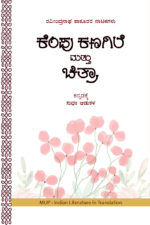
Kempu Kanagile and Chitra
₹160.00Author: Rabindranath Tagore, Translator: Sudha Adukkala
ಕೆಂಪು ಕಣಗಿಲೆ: ಅದೆಂಥ ಗಾಢಾಂಧಕಾರವೇ ಇರಲಿ, ಪುಟ್ಟ ಹಣತೆಯೊಂದು ಅದನ್ನು ತೊಡೆಯಬಲ್ಲುದೆಂಬುದು ಸಾರ್ವಕಾಲಿಕ ಸತ್ಯ. ಅಂಥದೊAದು ಸಂಘರ್ಷದ ಕಥನವನ್ನು ಗುರುದೇವ ರವೀಂದ್ರರು ತಮ್ಮ ಈ ನಾಟಕದಲ್ಲಿ ಹೇಳಿದ್ದಾರೆ. ‘ಕೆಂಪು ಕಣಗಿಲೆ’ ತೆರೆದಿಡುವ ಕೌರ್ಯದ ಜಗತ್ತು ಇಂದು ಈ ಕಾಲಘಟ್ಟದಲ್ಲಿ ನಿಂತು ಬರೆದರೇನೋ ಎಂಬಷ್ಟು ತಾಜಾ ಆಗಿದೆ. ಇಲ್ಲಿಯ ರಂಜನ ಕೇವಲ ಒಂದು ಪಾತ್ರವಲ್ಲ; ನಾವೆಲ್ಲರೂ ನಮ್ಮೊಳಗೆ ತುಂಬಿಸಿಕೊಳ್ಳಬೇಕಾದ ಜೀವನ ಪ್ರೀತಿಯ ವಿವಿಧ ಆಯಾಮಗಳ ಪ್ರತಿನಿಧಿ. ಇಲ್ಲಿಯ ನಂದಿನಿ ಇಂದು ಜಗವ ಸಂತೈಸಬೇಕಾದ ತಾಯಿಹೃದಯದ ಪ್ರತೀಕವಾಗಿದ್ದಾಳೆ.
ಚಿತ್ರಾ: ಪೌರಾಣಿಕ ಕಥಾನಕವೊಂದರ ಪುನರ್ಲೇಖನದ ಈ ನಾಟಕವು ಹೆಣ್ಣು ಮತ್ತು ರಾಷ್ಟçವನ್ನು ಒಂದು ಸಂಕಥನವನ್ನಾಗಿ ಚರ್ಚಿಸುತ್ತದೆ. ಹೆಣ್ಣು-ಗಂಡಿನ ಘನತೆಯ ಬದುಕನ್ನು ಕನಸುವ ನಿರೂಪಣೆ ನಾವು ಕಟ್ಟಬೇಕಾಗಿರುವ ರಾಷ್ಟçದ ರೂಪುರೇಷೆಗಳನ್ನೂ ತನ್ನೊಳಗೆ ಆಡಕ ಮಾಡಿಕೊಂಡಿದೆ. ನಮ್ಮ ಅನನ್ಯತೆಯನ್ನು ಉಳಿಸಿಕೊಳ್ಳುತ್ತಲೇ ಇನ್ನೊಬ್ಬರೊಂದಿಗೆ ಸಹಬಾಳ್ವೆಯನ್ನು ನಡೆಸುವ ಬಗೆಯನ್ನು ಮಂಡಿಸುತ್ತದೆ. ತಾನು ಆರೋಪಿಸಿಕೊಂಡ ಕೃತಕ ತೆರೆಯನ್ನು ಸರಿಸುವ ಚಿತ್ರಾ ನಮ್ಮೊಳಗಿನ ಅರಿವಿಗೆ ತೊಡಕಾಗಿರುವ ಸಂಕುಚಿತತೆಯ ಪರದೆಯನ್ನೂ ಸರಿಸುತ್ತಾಳೆ.
Interested overseas readers may write to us at mup@manipal.edu about purchasing the book.Also available on
-
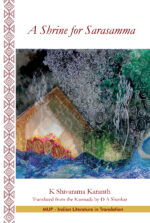
A Shrine for Sarasamma
₹180.00Author: Shivarama Karanth Translator: D A Shankar
A Shrine for Sarasamma is the English translation of Sarasammana Samadhi written by K Shivarama Karanth in 1937, in his early thirties. It offers one of the most authentic and searing accounts of Indian womanhood, which consistently, and through the ages, has suffered deep anguish, humiliation and crushing insult from the oppressive patriarchal culture prevalent in all parts of India and among all castes and classes. The novel is a classic in Kannada and the English translation is an attempt to bring to the English reading audience a taste of the regional classic.
Interested readers may write to us at mup@manipal.edu about purchasing the book.
Also available on
-
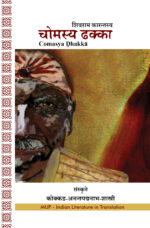
Comasya Dhakka
₹195.00Author: Shivarama Karanth Translator: Ananthapadmanabha Shastri
Set in the coastal Karavali region of Karnataka, Chomasya Dakka is the story of Coma, a Dalit bonded-laborer. Set in the pre-independent India, Comasya Dakka tells a poignant tale of dalit lives, and the suppression of their fundamental rights and identity through the character of Coma. Denied the right to even till and cultivate their own land due to their caste and identity, Coma and his children work as bonded-labourers for their landlord, Sankappayya. The plot of the novel follows the lives of Coma and his children and the tragedies that befall them. The original work in Kannada, Comana Dudi, was adapted into a well-acclaimed, national award-winning film in the year 1975. Directed by B V Karanth, it won the Swarna Kamal, Indias National Award for the Best Film in the year 1976.
Interested readers may write to us at mup@manipal.edu about purchasing the book.
Also available on