
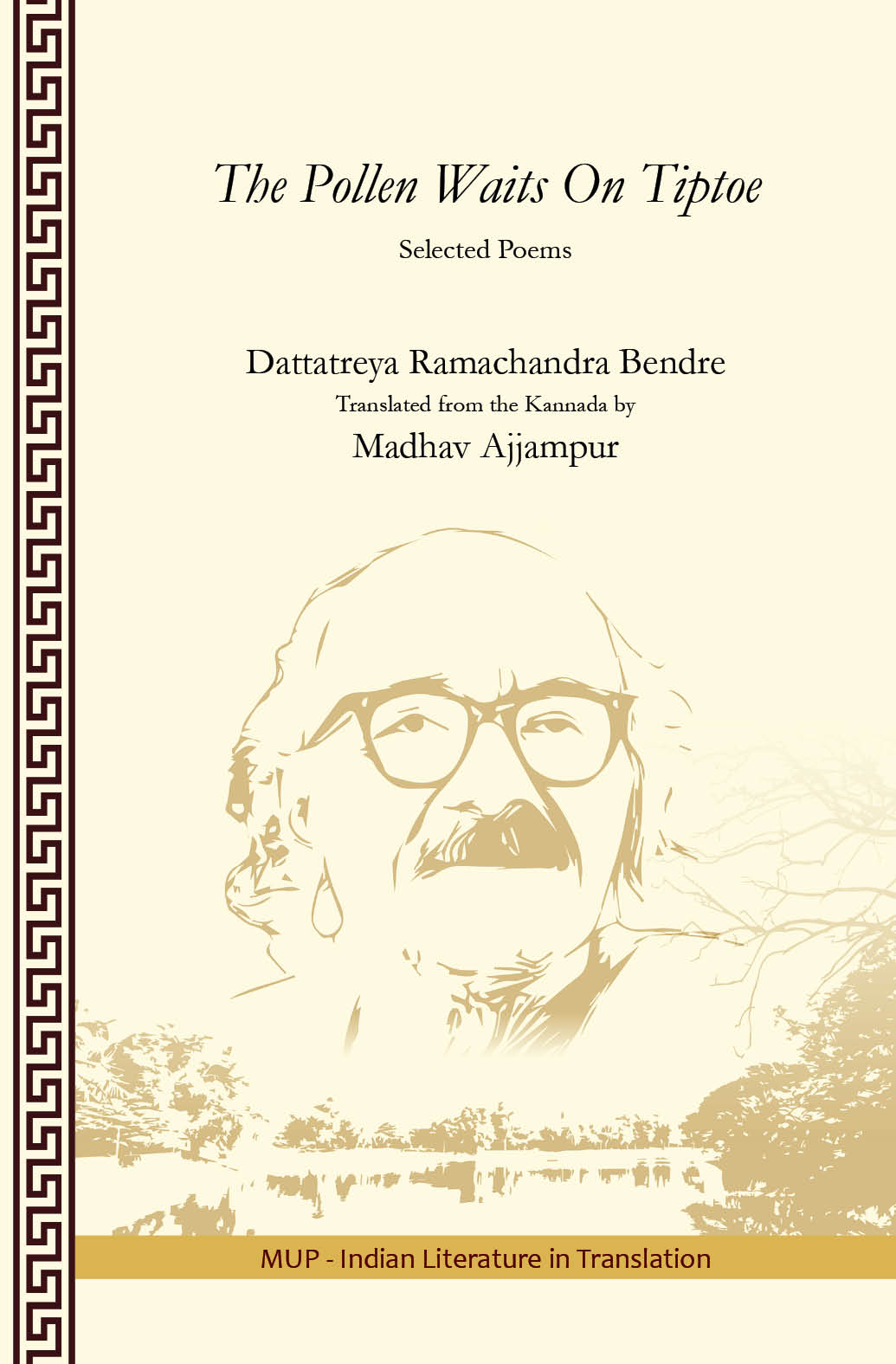

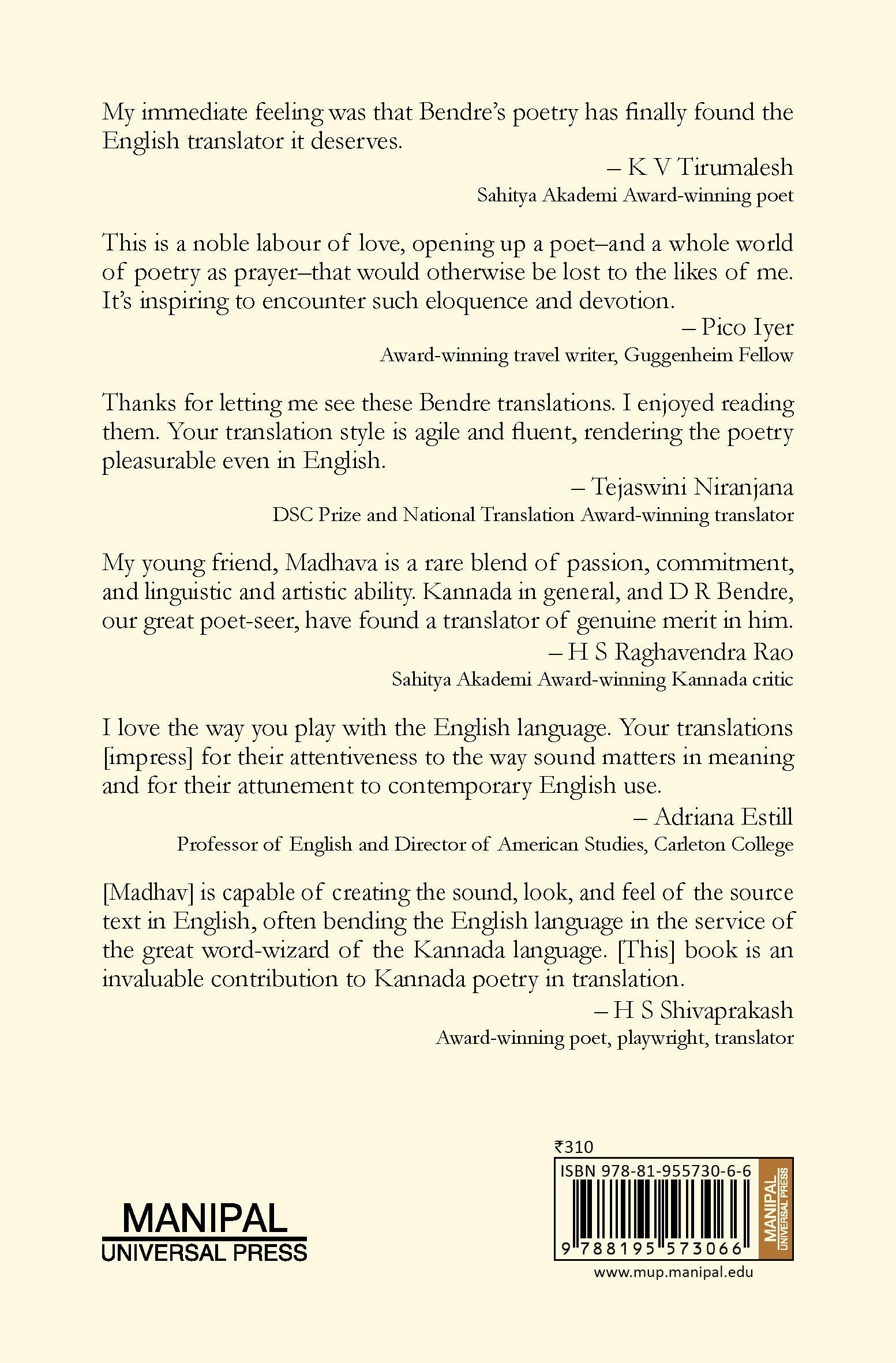
The Pollen Waits on Tiptoe- Selected Poems
₹310.00
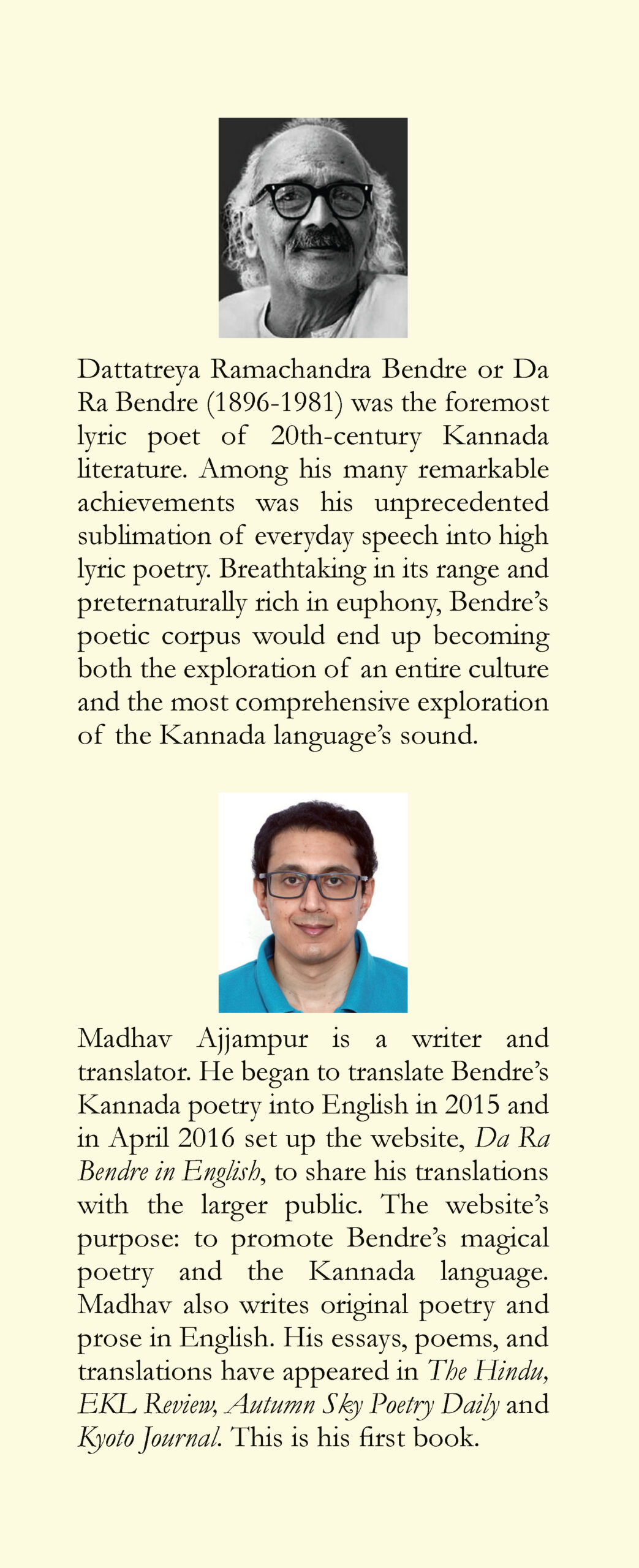
Author: Dattatreya Ramachandra Bendre, Translator: Madhav Ajjampur
The book presents English translations of 26 selected poems of 20th-century Kannada literature’s varakavi (heaven-touched poet) and one of the greatest lyric poets to have lived: Dattatreya Ramachandra Bendre.
Although no selection of Bendre’s poems, even in the original Kannada, can ever be representative of the astonishing range of his poetry, the poems in this book give the reader a sampling of some of the different types of poems Bendre wrote – including the blank verse of his sonnets, the free verse of some of his later poetry, and the overwhelmingly-euphonic lyric poems of his first period. Several of the included poems are also acknowledged classics.
A standout feature of this book is its character as a multimedia presentation. Given the exceptional aural quality of Bendre’s poetry, a provision has been made for the reader to listen to audio recordings of each poem, in both its original and translated forms. Also included are Afterwords which, among other things, contain stories about Bendre, interesting anecdotes related to the poems, and reflections on the process of translation.
Interested overseas customers may write to us at mup@manipal.edu about purchasing the book.
Also available on |
eBook available on |
| Format |
|---|
Customer Reviews
There are no reviews yet.
Related products
-
Post Googlism and Other Short Stories
₹350.00Author: R C Natarajan
This collection of short stories is for the fast-paced millennials, whom the author calls “The Post Googlist Generation” who want everything hastily, at their finger-tips and on the go. The language has also shrunk in size to allow the pace. The world-view of this generation is that what cannot be done through an app cannot and should not be done. Their expectations of a story are a striking start, a quickly built middle and an interesting end. Stories in the collection seek to meet these expectations of this generation talking to them in their own language. They also echo the changing lives and changing aspirations of the time.
Interested readers may write to us at mup@manipal.edu about purchasing the book.
Also available on
-
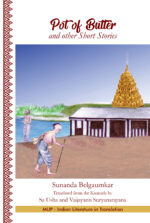
Pot of Butter and other short stories
₹250.00Author: Sunanda Belgaumkar Translator: Sa Usha, Vaijayanti Suryanarayana
Pot of Butter and other Short Stories is a collection of nine short stories, originally composed by Sunanda Belgaumkar in Kannada, handpicked and translated from her collections – Kajjaya and Koduvudenu Kombudenu. The bulk of her literary work including the stories in this book are inspired by the experiences in her early life, in the rustic and robust atmosphere of Dharwad. Her stories are predominantly semiautobiographical, laced with a liberal dose of artistic freedom.
This collection weaves together her writings on the underprivileged and marginalized as seen from the comfort of her palatial home, but rendered with compassion and empathy. Often, we find her narrative infused with self-directed questions such as, “What if I was in her shoes? ” or “Could that have been me? ” These stories are reflections on human nature, suffering, and destiny. There is hope, there is despair. There is love, there is longing. There is defeat, and there is triumph. In her stories, an oft-recurring metaphor for picking up one’s life after loss is a scorching summer followed by a torrential downpour and subsequently a plant springing to life.
As a translation, this book attempts to introduce Sunanda Belgaumkar’s literary and artistic creations to the non-Kannada reader, retaining as much of the indigenous elements of the original writings as possible. In doing so, it seeks to preserve the cultural climate of North Karnataka as it was around fifty years ago.
Interested readers may write to us at mup@manipal.edu about purchasing the book.
Also available on
-
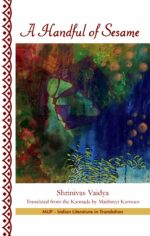
A Handful of Sesame
₹310.00Author: Srinivas B Vaidya, Translator: Maithreyi Karnoor
With a captivating start, A Handful of Sesame plunges us into the heart of the dying years of the 1857 mutiny. But the mutiny is largely a backdrop to the novel. When Kamalanabh of Kashi is manipulated by an impoverished Brahmin of Navalgund into marrying his daughter, the novel becomes basically the story of an internal migration. This is rare, and it remains one of the strengths of the novel. We are so used to speaking of migration across the postcolonial bridge and accredited national borders that we forget that India is a country of endless internal migrations – in the past and the present.
Interested readers may write to us at mup@manipal.edu about purchasing the book.
Also available on
-
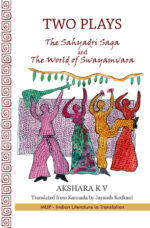
Two Plays – The Sahyadri Saga and The World of Swayamvara
₹199.00Author: Akshara K V Translator: Jayanth Kodkani
These two plays negotiate with the real problems of contemporary India. If Sahyadri Kanda is about the ripples caused in the life of the people in a village on the Western Coast which will soon have a nuclear plant, Swayamvaraloka, is an allegorical narrative set in a small village that extends to include the larger contemporary world. Both the plays dwell on the seeming binaries of village-city, success-failure, modern-traditional while examining the nature of human relationships in the changing world. These plays also reflect an ambition to elevate the real experience to a mythical level. While most playwrights attempt to echo contemporary concerns by reinterpreting history and mythology, for these plays, the epics, their grandeur, the struggle, the wars are not episodes that happen in kingdoms and palaces and battlefields, they are also that which takes place in the microworld of one’s consciousness. Each character in these plays find their own dharma, yet it offers no model for the reader, and remains only a pointer to the complex process of finding it.
Interested readers may write to us at mup@manipal.edu about purchasing the book.
Also available on
eBook available on
-
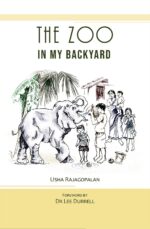
The Zoo In My Backyard
₹290.00Author: Usha Rajagopalan
What can you expect in a family of quirky adults, hyperactive children, and an assortment of pets? The author and her siblings shared their childhood with Kesavan, the incorrigibly curious black monkey; Judie, the nimble giant squirrel; Mini, the shy mouse deer that strayed; Psitta, the cackling parakeet; Devil, the runaway hound and many more creatures great and small. The adventures of the children and antics of their pets, together with the adults in the family make for a whole lot of fun and laughter ? not just in the backyard but indoors as well.
Interested readers may write to us at mup@manipal.edu about purchasing the book.
Also available on
-
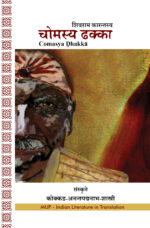
Comasya Dhakka
₹195.00Author: Shivarama Karanth Translator: Ananthapadmanabha Shastri
Set in the coastal Karavali region of Karnataka, Chomasya Dakka is the story of Coma, a Dalit bonded-laborer. Set in the pre-independent India, Comasya Dakka tells a poignant tale of dalit lives, and the suppression of their fundamental rights and identity through the character of Coma. Denied the right to even till and cultivate their own land due to their caste and identity, Coma and his children work as bonded-labourers for their landlord, Sankappayya. The plot of the novel follows the lives of Coma and his children and the tragedies that befall them. The original work in Kannada, Comana Dudi, was adapted into a well-acclaimed, national award-winning film in the year 1975. Directed by B V Karanth, it won the Swarna Kamal, Indias National Award for the Best Film in the year 1976.
Interested readers may write to us at mup@manipal.edu about purchasing the book.
Also available on
-
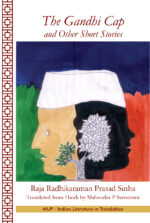
The Gandhi Cap and Other Short Stories
₹345.00Author: Raja Radhikaraman Prasad Sinha, Translator: Mahendra P Srivastava
The book The Gandhi Cap and Other Short Stories offers a glimpse into the lifetime of work of a forgotten pioneer of Hindi fiction, Raja Radhikaraman Prasad Sinha. It is ironic that one cannot find a single book by this author who was so dedicated to Hindi literature. The stories in this collection are a testament not only to the contributions of Sinha to Hindi fiction but also, reflect the depth of political and social milieu of the times. Many readers will be moved by the elements patriotism, feminism, secularism, and spiritualism in these stories. Strong female characters are common in most of these stories. These characters provide both a moral fulcrum to the stories as well as reflect the struggle of women to balance prevailing customs with modernity. Some of these stories provide sharp political and social commentary that still have currency (The Gandhi Cap). Sinha incorporates a unique style of writing that uses lyrical prose and poetry together. He even employs a dialogue between the storyteller and a social gathering in the form of an epilogue, to offer a discourse on social dilemma about women’s plight to become modern while admonishing them to retain their Indian essence (An Expensive Bargain). We hope the readers will enjoy this wonderful collection.
Interested readers may write to us at mup@manipal.edu about purchasing the book.
Also available on
-
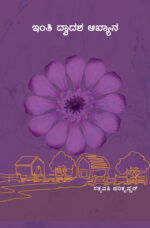
Inti Dvadasha Akhyana
₹120.00Author: Sathyavathi Harikrishnan
ಸತ್ಯವತಿ ಹರಿಕೃಷ್ಣನ್ ಹಾಸ್ಯಬರವಣಿಗೆಯಲ್ಲಿ ಸುಮಾರು ಎರಡು ದಶಕಗಳಿಂದ ತನ್ನನ್ನು ತೊಡಗಿಸಿಕೊಂಡಿರುವ ಕವಯಿತ್ರಿ. ಇವರ ಹಾಸ್ಯಲೇಖನಗಳು ತರಂಗ, ತುಷಾರ, ಮಯೂರ, ಕರ್ಮವೀರದಂಥ ನಿಯತಕಾಲಿಕಗಳಲ್ಲಿ, ಉದಯವಾಣಿ, ಪ್ರಜಾವಾಣಿ ಮುಂತಾದವುಗಳಲ್ಲಿಯೂ ಪ್ರಕಟಗೊಂಡಿವೆ. 2002ರಲ್ಲಿ ಡೆಟ್ರಾಯಿಟ್ ನಲ್ಲಿ ನಡೆದ “ಅಕ್ಕ” ವಿಶ್ವ ಕನ್ನಡ ಸಮ್ಮೇಳನದ ಸ್ಮರಣ ಸಂಚಿಕೆಯಲ್ಲಿ ಇವರ “ಗುಂಡ್ರಾಮನ ಚಿಕಿತ್ಸಾಯಣ’ ಎಂಬ ಕೃತಿ ಪ್ರಕಟವಾಗಿದೆ. ಸನ್ಮಾನ್ಯರಾದ ದೇಜಗೌ ಮತ್ತು ಜಿಟಿನಾರವರ ಸಂಪಾದಕತ್ವದಲ್ಲಿ ಪ್ರಕಟವಾದ “ಪುಸ್ತಕ ಪ್ರಪಂಚ’ದಲ್ಲಿ ಇವರ ಅನುವಾದಿತ ಲೇಖನಗಳು ಪಡಿಮೂಡಿವೆ. “ಕುಂಬಾಸ’, “ನುಗ್ಗೇಹಳ್ಳಿ ಪಂಕಜ’ವೇ ಮೊದಲಾದ ಪ್ರಶಸ್ತಿಗಳನ್ನು ಪಡೆದಿರುವ ಸತ್ಯವತಿಯವರು ಈಗಾಗಲೇ ಐದು ಹಾಸ್ಯ ಸಂಕಲನಗಳನ್ನು ರಚಿಸಿದ್ದಾರೆ. ಅವರ ಆರನೆಯ ಹಾಸ್ಯ ಸಂಕಲನವೇ – “ಇಂತಿ ದ್ವಾದಶ ಆಖ್ಯಾನ’. ಹಾಸ್ಯದಲ್ಲಿ ಅಪಹಾಸ್ಯ, ತಿಳಿಹಾಸ್ಯ, ವ್ಯಂಗ್ಯ ಮುಂತಾದ ಪ್ರಭೇದಗಳಿವೆ. ವ್ಯಂಗ್ಯಮಿಶ್ರಿತವಾದ ತಿಳಿಹಾಸ್ಯ ಒಂದೇ ಕಾಲದಲ್ಲಿ ಎರಡು ಉದ್ದೇಶಗಳನ್ನು ಹೊಂದಿರುತ್ತವೆ. ಅದು ಮೇಲ್ನೋಟಕ್ಕೆ ಮನೋರಂಜನೆಯಾಗಿ ಕಂಡರೂ, ಅದರ ಇಂಗಿತ ಓದುಗರನ್ನು ಗಂಭೀರ ಚಿಂತನೆಗೆ ತೊಡಗುವಂತೆ ಮಾಡುವುದಾಗಿರುತ್ತದೆ. ವ್ಯಕ್ತಿಯನ್ನು ನೋಯಿಸದೇ ಲಘುಹಾಸ್ಯ-ವ್ಯಂಗ್ಯಗಳಿಂದ ಸ್ವವಿಮರ್ಶೆ ಮಾಡಿಕೊಳ್ಳುವಂತೆ ಪ್ರೇರೇಪಿಸುವುದು ಹಾಸ್ಯದ ಕಲಾತ್ಮಕ ಪ್ರಕ್ರಿಯೆ. ಶ್ರೀಮತಿ ಸತ್ಯವತಿಯವರ ಈ ಕೃತಿಯಲ್ಲಿ ಇಂತಹ ಒಂದು ಪ್ರಯತ್ನವನ್ನು ನಾವು ಕಾಣಬಹುದು. “ಇಂತಿ ದ್ವಾದಶ ಆಖ್ಯಾನ’ದಲ್ಲಿ ಹನ್ನೆರಡು ವೈವಿಧ್ಯಮಯ ಸಣ್ಣ ಹಾಸ್ಯಲೇಖನಗಳಿವೆ. ಸತ್ಯವತಿಯವರು ನಮ್ಮ ಜೀವನದ ಸಾಮಾನ್ಯ ಘಟನೆಗಳನ್ನೇ ರಂಗುರಂಗಾಗಿ ತಿಳಿಹಾಸ್ಯದ ಮೂಲಕ ಈ ಕೃತಿಯಲ್ಲಿ ತೋರಿಸಿದ್ದಾರೆ. ಕಾಲ್ಪನಿಕ ಘಟನೆಗಳಲ್ಲಿ ಹಾಸ್ಯದ ಪಾತ್ರಗಳನ್ನು ಸೃಷ್ಟಿಸಿ, ಗಂಭೀರ ವಿಚಾರಗಳನ್ನು ಮನಮುಟ್ಟುವಂತೆ ನಿರೂಪಿಸುವ ಲೇಖಕಿಯ ಶೈಲಿಯು ಅಪೂರ್ವವಾದದ್ದು. ಪ್ರತಿ ಕತೆಯ ಶೀರ್ಷಿಕೆಯಲ್ಲೇ ಹಾಸ್ಯ ತುಂಬಿರುವ ಈ ಕೃತಿಯು ಓದುಗರನ್ನು ನಗಿಸುವಲ್ಲಿ ಯಶಸ್ವಿಯಾಗುತ್ತದೆ.
Interested customers may write to us at mup@manipal.edu about purchasing the book.
Also available on
Be the first to review “The Pollen Waits on Tiptoe- Selected Poems”
You must be logged in to post a review.