
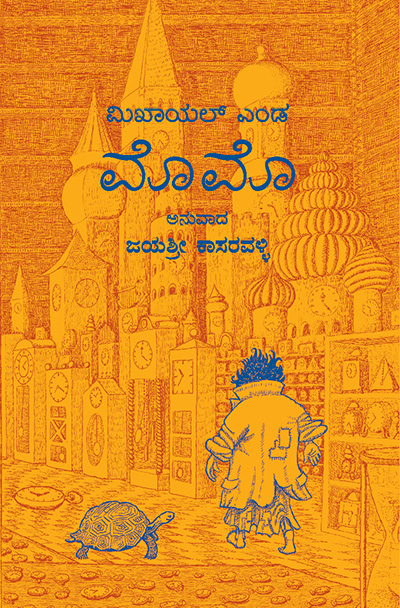
MOMO
₹450.00
Author:
The fantasy novel originally written in German and translated into English, has been enjoyed by millions of readers worldwide. It has now been translated into Kannada as well. The novel has a very unusual story about time. The story describes how people in the modern era use the time, and a girl named MOMO teaches how it should be used. Humans have stolen time from modern societies, and a little girl of mysterious origin brings it back. In today’s society, the story has timeless relevance.
ನಗರದ ಅಂಚಿನಲ್ಲಿ ಹಾಳುಬಿದ್ದಿದೆ ಒಂದು ಆಂಪಿ ಥೀಯೇಟರ್. ಅಲ್ಲಿರುವ ದಿಕ್ಕಿಲ್ಲದ ಪುಟ್ಟ ಹುಡುಗಿ ಮೊಮೊ. ಒಂದು ದಿನ ಬೂದು ಬಣ್ಣದ ಬಟ್ಟೆ ತೊಟ್ಟು ದುಷ್ಟರು ಸದ್ದಿಲ್ಲದೇ ಬಂದು ನಗರವನ್ನು ಆಕ್ರಮಿಸಿಕೊಳ್ಳುತ್ತಾರೆ. ಅವರನ್ನು ಹಿಮ್ಮೆಟ್ಟಿಸುವ ಶಕ್ತಿಯಿರುವುದು ಮೊಮೊಗೆ ಮಾತ್ರ. ಅವಳು ಪ್ರೊಫೆಸರ್ ಹೋರಾ ಮತ್ತು ಅವರಲ್ಲಿರುವ ವಿಚಿತ್ರ ಆಮೆಯ ನೆರವಿನಿಂದ ಕಾಲದ ಸರಹದ್ದುಗಳನ್ನು ದಾಟಿ ಆ ದುಷ್ಟರ ಒಳಸಂಚುಗಳನ್ನು ಬಯಲುಮಾಡುತ್ತಿದ್ದಾಳೆ. ‘ಮೊಮೊ’ ಕಾಲವನ್ನು ಕದಿಯುವವರ ಕಥೆಯಾಗಿರುವ ಜೊತೆಗೇ ಕದ್ದ ಕಾಲವನ್ನು ಮತ್ತೆ ಜನರಿಗೆ ತಂದುಕೊಡುವ ಒಂದು ಮಗುವಿನ ಸಾಹಸಮಯ ಕಥೆಯು ಆಗಿದೆ.
Interested customers may write to us at mup@manipal.edu about purchasing the book.
|
Also available on
|
| Format |
|---|
Customer Reviews
There are no reviews yet.
Related products
-
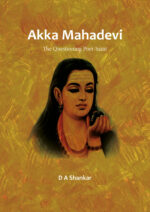
Akka Mahadevi, the questioning poet-saint
₹255.00Author: D A Shankar
This book presents the mystical ruminations and literary excellence of Akka Mahadevi, the earliest example of a gender-liberated woman writer, credited with the composition of over four hundred and forty remarkably self-explorative Vachanas. Akka Mahadevi represents a powerfully authentic female voice of the radical, egalitarian Sharana Movement, which questioned the socially established barrier between genders and ushered in a world of socio-cultural equality.
In this book, the author explores the questioning spirit intrinsic to Akka Mahadevi’s life and writings, as she questions the widely held conventional norms: the traditional husband-wife relationship, her parents, elders; she questions Basavanna and Allama for their habituated patriarchal manner of speaking, and she bravely questions her personal deity whom she loves and adores. Apart from discerning a credible ‘history’ and background to Akka’s works, this book makes available a rendition of her selectively profound and memorable Vachana in modern English, that crosses the ?the gulf of language and the gulf of time.
Interested readers may write to us at mup@manipal.edu about purchasing the book.
Also available on

-
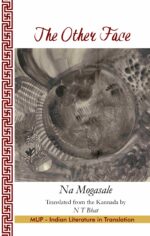
The Other Face
₹550.00Author: Na Mogasale Translator: N T Bhat
Set in a fictitious village called Kanthapura in Kasaragod district, Mukhāntara spans across the life of seven generations of a Havyaka Brahmin family. A story about the realities of living in a society marked by caste distinctions, the desire to find communal harmony and the tribulations of the characters through the entirety of the novel, it is also a tale of changing times and people. After unexpectedly coming into possession of a huge portion of land, Thirumalēshwara Bhat of Īshwarīmūle becomes a satisfied man. But childless, Thirumalēshwara Bhat and his wife Pārvathakka decide to adopt Venkappaiah and also give shelter to his widowed mother, Rathnamma. Venkappaiah is to inherit Thirumalēshwara’s vast wealth but when Krishnaiah, the illegitimate child of Thirumalēshwara and Rathnamma is born, rivalry ensues. Through the overlapping narratives of the characters, we get a glimpse into their journey from tradition to modernity. The characters strive to reshape new values when old values are slowly questioned and erased as they move on and are swept along in the waves of globalization.
Interested readers may write to us at mup@manipal.edu about purchasing the book.
Also available on
eBook available on

-
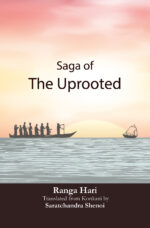
Saga of The Uprooted
₹95.00Author: Ranga Hari, Translator: Saratchandra Shenoi
This English translation of Visthapanachi Katha, a Konkani Khanda Kavya, depicts the saga of the migration of the Konkani community from Goa to a land far away from home. This collection of poems encapsulates the reign of a colonial power over the region of Goa that began with the entry of the Portuguese in the 16th century. It illustrates the displacement of the Konkani people and their resurgence at Cochin port. The poems describe the transformation of Goa – both culturally and topographically – and the people of Goa who were plundered, displaced, uprooted, and were forced to strip off their culture and identity. The poet is unfolding the tale of his very own ancestors by tracing out these events and graphically portraying the plight of the Konkani people. Saratchandra Shenoi, the author of this English translation, is a multilingual translator and a Sahitya Akademi Award winning (Antarnad – 1999) Konkani poet based in Kochi. He has over twenty books to his credit which include collections of poetry, works of fiction and non-fiction, translations, edited anthologies and language guides. Ranga Hari is the author of the Konkani original text titled Visthapanachi Katha. He has written more than twenty-five books in different languages, and was associated with Bharatiya Sikshan Mandal and Vidya Bharati.
Interested readers may write to us at mup@manipal.edu about purchasing the book.
Also available on
-
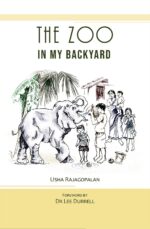
The Zoo In My Backyard
₹290.00Author: Usha Rajagopalan
What can you expect in a family of quirky adults, hyperactive children, and an assortment of pets? The author and her siblings shared their childhood with Kesavan, the incorrigibly curious black monkey; Judie, the nimble giant squirrel; Mini, the shy mouse deer that strayed; Psitta, the cackling parakeet; Devil, the runaway hound and many more creatures great and small. The adventures of the children and antics of their pets, together with the adults in the family make for a whole lot of fun and laughter ? not just in the backyard but indoors as well.
Interested readers may write to us at mup@manipal.edu about purchasing the book.
Also available on
-
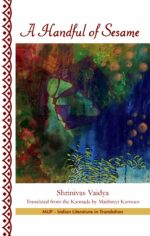
A Handful of Sesame
₹310.00Author: Srinivas B Vaidya, Translator: Maithreyi Karnoor
With a captivating start, A Handful of Sesame plunges us into the heart of the dying years of the 1857 mutiny. But the mutiny is largely a backdrop to the novel. When Kamalanabh of Kashi is manipulated by an impoverished Brahmin of Navalgund into marrying his daughter, the novel becomes basically the story of an internal migration. This is rare, and it remains one of the strengths of the novel. We are so used to speaking of migration across the postcolonial bridge and accredited national borders that we forget that India is a country of endless internal migrations – in the past and the present.
Interested readers may write to us at mup@manipal.edu about purchasing the book.
Also available on
-
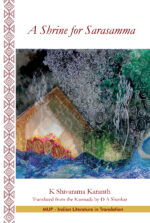
A Shrine for Sarasamma
₹180.00Author: Shivarama Karanth Translator: D A Shankar
A Shrine for Sarasamma is the English translation of Sarasammana Samadhi written by K Shivarama Karanth in 1937, in his early thirties. It offers one of the most authentic and searing accounts of Indian womanhood, which consistently, and through the ages, has suffered deep anguish, humiliation and crushing insult from the oppressive patriarchal culture prevalent in all parts of India and among all castes and classes. The novel is a classic in Kannada and the English translation is an attempt to bring to the English reading audience a taste of the regional classic.
Interested readers may write to us at mup@manipal.edu about purchasing the book.
Also available on
-
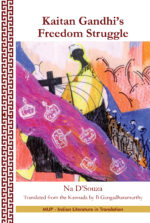
Kaitan Gandhi’s Freedom Struggle
₹280.00Author: Na D’Souza Translator: B Gangadharamurthy
Kaitan Gandhiya Swatantrya Horata is one of the very few novels written in Kannada on the Gandhian phase of the Indian freedom struggle. It is not globally unknown that Gandhi not only changed the idiom of the struggle and successfully experimented his lifetime-belief in non-violence on the vast canvas but also made it decisively inclusive. Kaitan Gandhi’s Freedom Struggle thematically illuminates these two crucial aspects of the great struggle and grapples with the naked truth as Charles, the priest in the novel revealingly says,The rulers, whosoever it is, are rulers. Caste, colour, or country does not matter to them. All are wicked. Like in all true works of realist literature, the author, here too, creatively blends the individual, the social, and the historical in such a way that the novel poignantly unfolds the true spirit of quest for freedom and humanity.
Interested readers may write to us at mup@manipal.edu about purchasing the book.
Also available on
-
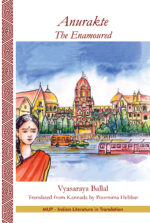
Anurakte- The Enamoured
₹390.00Author: Vyasaraya Ballal Translator: Poornima Hebbar
There are many rags-to-riches stories around the city of Mumbai. However, here is a story of transformation of a woman and her true self in the city of dreams. Set in Mangalore and Mumbai of the late 1940s, Anurakte- The Enamoured is an elegantly written story of a woman and her changing worldview over a period of time. Sumithra, a young woman with ordinary dreams and aspirations, comes to the then Bombay in search of livelihood. Little did she know that her experiences in the city and her zest for an independent life would transform her into a different person. She breaks the shell and resolves not to look back. The book is a poignant tale of love, loss, betrayal, family, relationships and traditions. The culturescape of Mumbai beautifully intertwines with her dreams. It is as much a story of the vibrancy of Mumbai as it is about Sumithra’s journey towards freedom.
Interested readers may write to us at mup@manipal.edu about purchasing the book.
Also available on
Be the first to review “MOMO”
You must be logged in to post a review.