-
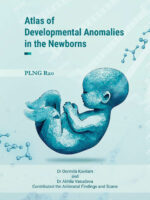
Atlas of Developmental Anomalies in the Newborns
₹2,000.00Author: PLNG Rao
Atlas of Developmental Anomalies in the Newborns is a clinically oriented, pictorial reference that includes a wide range of congenital anomalies seen in newborn babies. This book is based on decades of clinical experience and a large referral base. The book includes the classification of congenital anomalies, clinical explanations for each condition, and clinical and surgical photographs curated by the author, Dr PLNG Rao. It also includes guidance on prognosis and parental counselling to help clinicians decide on the next steps. It is designed as a resource that is useful for pediatricians, neonatologists, obstetricians, and pediatric surgeons. It focuses on recognizing, understanding, and clinically approaching congenital anomalies in newborns through visual documentation and concise explanations.
Interested readers, international readers and bulk buyers may write to us at mup@manipal.edu about purchasing the book.
Also available on

eBook available on

-
Pharmaceutical Technology Handbook
₹2,150.00The pharmaceutical industry is growing both in terms of volume and diversity of new products. As years pass by, new technology both for manufacture and quality control is being introduced. It is essential to maintain a competitive edge concerning quality, cost, compliance, and prompt deliveries. The fresh graduates are lacking knowledge about the ongoings of industry and there is a gap between academic education and industry expectations from pharma graduates. This comprehensive updated Pharmaceutical Technology Handbook helps in reducing the gap in understanding technology, modern pharma equipment, and plant design to some extent. Divided into six sections, the articles presented in this book, in one way or another, touch all aspects of succeeding in a competitive situation. The highlight of this book is its focus on the layout for various manufacturing sections, each prepared by expert architects/consultants. The authors are conversant with Good Manufacturing Practice (GMP) guidelines and have been instrumental in delivering manufacturing units of global standards approved by various approving agencies.
Interested customers may write to us at mup@manipal.edu about purchasing the book.
Also available on
-
COVID19: A Multidimensional Response
₹2,200.00Editors: N Udupa, Raviaraja NS, Chiranjay Mukhopadhya,
COVID-19 disease is caused by the SARS-CoV-2 virus, first detected in November-December 2019 in Wuhan, China. Thus far, more than 7 million people have been infected with the novel coronavirus across the globe, and the count is increasing with every passing day. Even though it causes severe respiratory problems, the majority of patients show mild symptoms, and pathogenesis is under investigation. Although several drugs are being developed and many of them are undergoing clinical trials, currently there are no approved drugs/vaccines to cure this disease. Personal hygiene and social distancing are important means to prevent the spread of this disease. With the advancements in scientific research, humankind is hoping to find a potent drug/vaccine for this disease at the earliest. The health care professionals and scientific community are at their maximum in combating this viral infection. In this book, an attempt is made to compile various aspects of COVID-19 in a single platform, which include aetiology, epidemiology, its clinical manifestations, diagnosis, pathological, clinical and therapeutic facets, comorbidities, risk factors, and the essential precautionary measures. This book comprises around 29 chapters contributed by various experts from research and clinical backgrounds.
Interested readers may write to us at mup@manipal.edu about purchasing the book.
Also available on
-
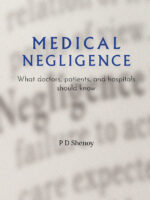
Medical Negligence: What Doctors, Patients and Hospitals Should Know
₹2,200.00Author: P D Shenoy
The title Medical Negligence is sufficient to illustrate the contents of the book which helps retain knowledge and information about the field of Medicine and Health Science. The author gives an introductory note on several important medical specialities, with relevant case laws in, as many as, 37 chapters which are categorized into five sections. The book covers several important subjects such as the doctor-patient relationship, salient features of the Consumer Protection Act, the concept of medical negligence – civil and criminal, the importance of valid informed consent and the principle of res ipsa loquitur, etc. The chapters on almost every branch of Medicine and Surgery contain a wealth of up-to-date information on the current scientific understanding of the subject, which intends to present medical malpractice in the larger context of the admirable advances in medicine and which have made life much safer and better in the last few decades. The book contains detailed guidelines for doctors, patients, and hospitals in three different chapters with a concluding chapter on Medical Insurance. The book is written in a lucid style that can be understood not only by physicians and lawyers but also by the public.
Interested customers may write to us at mup@manipal.edu about purchasing the book.
Also available on
-
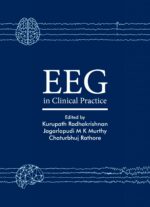
EEG in Clinical Practice
₹2,500.00Editors: K Radhakrishnan, Jagarlapudi M K Murthy, Chaturbhuj Rathore
EEG in Clinical Practice is a comprehensive, easy-to-read, and well-illustrated book on scalp EEG. Through the text in its 21 chapters, 553 figures, and 94 tables describes practically every aspect of the scalp EEG including pathophysiology, technical challenges, and its value and limitations in the diagnosis of epilepsy and related disorders. Some of the recent advances such as EEG monitoring in intensive care units, quantitative EEG, and high frequency oscillations are also covered. Adhering to the systematic approach to reading and interpretation of the EEG, depicted in the final chapter, may help to minimize misreading of EEG and its consequences, which is highly prevalent especially in the developing countries. Though it is targeted at neurology trainees, young practicing neurologists, and neurotechnologists, it also serves as a reference guide for all the neurologists and electrophysiologists.
Interested readers may write to us at mup@manipal.edu about purchasing the book.
Also available on
-

Biomedical Spectroscopy
₹2,950.00Author: Santhosh C, Vasudevan Baskaran Kartha
Biomedical spectroscopy is the output of the intensive discussions of the authors and the medical professionals of Kasturba Medical College, Manipal University. The ?Centre for Laser Spectroscopy?, a centre for developing biomedical applications of laser spectroscopic methods, was established at Manipal University in 1997. The scientists of the Centre, together with the physicians, surgeons, and pathologists of the KMC, initiated a number of research programs in this area. The main aim of the Centre was to develop spectroscopic methods for early detection, screening, monitoring therapy and identification of disease markers, with special emphasis on various cancers, so that these techniques can be applied for routine healthcare applications. Outcome of these research activities are covered in the book. A common platform of information can provide a more open communication enabling faster and better evolution of the spectroscopic methods for biomedical applications.
Interested readers may write to us at mup@manipal.edu about purchasing the book.
International Edition available on 
South Asia Edition available on -

The Multivalence of an Epic: Retelling the Ramayana in South India and Southeast Asia
₹3,000.00Editor: Parul Pandya Dhar
The Ramayana traditions of South India and Southeast Asia are examined at multiple levels in this volume. The research presented here offers in-depth investigations of chosen moments in the development of the epic tradition together with broader trends that help in understanding the epic’s multivalence. The journey and localization of the Rāmāyaṇa is explored in its manifold expressions from classical to folk, from temples and palaces to theatres and by-lanes in cities and villages, and from ancient to modern times. Regional Rāmāyaṇas from different parts of South India and Southeast Asia are placed in deliberate juxtaposition to enable a historically informed discussion of their connected pasts across land and seas. The three parts of this volume, organized as visual, literary, and performance cultures, discuss the sculpted, painted, inscribed, written, recited, and performed Ramayanas. A related emphasis is on the way boundaries of medium and genre have been crossed in the visual, literary, and performed representations of the Rāmāyaṇa. These are rewarding directions of research that have thus far received little attention. Bringing together 19 well-known scholars in Ramayana studies from Cambodia, Canada, France, India, Indonesia, Malaysia, Singapore, Thailand, UK, and USA, this thought-provoking and elegantly illustrated volume engages with the inherent plurality, diversity, and adaptability of the Rāmāyaṇa in changing socio-political, religious, and cultural contexts and with shifting norms, tastes, traditions, and ideologies.
Interested readers may write to us at mup@manipal.edu about purchasing the book.
International Edition available on 
South Asia Edition available on -
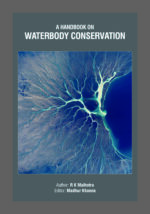
A Handbook on Waterbody Conservation
₹3,000.00Author: R K Malhotra Editor: Madhur Khanna
Water is life, engineering it well is survival.In a world grappling with water scarcity, climate uncertainty, and the demands of unsustainable development, A Handbook n Waterbody Conservation serves as a practical reference for engineers, policymakers, and practitioners. Drawing on decades of field experience, it offers a rich compendium of actionable solutions spanning rehabilitation, maintenance, construction, and conservation of water infrastructure. Designed as a practical guide, the handbook goes beyond theory, presenting tested approaches for real-world implementation. It is a vital tool for those engaged in protecting and sustaining water resources and represents the culmination of a lifelong commitment to safeguarding one of the planet’s most vital resources—water.Blending technical expertise with practical insight, this handbook offers a comprehensive resource for the construction, rehabilitation, and upkeep of water storage structures, along with soil and water conservation practices. Grounded in field experience, it addresses key challenges associated with water infrastructure today. What sets this book apart is its emphasis on practical engineering solutions, supported by community participation, grassroots innovation, and project oversight.“Work is worship” has long been R K Malhotra’s guiding belief.In his own words: “Knowledge is a vast ocean— take a sip and share it with others”This handbook is more than a technical resource. It reflects R K Malhotra’s professional experience and commitment to hands-on service, problem-solving, and the sharing of knowledge to support sustainable water management.
Interested readers, international readers and bulk buyers may write to us at mup@manipal.edu about purchasing the book.Also available on
eBook available on