
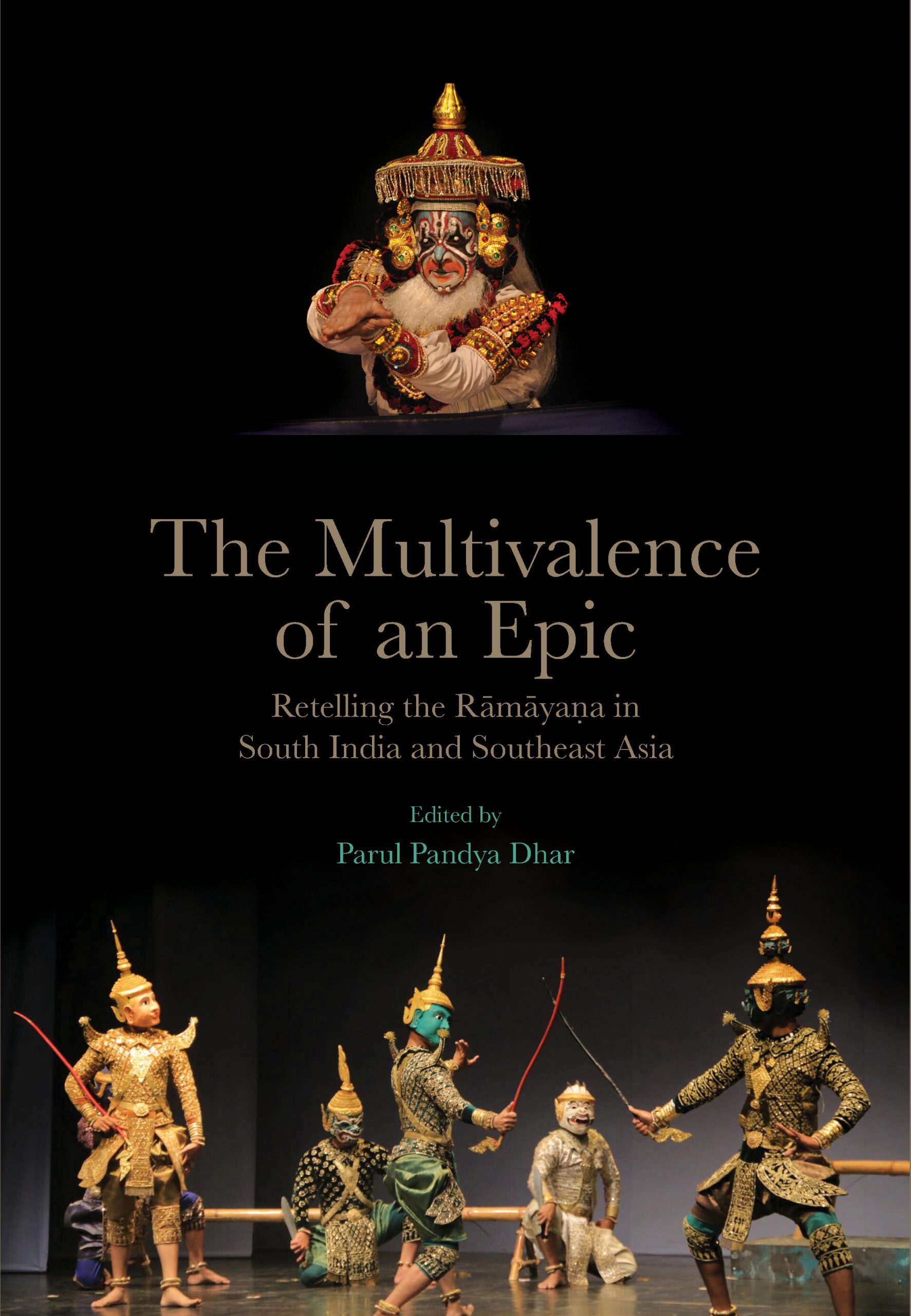
The Multivalence of an Epic: Retelling the Ramayana in South India and Southeast Asia
₹3,000.00
Editor: Parul Pandya Dhar
The Ramayana traditions of South India and Southeast Asia are examined at multiple levels in this volume. The research presented here offers in-depth investigations of chosen moments in the development of the epic tradition together with broader trends that help in understanding the epic’s multivalence. The journey and localization of the Rāmāyaṇa is explored in its manifold expressions from classical to folk, from temples and palaces to theatres and by-lanes in cities and villages, and from ancient to modern times. Regional Rāmāyaṇas from different parts of South India and Southeast Asia are placed in deliberate juxtaposition to enable a historically informed discussion of their connected pasts across land and seas. The three parts of this volume, organized as visual, literary, and performance cultures, discuss the sculpted, painted, inscribed, written, recited, and performed Ramayanas. A related emphasis is on the way boundaries of medium and genre have been crossed in the visual, literary, and performed representations of the Rāmāyaṇa. These are rewarding directions of research that have thus far received little attention. Bringing together 19 well-known scholars in Ramayana studies from Cambodia, Canada, France, India, Indonesia, Malaysia, Singapore, Thailand, UK, and USA, this thought-provoking and elegantly illustrated volume engages with the inherent plurality, diversity, and adaptability of the Rāmāyaṇa in changing socio-political, religious, and cultural contexts and with shifting norms, tastes, traditions, and ideologies.
Interested readers may write to us at mup@manipal.edu about purchasing the book.
International Edition available on |
South Asia Edition available on
|
| Format | |
|---|---|
| Author |
Related products
-
Linear Algebra with Applications
₹650.00Linear Algebra with Applications portrays selected articles published earlier by Prof Ravindra B Bapat in various reputed journals. This volume published in honour of Prof Bapat, on the occasion of his 60th birthday, consists of his original research articles written in the area of (i) Permanent, Determinant and their applications, (ii) Non-negative Matrices, (iii) Matrix Methods in Statistics and Graph theory, and (iv) Generalized Inverses of a Matrix. Starting with an article A Generalization of a Theorem of Ky Fan on Simplicial Maps, his first article published in 1980, several articles probing the properties of permanent and determinant, characterization of generalized inverses, spectral properties of graphs, and applications of matrix methods in statistics are compiled in this volume. The articles selected in this book will certainly inspire the young linear algebraists and provide several matrix techniques to solve different problems in the area of applied linear algebra.
Interested readers may write to us at mup@manipal.edu about purchasing the book.
Also available on

-

The Practice of Geopolitics
₹850.00Author: M D Nalapat
Intended to be a Practioner’s Guide to Geopolitics, the book provides a look into the thought processes that generate correct and timely analysis of global events. Geopolitics needs to weave within its analytical grasp economics, society, strategy and even culture, as the science deals with overall national capabilities as well as the mutal synergy and frictions between nations. Although a broad range of subjects has been covered in the book, each is anchored in the ground reality of events having a profound impact on the lives of citizens and on world events. The growing interconnectedness of the globe has resulted in a need to do away with the popular west centric models of international relations and to view events not through that single prism but from a holistic viewpoint that accepts the relevance and maturity of different histories and geographies. What the book provides is an alternative Weltanschauung to the dominant models of geopolitical analysis, so that the science is enabled to cross beyond the narrow boundaries which have confined. The scope and applicability of its analysis. The rise of Asia needs a geopolitical vision unique to the continent, and this is what has been provided by Professor Nalapat.
Interested readers may write to us at mup@manipal.edu about purchasing the book.
Also available on
-
Christa Shaka 1800 Ra Modalina Mysooru ithihaasa
₹295.00Author: D S Achuta Rao Translator: S Narendra Prasad
೧೮೦೦ ಕ್ರಿ. ಶ. ದ ಹಿಂದಿನ ಮೈಸೂರು ಇತಿಹಾಸವು ಪ್ರೊ. ಡಿ ಎಸ್ ಅಚ್ಯುತ ರಾವ್ ಅವರ ಜೀವನ ಮತ್ತು ಕೆಲಸದ ಬಗ್ಗೆ. ಮೈಸೂರು ಇತಿಹಾಸದ ಕುರಿತಾದ ಅವರ ಸಂಶೋಧನೆಯು 1940-65ರ ಅವಧಿಯಲ್ಲಿ ಅವರು ಪ್ರಕಟಿಸಿದ ಹತ್ತು ಸೂಚ್ಯಂಕ ಲೇಖನಗಳಿಂದ ಪ್ರತಿನಿಧಿಸುತ್ತದೆ. ಅವರು ಭಾರತದ ಇತಿಹಾಸ ಮತ್ತು ಅದರ ಅದ್ಭುತ ಭೂತಕಾಲವನ್ನು ಸಕ್ರಿಯವಾಗಿ ಜನಪ್ರಿಯಗೊಳಿಸಿದರು. ಮಹಾರಾಜಾಸ್ ಕಾಲೇಜ್ ಹಿಸ್ಟರಿ ಸೊಸೈಟಿ, ಭಾರತದ ವಸಾಹತು ಸಂಶೋಧಕರು ಮತ್ತು ಕನ್ನಡ ವಿಶ್ವಕೋಶದಲ್ಲಿ ಮೈಸೂರು ಸರ್ಕಾರದ ಉಪಕ್ರಮದಿಂದ ಭಾರತೀಯ ಇತಿಹಾಸದಲ್ಲಿ ಉಪಕ್ರಮಗಳನ್ನು ಪ್ರಸ್ತುತಪಡಿಸುವುದರಿಂದ ಅಂತಹ ಮೂರು ಲೇಖನಗಳನ್ನು ಸೇರಿಸಲಾಗಿದೆ. ಎರಡನೇ ಭಾಗದಲ್ಲಿ ಅವರ ಜೀವನಚರಿತ್ರೆಯಲ್ಲಿ, ಅವರ ವಿದ್ಯಾರ್ಥಿಗಳು ಮತ್ತು ಮಕ್ಕಳು ಶಿಕ್ಷಕ ಮತ್ತು ತಂದೆಯಾಗಿ ಅವರ ಜೀವನದ ಬಗ್ಗೆ ಬರೆದಿದ್ದಾರೆ, ಅವರ ಅವಧಿಯ ಸಂದರ್ಭವನ್ನು ಒದಗಿಸಿದ್ದಾರೆ. ಪುಸ್ತಕವು ಕಳೆದ ಶತಮಾನದ ಮಧ್ಯದಲ್ಲಿ ಇತಿಹಾಸ ಸಂಶೋಧನೆಗೆ ಆಸಕ್ತಿದಾಯಕ ವಿಂಡೋವನ್ನು ಪ್ರಸ್ತುತಪಡಿಸುತ್ತದೆ.
Interested readers may write to us at mup@manipal.edu about purchasing the book.
Also available on
-

Childhood Cancer
₹185.00Authors: H S Ballal, P D Gupta
Childhood Cancer is a major medical problem in most of the societies of the modern world. Though enough literature is available on the subject, it is not easily intelligible to common people. An ordinary parent whose ward is affected by any form of childhood cancer would beat a loss without the basic information. This book is aimed at educating a non-professional who wishes to grasp the problem in detail and in a simple way. The book primarily deals with the signs and symptoms of cancer in children which enable early detection. It is written in a lucid manner to remove the myth among parents that diagnosis of cancer in children amounts to a death sentence. Many of the childhood cancers, if detected early, can be cured completely, and the patients can live the rest of their lives like any other normal people. The book is an attempt to create this awareness among parents through proper information about the disease. Further, the book would also serve as a manual for MBBS students and professionals in other fields for primary treatment and management of the childhood cancer patients.
Interested customers may write to us at mup@manipal.edu about purchasing the book.
Also available on
-
COVID19: A Multidimensional Response
₹2,200.00Editors: N Udupa, Raviaraja NS, Chiranjay Mukhopadhya,
COVID-19 disease is caused by the SARS-CoV-2 virus, first detected in November-December 2019 in Wuhan, China. Thus far, more than 7 million people have been infected with the novel coronavirus across the globe, and the count is increasing with every passing day. Even though it causes severe respiratory problems, the majority of patients show mild symptoms, and pathogenesis is under investigation. Although several drugs are being developed and many of them are undergoing clinical trials, currently there are no approved drugs/vaccines to cure this disease. Personal hygiene and social distancing are important means to prevent the spread of this disease. With the advancements in scientific research, humankind is hoping to find a potent drug/vaccine for this disease at the earliest. The health care professionals and scientific community are at their maximum in combating this viral infection. In this book, an attempt is made to compile various aspects of COVID-19 in a single platform, which include aetiology, epidemiology, its clinical manifestations, diagnosis, pathological, clinical and therapeutic facets, comorbidities, risk factors, and the essential precautionary measures. This book comprises around 29 chapters contributed by various experts from research and clinical backgrounds.
Interested readers may write to us at mup@manipal.edu about purchasing the book.
Also available on
-
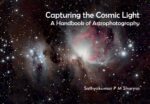
Capturing the Cosmic Light – A Handbook of Astrophotography
₹670.00Author: Sathyakumar P M Sharma
The Handbook of Astrophotography is the first book dedicated to Astronomical Imaging through modest equipment, and the first to be published in India. It is a chronicle of the techniques learnt and employed by the author and is by no means proprietary. It is assumed that the reader is equipped with the basic knowledge to use a digital camera. After showing the many methods to capture the Cosmos, the book shows how to process these images. It is designed to be a handbook and not a user manual. The author hopes that the reader will be confident in astronomical imaging and develop his/her own techniques after reading the book. Sathyakumar started Astrophotography in January 2006 with a homemade wooden star-tracking mount and a camera borrowed from a friend. He later used his homemade Newtonian reflector telescope and an inexpensive digital camera to capture photos of the Moon. With an MSc in Aerospace engineering from the University of Salford, Manchester, he joined Opticstar Ltd, as a design engineer. There he was trained on the latest of astronomical instruments available for the amateur astrophotographer and eventually purchased the Celestron C8 Schmidt cassegrain telescope and the CG-5 Equatorial mount. Currently, he uses a GSO 6 inch RC telescope and an HEQ5-PRO computerized mount as well as an Orion 80ED Apochromatic telescope for astrophotography. He also owns an Astrotrac to take wide field vistas of the Cosmos. He is now employed as a Scientific Officer at Karnataka Science and Technology Promotion Society, Department of Science and Technology, Govt. of Karnataka.
Interested readers may write to us at mup@manipal.edu about purchasing the book.
Also available on
-
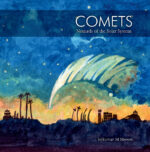
Comets – Nomads of the Solar System
₹290.00This book introduces the general reader to the world of comets – those celestial visitors from the outer Solar System that occasionally visit the Earth’s neighbourhood and put up spectacular shows in the night sky. The world had geared up for just such a show at the end of 2013, when Comet ISON was expected to light up the night sky. Using the occasion to bring the world of comets to those interested, this book is a delightful read about the quirky world of these unpredictable visitors. Apart from lucidly and accurately updating the reader about what comets are, where they come from, why is it that they assume the fantastic shapes they do etc. “Comets” also regales the reader with myths about comets in various cultural contexts, snippets about famous comets in the history of mankind, anecdotes on comet discoveries and discoverers, the bewildering procedures followed while naming comets and much more. The book takes a hard look at the hype surrounding the fiery expectations about Comet ISON an cautions the reader that, while there was a good chance of the comet blazing forth in the skies of December 2013, there was a realistic chance that the comet would not survive its close encounter with the Sun. Sadly, the pessimistic predictions came true and the comet disintegrated as it went around the Sun. As we wait for chance to throw us a Great Comet to gaze at in the future, “Comets: Nomads of the Solar System” is an excellent guide to prepare for the event!
Interested customers may write to us at mup@manipal.edu about purchasing the book.
Also available on
-
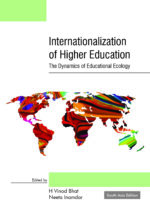
Internationalization of Higher Education: The Dynamics of Educational Ecology
₹500.00Editors: H Vinod Bhat, Neeta InamdarThe mobility of scholars seeking knowledge has been a part of the university ideal for centuries. History holds testimony to the fact that these mobilities have also altered the lives of people in different regions. Universities have played a pivotal role in the movement of people across borders and the resultant transformation of societies due to transcultural interactions.In this book, the editors have brought together ideas on the changing dynamics of these mobilities of scholars and the interconnectedness of higher education institutions in today’s world. An attempt is also made to record the implications of these international collaborations in knowledge generation and dissemination within the educational ecology. The notion of educational ecology is explored through the articles in the book to comprehend the power play that exists in the dimension and the direction of internationalization of higher education. All this is done with the hope that the opening up of education to global opportunities may, over a period of time, lead to equitable distribution of opportunities worldwide.Interested readers may write to us at mup@manipal.edu about purchasing the book.
International Edition available on South Asia Edition available on