
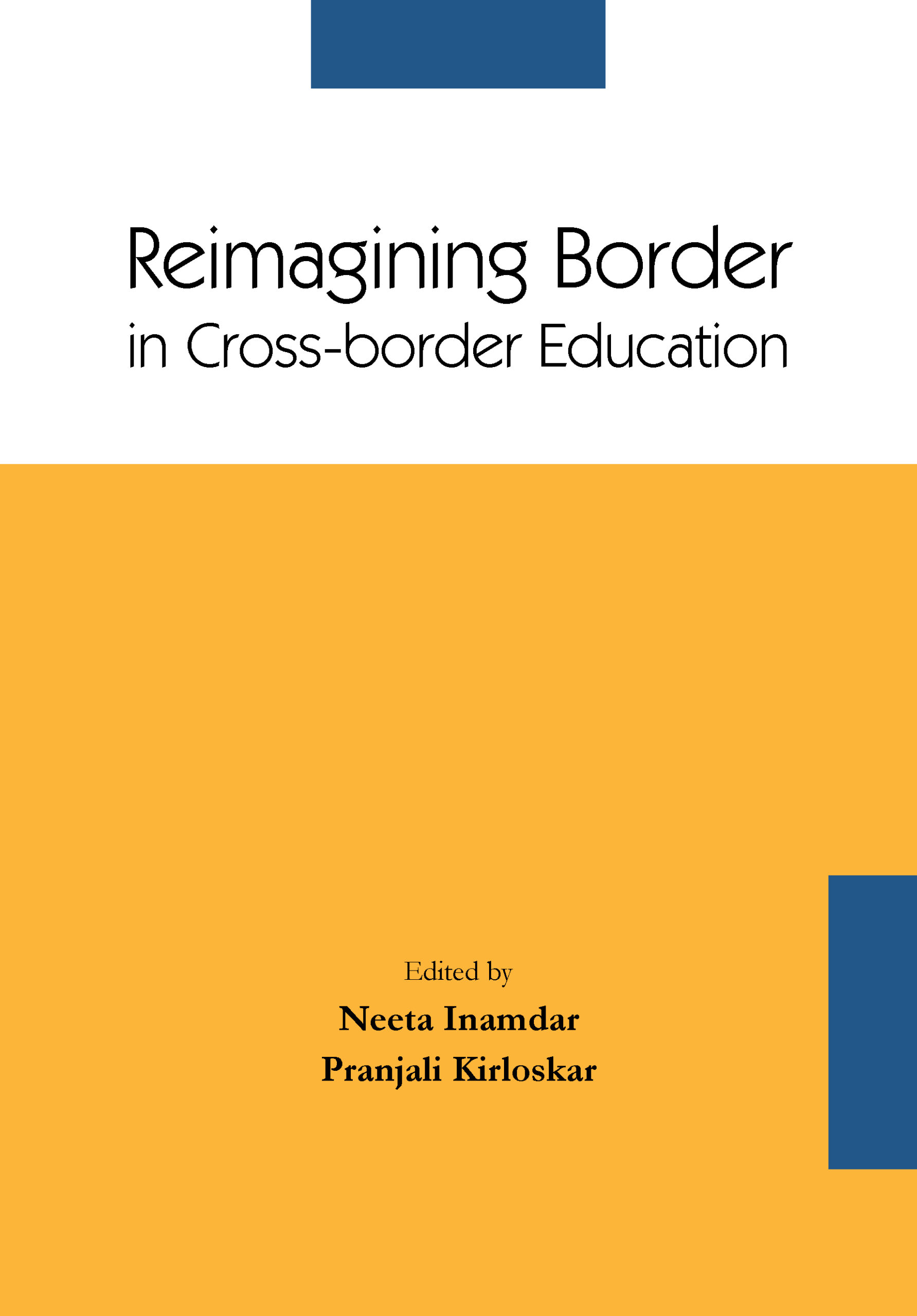

Reimagining Border in Cross-border Education
₹600.00
Editors: Neeta Inamdar, Pranjali Kirloskar
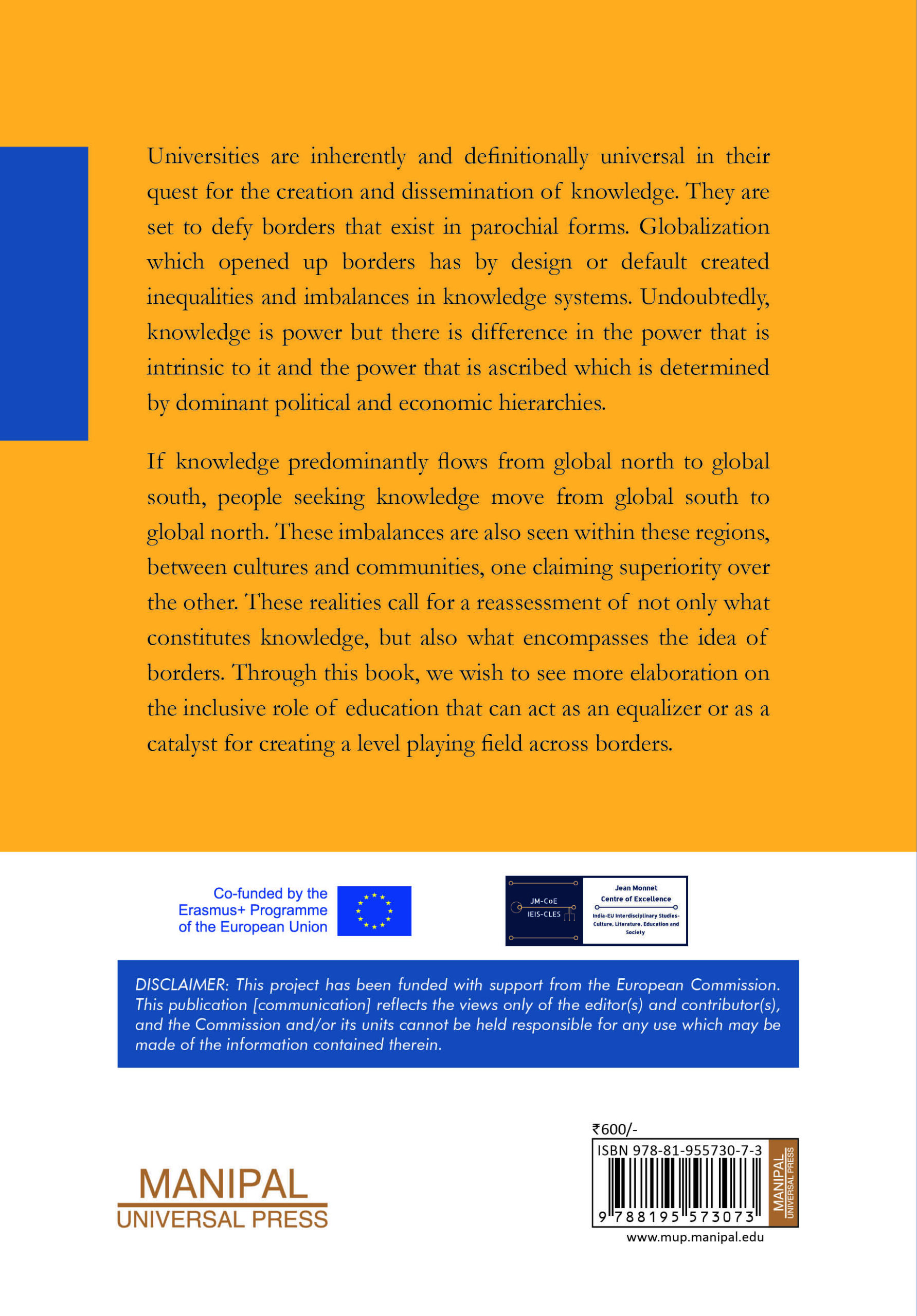
Universities are inherently and definitionally universal in their quest for the creation and dissemination of knowledge. They are set to defy borders that exist in parochial forms. Globalization which opened up borders has by design or default created inequalities and imbalances in knowledge systems. Undoubtedly, knowledge is power but the difference in the power that is intrinsic to it and the power that is ascribed which is determined by dominant political and economic hierarchies.<br><br>If knowledge predominantly flows from global north to global south, people seeking knowledge move from global south to global north. These imbalances are also seen within these regions, between cultures and communities, one claiming superiority over the other. These realities call for a reassessment of not only what constitutes knowledge, but also what encompasses the idea of borders. Through this book, we wish to see more elaboration on the inclusive role of education that can act as an equalizer or as a catalyst for creating a level playing field across borders.
Interested readers may write to us at mup@manipal.edu about purchasing the book.
International Edition available on |
South Asia Edition available on |
| Format |
|---|
Customer Reviews
There are no reviews yet.
Related products
-
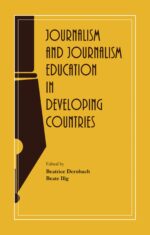
Journalism and Journalism Education in Developing Countries
₹550.00Editors: Beate Illg, Beatrice Dernbach
Free and fair media are at the heart of any democratic set up. A thriving field of journalism and zealous and ethical journalists in that sense become torch bearers of a brighter and promising tomorrow. In this light, the status of journalists, the most important actors in the field becomes increasingly important as a matter of study. They act as gatekeepers of information that is flooding in the era of new media, a wave that is not so new anymore. Their roles remain intact and even becomes prominent in the chaos of many-to-many communication.
Not concentrating on specific countries, selected contributions in the book reflect on the developments of media and journalism education across different countries. Introducing the book with an overview about the state-of-the-art of journalism education and the research on a meta level, the book moves on to talk about media studies in the Asian countries and in Arab world, the African States and Brazil.
The recent economic and social developments present both opportunities and risks for journalism. Freedom of expression and freedom of press, even in democratic countries, are under pressure. This book provides an international perspective on the different aspects of journalism – the situation in which journalists work, their working conditions, educational backgrounds, struggles and successes. It is aimed at an international public interested in the field of journalism and freedom of speech. It addresses journalists, trainers and academics. Furthermore, institutions in the field of development cooperation, education or cultural policy and cultural education are the focus of this work. Though the book is focused on journalism and journalism education in developing countries, contributions are from across the globe. This book is an interesting read for all those who care about a vital media landscape and an open democratic society.Interested readers may write to us at mup@manipal.edu about purchasing the book.
Also available on
-
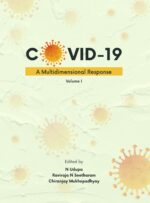
COVID19: A Multidimensional Response
₹2,200.00Editors: N Udupa, Raviaraja NS, Chiranjay Mukhopadhya,
COVID-19 disease is caused by the SARS-CoV-2 virus, first detected in November-December 2019 in Wuhan, China. Thus far, more than 7 million people have been infected with the novel coronavirus across the globe, and the count is increasing with every passing day. Even though it causes severe respiratory problems, the majority of patients show mild symptoms, and pathogenesis is under investigation. Although several drugs are being developed and many of them are undergoing clinical trials, currently there are no approved drugs/vaccines to cure this disease. Personal hygiene and social distancing are important means to prevent the spread of this disease. With the advancements in scientific research, humankind is hoping to find a potent drug/vaccine for this disease at the earliest. The health care professionals and scientific community are at their maximum in combating this viral infection. In this book, an attempt is made to compile various aspects of COVID-19 in a single platform, which include aetiology, epidemiology, its clinical manifestations, diagnosis, pathological, clinical and therapeutic facets, comorbidities, risk factors, and the essential precautionary measures. This book comprises around 29 chapters contributed by various experts from research and clinical backgrounds.
Interested readers may write to us at mup@manipal.edu about purchasing the book.
Also available on
-
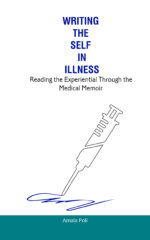
Writing the self in Illness: Reading the Experiential through the Medical Memoir
₹240.00Author: Amala Poli
Writing the Self in Illness: Reading the Experiential Through the Medical Memoir is MUP’s refreshing venture into the developing fields of Medical and Health Humanities with an aim to consider the necessity of the narrative knowledge as complementary to the contemporary notions of well-being, illness, and healthcare.
Is individual happiness contingent on health and well-being “How does one find happiness in the throes of illness” In the present-day scenario, wherein medical practice is largely dominated by evidence-based understanding, diagnostic language, and problem-solving methods, the discipline of Medical Humanities emerges with a reciprocal dialogue between Humanities, Social Sciences, Health, and Medicine. The study of varied experiential narratives – literary works and unmediated accounts of patients and healthcare professionals, is foregrounded in Medical Humanities to amplify knowledge and understanding about the complexity of encounters with illness and their transformational quality in a nuanced manner. Both thought-provoking and informative, this publication brings about the anecdotal form of personal narratives in the light of medical discourses along with the specific cultural context of the narrative.
The present publication seeks to be an important reading for students and academics in the field of medical humanities, health professionals or medical practitioners, as well as scholars aspiring to venture into this flourishing field.Interested readers may write to us at mup@manipal.edu about purchasing the book.
Also available on
-
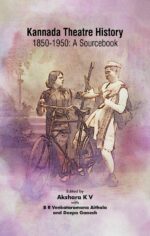
Kannada Theatre History 1850-1950: A Sourcebook
₹250.00Edited by: Akshara K V with
This source book on Kannada theatre history is a valuable contribution to the larger field of Indian Theatre Studies. Avoiding the shortcuts of an overview or a Wikipedia-like assemblage of information, it delves into the lives, histories, struggles, debates and anecdotes surrounding some of the most pioneering figures in the shaping of Kannada theatre between 1850-1950. The selection of primary sources, most of which are being made available in English for the first time, is nothing short of a revelation in the way it illuminates insights into the actual making and thinking of theatre practice. Here we have a model of how the construct of ‘Indian Theatre’ can be textured, inflected, individuated and problematized at regional, local and intracultural levels. Rustom Bharucha .This book is a labour of love by scholars who not only love Kannada theatre, but want to pass on their enjoyment of it. Delving deep into folklore oral history, local history, gossip debate and discourse, the editors bring out the world of Kannada theatres in pluralistic terms. Scholarship and playfulness combine to create a powerful act of storytelling where the book itself mimics the career of Kannada theatre. As an anthology it becomes an initiation rite, an introduction to all the great figures, not as hagiography but as nuanced analysis. Big questions and little questions combine to create both a sense of combativeness and a wonderful feeling of homecoming. Like tricksters, they break the binaries of tradition and modernity, treating it almost like a bad play which needs new scripts and new performers. A wonderful anthology. A deeply desi book, with all the cosmopolitanism of world theatre.
Interested readers may write to us at mup@manipal.edu about purchasing the book.
Also available on
-
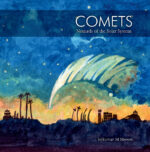
Comets – Nomads of the Solar System
₹290.00This book introduces the general reader to the world of comets – those celestial visitors from the outer Solar System that occasionally visit the Earth’s neighbourhood and put up spectacular shows in the night sky. The world had geared up for just such a show at the end of 2013, when Comet ISON was expected to light up the night sky. Using the occasion to bring the world of comets to those interested, this book is a delightful read about the quirky world of these unpredictable visitors. Apart from lucidly and accurately updating the reader about what comets are, where they come from, why is it that they assume the fantastic shapes they do etc. “Comets” also regales the reader with myths about comets in various cultural contexts, snippets about famous comets in the history of mankind, anecdotes on comet discoveries and discoverers, the bewildering procedures followed while naming comets and much more. The book takes a hard look at the hype surrounding the fiery expectations about Comet ISON an cautions the reader that, while there was a good chance of the comet blazing forth in the skies of December 2013, there was a realistic chance that the comet would not survive its close encounter with the Sun. Sadly, the pessimistic predictions came true and the comet disintegrated as it went around the Sun. As we wait for chance to throw us a Great Comet to gaze at in the future, “Comets: Nomads of the Solar System” is an excellent guide to prepare for the event!
Interested customers may write to us at mup@manipal.edu about purchasing the book.
Also available on
-
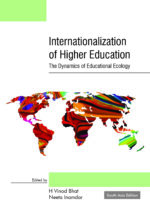
Internationalization of Higher Education: The Dynamics of Educational Ecology
₹500.00Editors: H Vinod Bhat, Neeta InamdarThe mobility of scholars seeking knowledge has been a part of the university ideal for centuries. History holds testimony to the fact that these mobilities have also altered the lives of people in different regions. Universities have played a pivotal role in the movement of people across borders and the resultant transformation of societies due to transcultural interactions.In this book, the editors have brought together ideas on the changing dynamics of these mobilities of scholars and the interconnectedness of higher education institutions in today’s world. An attempt is also made to record the implications of these international collaborations in knowledge generation and dissemination within the educational ecology. The notion of educational ecology is explored through the articles in the book to comprehend the power play that exists in the dimension and the direction of internationalization of higher education. All this is done with the hope that the opening up of education to global opportunities may, over a period of time, lead to equitable distribution of opportunities worldwide.Interested readers may write to us at mup@manipal.edu about purchasing the book.
International Edition available on South Asia Edition available on -

Transformation Beyond Sight
₹395.00Author: Jibu Thomas
Transformation Beyond Sight is a gripping narrative of the author’s experience in the hospital administration of Kasturba Hospital (KH), Manipal. As an experiential account, the present book provides insights into the thoughts, concerns, and apprehensions of prospective hospital administrators, and spotlights the vital role played by a hospital administrator in the day-to-day operations of KH, which is also an advanced healthcare facility.This book draws attention to the transformational quality of the author’s experiences to emphasize that the evolution in leadership and management of the teaching hospital went hand-in-hand with the transformation of the author’s administrative skills, and his own persona as a diligent administrator. The biographical undertone also provides an insight into the complex and dynamic healthcare environment, alongside the competencies, creativity, and mindfulness necessary for an administrator. This book narrates a hospital administrator’s engagements with the traditional processes and his attempts to bring about effective changes in the management and monitoring of operations of KH and the overall management of a healthcare facility.
Interested readers may write to us at mup@manipal.edu about purchasing the book.
Also available on
-
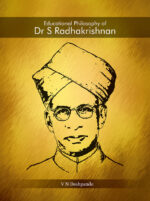
Educational Philosophy of Dr S Radhakrishnan
₹495.00Author: V N Deshpande
Educational Philosophy of Dr S Radhakrishnan effectively presents Radhakrishnan’s thoughts, highlighting their relevance to the present day. The author has at length discussed Indian Philosophy in comparison with the Western thought and successfully established that the East-West synthesis as propagated by Radhakrishnan is the need of the hour. The readers will also get an account of Radhakrishnan’s life story in the backdrop of the political history of pre and post-Independent India. This book is Dr V N Deshpande’s posthumous publication.
Interested readers may write to us at mup@manipal.edu about purchasing the book.
Also available on
Be the first to review “Reimagining Border in Cross-border Education”
You must be logged in to post a review.