
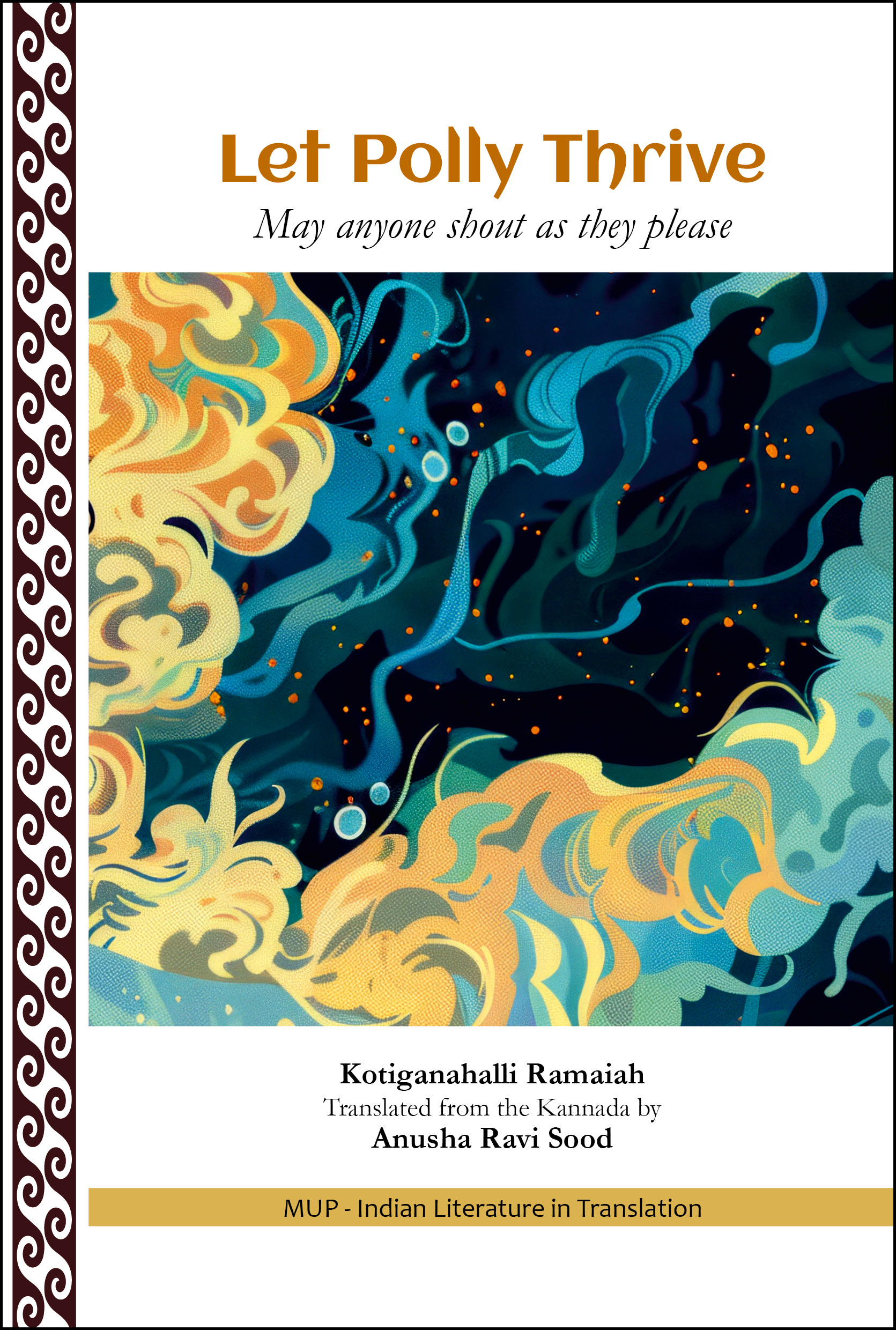
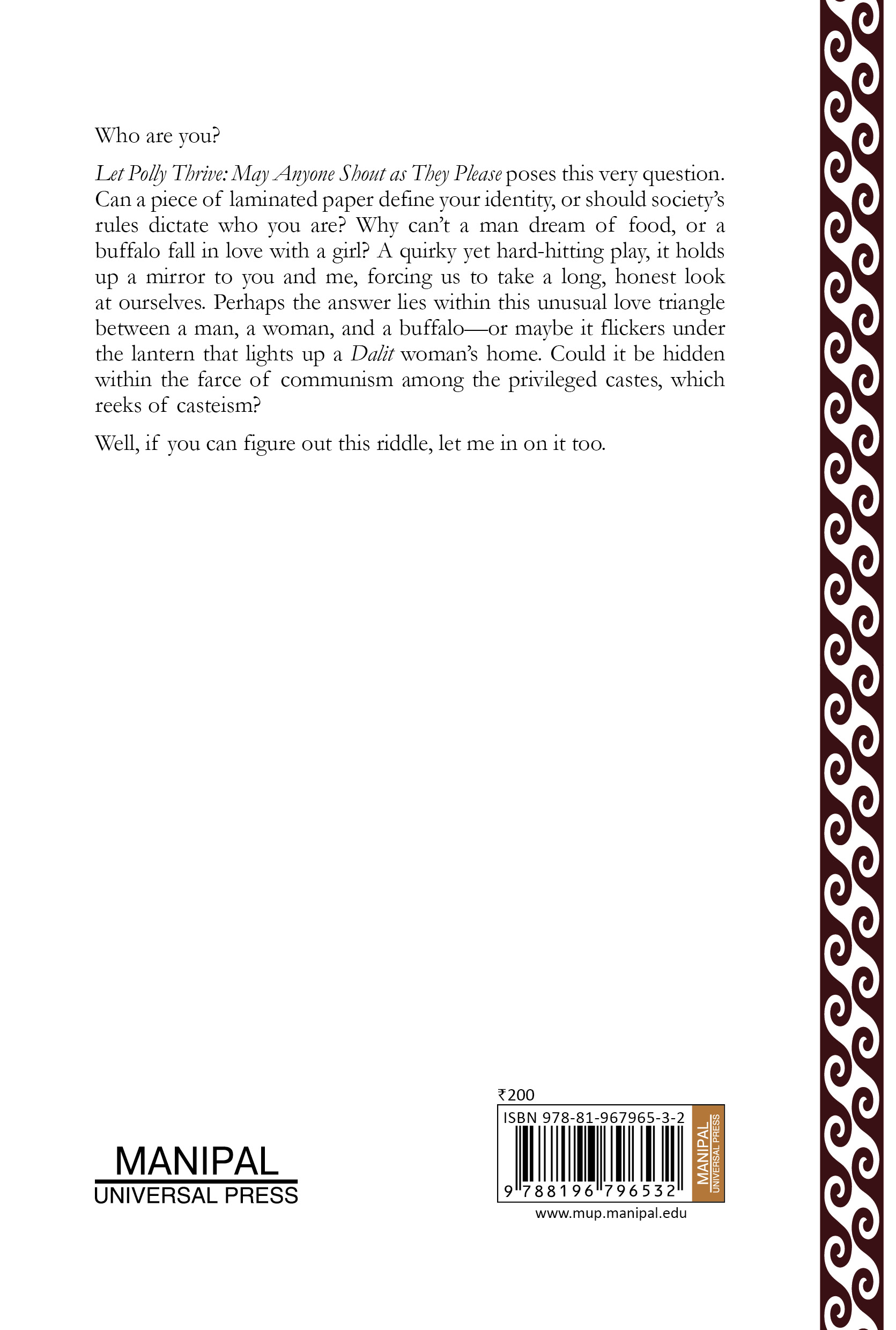
Let Polly Thrive: May anyone shout as they please
₹200.00
Author: Kotiganahalli Ramaiah, Translator: Anusha Ravi Sood
Who are you?
Let Polly Thrive: May anyone shout as they please poses this very question. Can a piece of laminated paper define your identity, or should society’s rules dictate who you are? Why can’t a man dream of food, or a buffalo fall in love with a girl? A quirky yet hard-hitting play, it holds up a mirror to you and me, forcing us to take a long, honest look at ourselves. Perhaps the answer lies within this unusual love triangle between a man, a woman, and a buffalo—or maybe it flickers under the lantern that lights up a Dalit woman’s home. Could it be hidden within the farce of communism among the privileged castes, which reeks of casteism?
Well, if you can figure out this riddle, let me in on it too.
Interested readers may write to us at mup@manipal.edu about purchasing the book.
Also available on

| Format |
|---|
Customer Reviews
There are no reviews yet.
Related products
-
Nala Charitre: The Legend of Nala(A Short Epic)
₹295.00This book presents the mythological narrative of Nala-Damayanti as an epic poem in English. Among the luminaries of sixteenth century Bhakti tradition, Kanakadasa’s literary and musical compositions (kirtanes) are imbued with philosophical meanings, which show immense formative influence on the cultural and literary scene of Karnataka. Also, Kanakadasa’s literary works such as Mohana Tarangini, Haribhaktisara, and the eminent allegorical masterpiece Ramadhanya Charitre incorporate metaphors taken from everyday life, which fascinate the commoners and offers them respite from mundane life-struggles. While such metaphorical expressions represent a remarkable trend in Bhakti poetry, in Kanakadasa?s depiction of Nala and Damayanti’s misfortunes, the toilsome life of common men and women stares forth. Hauled out of their palatial leisurely living, a curious turn of events compels them to survive amidst endless suffering. On one hand Nala Charitre is a poignant story of love, and on the other, it thematizes human existence, humandivine relationship and simplifies poetry to reach the audience beyond the limited circle of literates. As the Bhakti Literature assimilates the vernacular into devotional poetry, Kanakadasa?s epic poem interweaves mythological themes from Mahabharata with struggles of medieval Indian society, thus overcoming the binaries of human and divine.
Interested readers may write to us at mup@manipal.edu about purchasing the book.
-
Ekathaari: An Autobiography of a Nomad
₹320.00Author: Kuppe Nagaraja, Translator: Sadananda R
Kuppe Nagaraja’s autobiography is of social importance as it covers the life of a nomadic community. Its uniqueness comes from the fact that the nomadic and semi-nomadic lifestyle is markedly different from that of other communities in the lower socioeconomic strata of society. This autobiography does not glorify the life of its author; it narrates the story of a community through the lens of an individual’s life. It begins as the story of an individual, then becomes the story of a family, and finally transforms into the story of a community. The autobiography grows beyond the traps of self-glorification by providing equal space to all these aspects in a balancedmanner.
– Baraguru Ramachandrappa
Noted Kannada writer, critic and film directorJust as birds migrate to greener pastures, nomadic people move towards regions that have received good rains. Kuppe Nagaraja’s autobiography meaningfully captures their traditions, beliefs, social interactions, and superstitions. This book can also be considered a free gift to social scientists as it provides insights into the life of nomads. It should be noted that it is very difficult to study nomads, as they keep to themselves and often dodge any probing questions.
Moreover, the book provides an answer to all those people who often stand on the footpaths of cities debating the relevance of caste-based reservation in Indian society.– Krupakara-Senani
The Green Oscar winning wildlife photographersInterested customers may write to us at mup@manipal.edu about purchasing the book.
Also available on
-
Mahāmmāyi
₹195.00Author: Chandrasekhara Kambara, Translator: Kathyayini Kunjibettu
Mahāmmāyi is the story of the legend of Shatavithaayi – the Goddess of death, and her adopted son Sambhashiva. Out of affection for her son, Goddess Shatavithaayi blesses him with the “power of life”. The blessing was that death will evade the people who are treated by Sambashiva. But a certain condition set by Shatavithaayi forbade him from healing every ill man. The condition was that, if Shatavithaayi stood on the right side of the patient, Sambhashiva could treat that person and he would live; but, if she stood on the left side of the patient, he should not treat that person as his death was inevitable. Through a distinct method of story-telling, the story follows the life of Sambhashiva as he begins to question the ideas of fate and destiny. Thus, the conflict between fate and human efforts to change that fate is vividly described in this play.Interested readers may write to us at mup@manipal.edu about purchasing the book.
Also available on
-
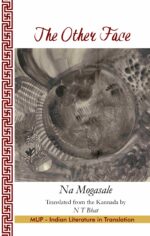
The Other Face
₹550.00Author: Na Mogasale Translator: N T Bhat
Set in a fictitious village called Kanthapura in Kasaragod district, Mukhāntara spans across the life of seven generations of a Havyaka Brahmin family. A story about the realities of living in a society marked by caste distinctions, the desire to find communal harmony and the tribulations of the characters through the entirety of the novel, it is also a tale of changing times and people. After unexpectedly coming into possession of a huge portion of land, Thirumalēshwara Bhat of Īshwarīmūle becomes a satisfied man. But childless, Thirumalēshwara Bhat and his wife Pārvathakka decide to adopt Venkappaiah and also give shelter to his widowed mother, Rathnamma. Venkappaiah is to inherit Thirumalēshwara’s vast wealth but when Krishnaiah, the illegitimate child of Thirumalēshwara and Rathnamma is born, rivalry ensues. Through the overlapping narratives of the characters, we get a glimpse into their journey from tradition to modernity. The characters strive to reshape new values when old values are slowly questioned and erased as they move on and are swept along in the waves of globalization.
Interested readers may write to us at mup@manipal.edu about purchasing the book.
Also available on
eBook available on

-
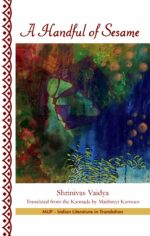
A Handful of Sesame
₹310.00Author: Srinivas B Vaidya, Translator: Maithreyi Karnoor
With a captivating start, A Handful of Sesame plunges us into the heart of the dying years of the 1857 mutiny. But the mutiny is largely a backdrop to the novel. When Kamalanabh of Kashi is manipulated by an impoverished Brahmin of Navalgund into marrying his daughter, the novel becomes basically the story of an internal migration. This is rare, and it remains one of the strengths of the novel. We are so used to speaking of migration across the postcolonial bridge and accredited national borders that we forget that India is a country of endless internal migrations – in the past and the present.
Interested readers may write to us at mup@manipal.edu about purchasing the book.
Also available on
-
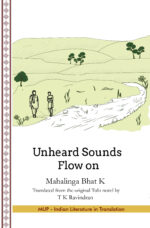
Unheard Sounds Flow On
₹315.00Author: K Mahalinga, Translator: T K Ravindran
In spite of being one of the oldest members of the Dravidian family of languages, Tulu, unfortunately, has not yet found the recognition that it richly deserves in the modern world. Since modernity privileges the written over the spoken, the Tulu language that is abundantly blessed with oral literature has been placed on the fringes of modern literary world. Ironically, Tulu is still engaged in a desperate fight for official status in a country that boasts of its cultural and linguistic diversity. The motives behind the translation of Nanajjer Sude Tirgayer, hailed as the first modern Tulu novel, into English refuse to remain apolitical in this context.
The novel, which has already been translated into Kannada, Konkani and Malayalam, beautifully captures the pulse of rusticity that characterizes the life of a village community that lived its life with its love-hate relationship with nature, more than 75 years ago in a Tulu speaking village in the south-western part of Karnataka. Besides bringing alive the socio-cultural practices that find their articulation through the natural linguistic plurality ingrained in the village psyche, the novel touches upon the duality of human nature that leaves man perennially condemned to an inner crisis.
Interested customers may write to us at mup@manipal.edu about purchasing the book.
Also available on
-
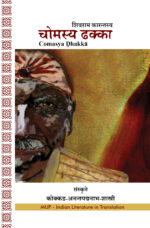
Comasya Dhakka
₹195.00Author: Shivarama Karanth Translator: Ananthapadmanabha Shastri
Set in the coastal Karavali region of Karnataka, Chomasya Dakka is the story of Coma, a Dalit bonded-laborer. Set in the pre-independent India, Comasya Dakka tells a poignant tale of dalit lives, and the suppression of their fundamental rights and identity through the character of Coma. Denied the right to even till and cultivate their own land due to their caste and identity, Coma and his children work as bonded-labourers for their landlord, Sankappayya. The plot of the novel follows the lives of Coma and his children and the tragedies that befall them. The original work in Kannada, Comana Dudi, was adapted into a well-acclaimed, national award-winning film in the year 1975. Directed by B V Karanth, it won the Swarna Kamal, Indias National Award for the Best Film in the year 1976.
Interested readers may write to us at mup@manipal.edu about purchasing the book.
Also available on
-

BAKA – Collection of Two Plays
₹340.00Author: M S Keshava Prabhu, Translator: L V Shantakumari
Baka dramatizes the episode of Bakasura, from the Indian epic, Mahabharata. Baka is a cannibal demon that terrorizes a village with its horrifying attacks. The king of the village strikes an agreement with the demon, putting its people in peril. They live in constant fear for years until the sudden arrival of a hero changes everything.
A theatrical and evocative narration, this play satirically mirrors society’s greed and irresponsibility. It depicts power struggles through the conflict that arises between Baka the demon, the cowardly king, and the oppressed people.Interested customers may write to us at mup@manipal.edu about purchasing the book.Also available on
Be the first to review “Let Polly Thrive: May anyone shout as they please”
You must be logged in to post a review.