

Karakarthaprabodhini
₹345.00
Author: Shivani V
Kaumudī (water lily) is the primer to study Sanskrit grammar, yet an ardent reader might find it a maze to untangle from its complexities. There is a need of Kaumudī (moonlight) to blossom it and show the light to reach its core. Kārakārthaprabodhinī is such an attempt. Kāraka, a factor that determines the relation between verb and the constituent words of a sentence, enables the reader to understand the intent of the sentence and thus critical discourses too. The Sanskrit grammatical texts and discourses have elaborated on the subtleties of Kāraka. Due to its profundity, there was a need for a lucid writing for the scholars and students for easy comprehension, which can be a reference book. Dr Potti made this possible for the Malayalam readers. Dr Shivani presents it for the Sanskrit fraternity too, with an introduction by Dr Varakhedi.
Interested customers may write to us at mup@manipal.edu about purchasing the book.
Also available on |
Customer Reviews
There are no reviews yet.
Related products
-
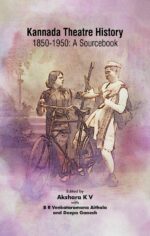
Kannada Theatre History 1850-1950: A Sourcebook
₹250.00Edited by: Akshara K V with
This source book on Kannada theatre history is a valuable contribution to the larger field of Indian Theatre Studies. Avoiding the shortcuts of an overview or a Wikipedia-like assemblage of information, it delves into the lives, histories, struggles, debates and anecdotes surrounding some of the most pioneering figures in the shaping of Kannada theatre between 1850-1950. The selection of primary sources, most of which are being made available in English for the first time, is nothing short of a revelation in the way it illuminates insights into the actual making and thinking of theatre practice. Here we have a model of how the construct of ‘Indian Theatre’ can be textured, inflected, individuated and problematized at regional, local and intracultural levels. Rustom Bharucha .This book is a labour of love by scholars who not only love Kannada theatre, but want to pass on their enjoyment of it. Delving deep into folklore oral history, local history, gossip debate and discourse, the editors bring out the world of Kannada theatres in pluralistic terms. Scholarship and playfulness combine to create a powerful act of storytelling where the book itself mimics the career of Kannada theatre. As an anthology it becomes an initiation rite, an introduction to all the great figures, not as hagiography but as nuanced analysis. Big questions and little questions combine to create both a sense of combativeness and a wonderful feeling of homecoming. Like tricksters, they break the binaries of tradition and modernity, treating it almost like a bad play which needs new scripts and new performers. A wonderful anthology. A deeply desi book, with all the cosmopolitanism of world theatre.
Interested readers may write to us at mup@manipal.edu about purchasing the book.
Also available on
-
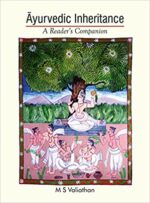
Ayurvedic Inheritance- A Reader’s Companion
₹650.00Author: M S Valiathan
In ancient India, learning spanned four quarters of one’s life. Learning was sought from the teacher, from one’s individual effort, from fellow students and in the last quarter, from the school of life itself. This book belongs to the third quarter for students of Ayurveda regardless of their background in medicine, science, or humanities. Apart from topics in the eight branches of Ayurveda, the book also deals with Ayurvedic Biology which seeks to study the concepts and procedures of Ayurveda with the tools of modern biology. M S Valiathan is a National Research Professor of the Government of India. He is a medical graduate from the University of Kerala and completed his postgraduate training in general surgery from the University of Liverpool and other hospitals in the UK. He did his specialisation in cardiac surgery from the Johns Hopkins and Georgetown University Hospitals in the US. He was a cardiac surgeon for over three decades. His shift to Ayurvedic studies resulted in the publication of three volumes on Caraka, Susruta and Vagbhata, and an Introduction to Ayurveda. The Department of Science and Technology set up a Task Force in Ayurvedic Biology under his chairmanship to promote research in the nascent discipline.
Interested readers may write to us at mup@manipal.edu about purchasing the book.
International Edition available on 
South Asia Edition available on
-
Parkinson’s Disease in India: From Clinic to Bench
₹1,500.00Editors: Madhuri Behari, SP Gorthi
The book fills a void in the knowledge about difference in Parkinson’s disease as seen India, if any from the rest of the world. It will provide a reference for any student of neurology wanting to learn the finer nuances of Parkinson’s disease in India. The book is written by Indian authors who have studied different aspects of Parkinson’s disease in depth, covering all aspects of Parkinson’s disease. The book is painstakingly drafted to cover all aspects of Parkinson’s disease from demography, etiology, clinical features (both motor and non-motor), complications, treatment modalities, its impact on the sufferer and the family and the financial aspect.
Interested readers may write to us at mup@manipal.edu about purchasing the book.
Also available on
-

Pharmaceutical Consumer Complaints: A Guide to Academia and Pharmaceutical Industry
₹795.00Editors: Girish Pai Kulyadi, Muddukrishna B S, Richa Ajay Dayaramani
This book is an excellent guide in analyzing consumer complaints and will aid the students who are yet to gain industry experience. It is necessary for resolving consumer complaints in pharmaceutical industry where such concerns are frequently received. The case studies provide a vivid description of defects that will help identify the nature of the issue, possible root cause of such complaints, and subsequent remediation.
Interested readers may write to us at mup@manipal.edu about purchasing the book.
Also available on
-
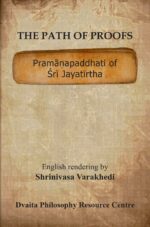
The Path of Proofs – Pramanapaddhati of Sri Jayatirtha
₹250.00Author: Shrinivasa Varakhedi
Epistemology of the Dvaita school of thought is presented in this short monograph Pramāṇapaddhati – the Path of Proofs, authored by Śrī Jayatīrtha. Epistemology is the science of knowledge that deals with the origin and nature of cognitive events and their means.
Ācārya Madhva, the proponent of the Dvaita school, has explained about the epistemology of this new school in his works. Since Madhva’s language is profound and the elucidations are scattered over his several works, it is difficult to comprehend for a novice. Hence, Pramāṇapaddhati was composed by his successor of third generation Śrī Jayatīrtha. The simple and captivating
style of this work is sure to ignite the interest in the readers to conduct further study in detail. This work is not only regarded as a standard textbook of Dvaita studies, but also considered as a basic authentic work in the Dvaita dialectic literature.This work is rendered into English by Prof Shrinivasa Varakhedi adopting the mirror-translation method.
Interested readers may write to us at mup@manipal.edu about purchasing the book.Also available on
-
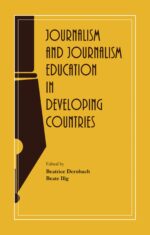
Journalism and Journalism Education in Developing Countries
₹550.00Editors: Beate Illg, Beatrice Dernbach
Free and fair media are at the heart of any democratic set up. A thriving field of journalism and zealous and ethical journalists in that sense become torch bearers of a brighter and promising tomorrow. In this light, the status of journalists, the most important actors in the field becomes increasingly important as a matter of study. They act as gatekeepers of information that is flooding in the era of new media, a wave that is not so new anymore. Their roles remain intact and even becomes prominent in the chaos of many-to-many communication.
Not concentrating on specific countries, selected contributions in the book reflect on the developments of media and journalism education across different countries. Introducing the book with an overview about the state-of-the-art of journalism education and the research on a meta level, the book moves on to talk about media studies in the Asian countries and in Arab world, the African States and Brazil.
The recent economic and social developments present both opportunities and risks for journalism. Freedom of expression and freedom of press, even in democratic countries, are under pressure. This book provides an international perspective on the different aspects of journalism – the situation in which journalists work, their working conditions, educational backgrounds, struggles and successes. It is aimed at an international public interested in the field of journalism and freedom of speech. It addresses journalists, trainers and academics. Furthermore, institutions in the field of development cooperation, education or cultural policy and cultural education are the focus of this work. Though the book is focused on journalism and journalism education in developing countries, contributions are from across the globe. This book is an interesting read for all those who care about a vital media landscape and an open democratic society.Interested readers may write to us at mup@manipal.edu about purchasing the book.
Also available on
-
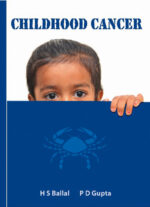
Childhood Cancer
₹185.00Authors: H S Ballal, P D Gupta
Childhood Cancer is a major medical problem in most of the societies of the modern world. Though enough literature is available on the subject, it is not easily intelligible to common people. An ordinary parent whose ward is affected by any form of childhood cancer would beat a loss without the basic information. This book is aimed at educating a non-professional who wishes to grasp the problem in detail and in a simple way. The book primarily deals with the signs and symptoms of cancer in children which enable early detection. It is written in a lucid manner to remove the myth among parents that diagnosis of cancer in children amounts to a death sentence. Many of the childhood cancers, if detected early, can be cured completely, and the patients can live the rest of their lives like any other normal people. The book is an attempt to create this awareness among parents through proper information about the disease. Further, the book would also serve as a manual for MBBS students and professionals in other fields for primary treatment and management of the childhood cancer patients.
Interested customers may write to us at mup@manipal.edu about purchasing the book.
Also available on
-
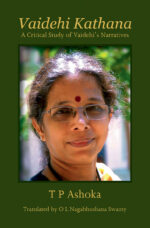
Vaidehi Kathana: A Critical Study of Vaidehi’s Narratives
₹250.00Author: T P Ashoka
Vaidehi Kathana is the first full-length literary critical study of the fictional, non fictional and poetic narratives of Vaidehi, who is considered to be one of the most celebrated contemporary Indian writers in Kannada. This work reviews, introduces, discusses and interprets all the writings of Vaidehi, which include short stories, poems, essays and a novel. The book examines how this great Indian writer has been reacting and responding to her time and space for the last four decades. The book shows how Vaidehi’s poetics has so subtly blended with her politics thereby creating some of the outstanding masterpieces in poetry and fiction of our times. The book discusses the special features of Vaidehi’s feminist perspectives as well as the uniqueness of her narrative skills. Arguing that Vaidehi’s spiritual triumph is demonstrated in her technical triumph, the book draws the attention of the non-Kannada readers to the entire body of Vaidehi’s writings. Lucidly translated into English by the noted translator O L Nagabhushana Swamy, T P Ashoka’s Vaidehi Kathana provides a meaningful opportunity for the non-Kannada readers to familiarize themselves with one of the greatest contemporary writers of India. T P Ashoka’s Vaidehi Kathana is a significant contribution to modern Indian literary criticism. The book provides an interesting reading not only to the students of literature, researchers and teachers but also appeals to the general readers.
Interested readers may write to us at mup@manipal.edu about purchasing the book.
Also available on
Be the first to review “Karakarthaprabodhini”
You must be logged in to post a review.