
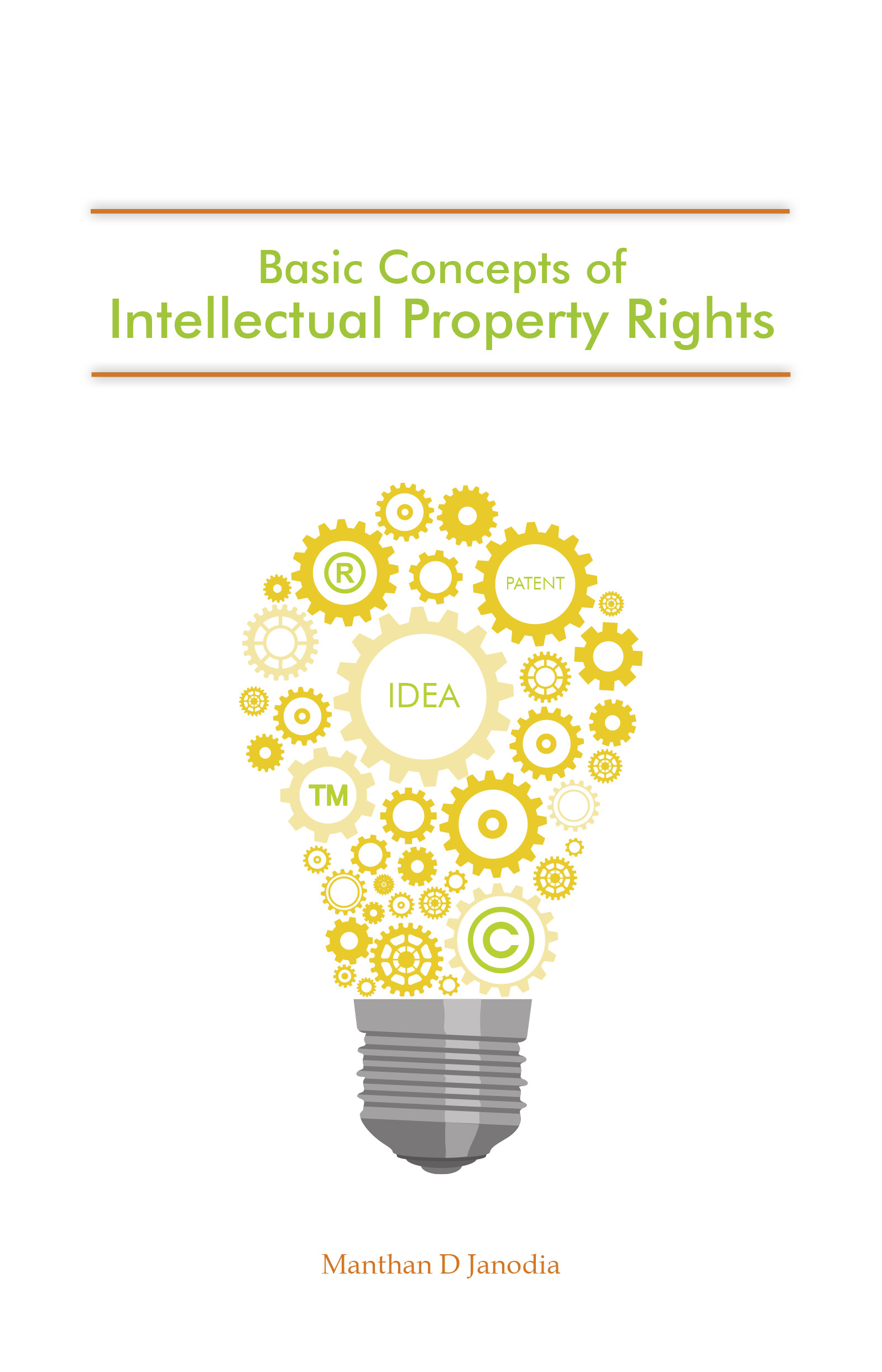
Basic Concepts of Intellectual Property Rights
₹190.00
This book on Intellectual Property Rights (IPRs) is aimed at undergraduate and post graduate students, research scholars and faculty members. The objective is to sensitize undergraduate and post graduate students regarding various aspects of IPRs, provide guidance to research scholars regarding safeguards to put in place for potentially patentable research and serve as a ready reckoner to faculty members interested to apply for patents but do not have a comprehensive information in various aspects of filing a patent application.
The book aims to simplify the complex issue of patent through hypothetical examples. This will help readers comprehend subject in an easy way. The book deliberately avoids the discussion on history of IPRs, General Agreement on Tariffs and Trade (GATT) negotiations and its background, culmination of GATT round of negotiations into World Trade Organization (WTO). These issues need a comprehensive discussion and are not the objectives of the book. The book is divided into eight short and simple chapters. At the end of the chapter a few Self Study Exercises are given for readers to recapitulate what they have read in that chapter. This may provide required foundation in understanding what is commonly referred to as “dry subject” of IPR. Overall, the book aims to provide required information regarding Intellectual Property Rights, focusing on patents, in simple and easily understandable language.
Interested customers may write to us at mup@manipal.edu about purchasing the book.
Also available on |
Out of stock
Customer Reviews
There are no reviews yet.
Related products
-
COVID19: A Multidimensional Response
₹2,200.00Editors: N Udupa, Raviaraja NS, Chiranjay Mukhopadhya,
COVID-19 disease is caused by the SARS-CoV-2 virus, first detected in November-December 2019 in Wuhan, China. Thus far, more than 7 million people have been infected with the novel coronavirus across the globe, and the count is increasing with every passing day. Even though it causes severe respiratory problems, the majority of patients show mild symptoms, and pathogenesis is under investigation. Although several drugs are being developed and many of them are undergoing clinical trials, currently there are no approved drugs/vaccines to cure this disease. Personal hygiene and social distancing are important means to prevent the spread of this disease. With the advancements in scientific research, humankind is hoping to find a potent drug/vaccine for this disease at the earliest. The health care professionals and scientific community are at their maximum in combating this viral infection. In this book, an attempt is made to compile various aspects of COVID-19 in a single platform, which include aetiology, epidemiology, its clinical manifestations, diagnosis, pathological, clinical and therapeutic facets, comorbidities, risk factors, and the essential precautionary measures. This book comprises around 29 chapters contributed by various experts from research and clinical backgrounds.
Interested readers may write to us at mup@manipal.edu about purchasing the book.
Also available on
-

Linear Algebra with Applications
₹650.00Linear Algebra with Applications portrays selected articles published earlier by Prof Ravindra B Bapat in various reputed journals. This volume published in honour of Prof Bapat, on the occasion of his 60th birthday, consists of his original research articles written in the area of (i) Permanent, Determinant and their applications, (ii) Non-negative Matrices, (iii) Matrix Methods in Statistics and Graph theory, and (iv) Generalized Inverses of a Matrix. Starting with an article A Generalization of a Theorem of Ky Fan on Simplicial Maps, his first article published in 1980, several articles probing the properties of permanent and determinant, characterization of generalized inverses, spectral properties of graphs, and applications of matrix methods in statistics are compiled in this volume. The articles selected in this book will certainly inspire the young linear algebraists and provide several matrix techniques to solve different problems in the area of applied linear algebra.
Interested readers may write to us at mup@manipal.edu about purchasing the book.
Also available on
-
The Path of Proofs – Pramanapaddhati of Sri Jayatirtha
₹250.00Author: Shrinivasa Varakhedi
Epistemology of the Dvaita school of thought is presented in this short monograph Pramāṇapaddhati – the Path of Proofs, authored by Śrī Jayatīrtha. Epistemology is the science of knowledge that deals with the origin and nature of cognitive events and their means.
Ācārya Madhva, the proponent of the Dvaita school, has explained about the epistemology of this new school in his works. Since Madhva’s language is profound and the elucidations are scattered over his several works, it is difficult to comprehend for a novice. Hence, Pramāṇapaddhati was composed by his successor of third generation Śrī Jayatīrtha. The simple and captivating
style of this work is sure to ignite the interest in the readers to conduct further study in detail. This work is not only regarded as a standard textbook of Dvaita studies, but also considered as a basic authentic work in the Dvaita dialectic literature.This work is rendered into English by Prof Shrinivasa Varakhedi adopting the mirror-translation method.
Interested readers may write to us at mup@manipal.edu about purchasing the book.Also available on
-
Journalism and Journalism Education in Developing Countries
₹550.00Editors: Beate Illg, Beatrice Dernbach
Free and fair media are at the heart of any democratic set up. A thriving field of journalism and zealous and ethical journalists in that sense become torch bearers of a brighter and promising tomorrow. In this light, the status of journalists, the most important actors in the field becomes increasingly important as a matter of study. They act as gatekeepers of information that is flooding in the era of new media, a wave that is not so new anymore. Their roles remain intact and even becomes prominent in the chaos of many-to-many communication.
Not concentrating on specific countries, selected contributions in the book reflect on the developments of media and journalism education across different countries. Introducing the book with an overview about the state-of-the-art of journalism education and the research on a meta level, the book moves on to talk about media studies in the Asian countries and in Arab world, the African States and Brazil.
The recent economic and social developments present both opportunities and risks for journalism. Freedom of expression and freedom of press, even in democratic countries, are under pressure. This book provides an international perspective on the different aspects of journalism – the situation in which journalists work, their working conditions, educational backgrounds, struggles and successes. It is aimed at an international public interested in the field of journalism and freedom of speech. It addresses journalists, trainers and academics. Furthermore, institutions in the field of development cooperation, education or cultural policy and cultural education are the focus of this work. Though the book is focused on journalism and journalism education in developing countries, contributions are from across the globe. This book is an interesting read for all those who care about a vital media landscape and an open democratic society.Interested readers may write to us at mup@manipal.edu about purchasing the book.
Also available on
-

Transformation Beyond Sight
₹395.00Author: Jibu Thomas
Transformation Beyond Sight is a gripping narrative of the author’s experience in the hospital administration of Kasturba Hospital (KH), Manipal. As an experiential account, the present book provides insights into the thoughts, concerns, and apprehensions of prospective hospital administrators, and spotlights the vital role played by a hospital administrator in the day-to-day operations of KH, which is also an advanced healthcare facility.This book draws attention to the transformational quality of the author’s experiences to emphasize that the evolution in leadership and management of the teaching hospital went hand-in-hand with the transformation of the author’s administrative skills, and his own persona as a diligent administrator. The biographical undertone also provides an insight into the complex and dynamic healthcare environment, alongside the competencies, creativity, and mindfulness necessary for an administrator. This book narrates a hospital administrator’s engagements with the traditional processes and his attempts to bring about effective changes in the management and monitoring of operations of KH and the overall management of a healthcare facility.
Interested readers may write to us at mup@manipal.edu about purchasing the book.
Also available on
-
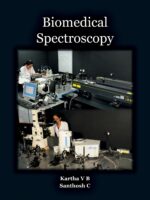
Biomedical Spectroscopy
₹2,950.00Author: Santhosh C, Vasudevan Baskaran Kartha
Biomedical spectroscopy is the output of the intensive discussions of the authors and the medical professionals of Kasturba Medical College, Manipal University. The ?Centre for Laser Spectroscopy?, a centre for developing biomedical applications of laser spectroscopic methods, was established at Manipal University in 1997. The scientists of the Centre, together with the physicians, surgeons, and pathologists of the KMC, initiated a number of research programs in this area. The main aim of the Centre was to develop spectroscopic methods for early detection, screening, monitoring therapy and identification of disease markers, with special emphasis on various cancers, so that these techniques can be applied for routine healthcare applications. Outcome of these research activities are covered in the book. A common platform of information can provide a more open communication enabling faster and better evolution of the spectroscopic methods for biomedical applications.
Interested readers may write to us at mup@manipal.edu about purchasing the book.
International Edition available on 
South Asia Edition available on -

Childhood Cancer
₹185.00Authors: H S Ballal, P D Gupta
Childhood Cancer is a major medical problem in most of the societies of the modern world. Though enough literature is available on the subject, it is not easily intelligible to common people. An ordinary parent whose ward is affected by any form of childhood cancer would beat a loss without the basic information. This book is aimed at educating a non-professional who wishes to grasp the problem in detail and in a simple way. The book primarily deals with the signs and symptoms of cancer in children which enable early detection. It is written in a lucid manner to remove the myth among parents that diagnosis of cancer in children amounts to a death sentence. Many of the childhood cancers, if detected early, can be cured completely, and the patients can live the rest of their lives like any other normal people. The book is an attempt to create this awareness among parents through proper information about the disease. Further, the book would also serve as a manual for MBBS students and professionals in other fields for primary treatment and management of the childhood cancer patients.
Interested customers may write to us at mup@manipal.edu about purchasing the book.
Also available on
-
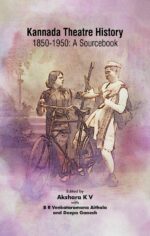
Kannada Theatre History 1850-1950: A Sourcebook
₹250.00Edited by: Akshara K V with
This source book on Kannada theatre history is a valuable contribution to the larger field of Indian Theatre Studies. Avoiding the shortcuts of an overview or a Wikipedia-like assemblage of information, it delves into the lives, histories, struggles, debates and anecdotes surrounding some of the most pioneering figures in the shaping of Kannada theatre between 1850-1950. The selection of primary sources, most of which are being made available in English for the first time, is nothing short of a revelation in the way it illuminates insights into the actual making and thinking of theatre practice. Here we have a model of how the construct of ‘Indian Theatre’ can be textured, inflected, individuated and problematized at regional, local and intracultural levels. Rustom Bharucha .This book is a labour of love by scholars who not only love Kannada theatre, but want to pass on their enjoyment of it. Delving deep into folklore oral history, local history, gossip debate and discourse, the editors bring out the world of Kannada theatres in pluralistic terms. Scholarship and playfulness combine to create a powerful act of storytelling where the book itself mimics the career of Kannada theatre. As an anthology it becomes an initiation rite, an introduction to all the great figures, not as hagiography but as nuanced analysis. Big questions and little questions combine to create both a sense of combativeness and a wonderful feeling of homecoming. Like tricksters, they break the binaries of tradition and modernity, treating it almost like a bad play which needs new scripts and new performers. A wonderful anthology. A deeply desi book, with all the cosmopolitanism of world theatre.
Interested readers may write to us at mup@manipal.edu about purchasing the book.
Also available on
Be the first to review “Basic Concepts of Intellectual Property Rights”
You must be logged in to post a review.