
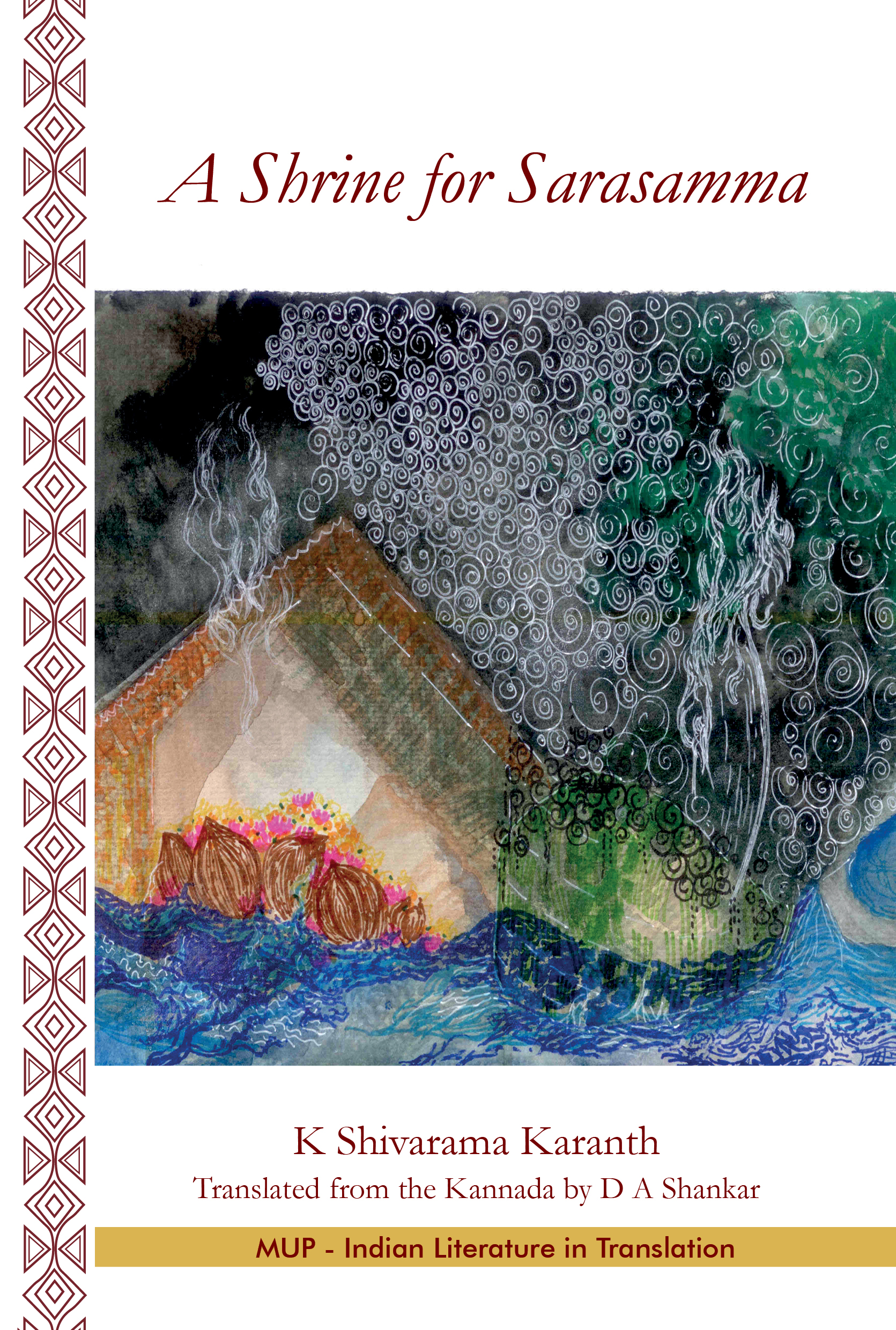
A Shrine for Sarasamma
₹180.00
Author: Shivarama Karanth Translator: D A Shankar
A Shrine for Sarasamma is the English translation of Sarasammana Samadhi written by K Shivarama Karanth in 1937, in his early thirties. It offers one of the most authentic and searing accounts of Indian womanhood, which consistently, and through the ages, has suffered deep anguish, humiliation and crushing insult from the oppressive patriarchal culture prevalent in all parts of India and among all castes and classes. The novel is a classic in Kannada and the English translation is an attempt to bring to the English reading audience a taste of the regional classic.
Interested readers may write to us at mup@manipal.edu about purchasing the book.

| Weight | 0.250 kg |
|---|---|
| Dimensions | 14 × 21 × 2 cm |
| Author | |
| Format |
Related products
-
Dhvani and Epiphany: Essays in Criticism
₹270.00Author: Prabhaker Acharya
Dhvani and Epiphany examines the work of major Indian poets like Nissim Ezekiel and Arun Kolatkar; the struggle of young poets to find an audience; and the art of fiction. But its main focus is on the nature of creativity. How does an artist communicate his meaning? What makes a work genuinely creative? Through a sensitive exploration of poetry- ranging from the simple poems of a child, Poorna Prajna, to the complex “Byzantium Poems” of Yeats- the first seven essays try to show how a poem comes to life when it speaks to us and we listen to its dhvani and respond.
Even in fiction, it is not all realism. There is irony in exploring the paradoxical nature of reality; events taking on symbolic overtones; and epiphany, moments of illumination and insights – when surprising correspondences are seen. Writers cannot surprise and delight their audience if they themselves are not surprised and delighted by such insights.
Interested readers may write to us at mup@manipal.edu about purchasing the book.
Also available on
-

Path to Ideal Motherhood
₹300.00Path to Ideal Motherhood is a complete guide on pre-conceptual counselling, pregnancy and childbirth. Pregnancy is to nurture a life within, where a would-be mother experiences physical, psychological, emotional and societal changes. A complete knowledge of pregnancy, and a sincere and positive effort by the would-be mother is what is required to make this journey an enriching experience, filled with fond memories. The book discusses and provides a detailed information on important facts of childbirth and pregnancy, lifestyle changes during pregnancy, along with the importance of breathing, nutrition, exercises, sleep, etc. The book also discusses the concept of Garbha Sanskar for a healthy baby. As a young mother nurtures a young life, the book seeks to nurture the young mother towards an ideal path to motherhood.
-
The Ramayana of Valmiki: A condensed version of Valmiki’s epic
₹340.00Author: M R Parameswaran
The world’s greatest epic poem Valmikiramayana, composed over 2,500 years ago, is loved by countless millions of men and women of all religions. The present book is the first condensed version in English of the most reliable version of Valmikiramayana, the Critical Edition prepared by Baroda Oriental Research Institute, India.
Interested readers may write to us at mup@manipal.edu about purchasing the book.Also available on
-
Pot of Butter and other short stories
₹250.00Author: Sunanda Belgaumkar Translator: Sa Usha, Vaijayanti Suryanarayana
Pot of Butter and other Short Stories is a collection of nine short stories, originally composed by Sunanda Belgaumkar in Kannada, handpicked and translated from her collections – Kajjaya and Koduvudenu Kombudenu. The bulk of her literary work including the stories in this book are inspired by the experiences in her early life, in the rustic and robust atmosphere of Dharwad. Her stories are predominantly semiautobiographical, laced with a liberal dose of artistic freedom.
This collection weaves together her writings on the underprivileged and marginalized as seen from the comfort of her palatial home, but rendered with compassion and empathy. Often, we find her narrative infused with self-directed questions such as, “What if I was in her shoes? ” or “Could that have been me? ” These stories are reflections on human nature, suffering, and destiny. There is hope, there is despair. There is love, there is longing. There is defeat, and there is triumph. In her stories, an oft-recurring metaphor for picking up one’s life after loss is a scorching summer followed by a torrential downpour and subsequently a plant springing to life.
As a translation, this book attempts to introduce Sunanda Belgaumkar’s literary and artistic creations to the non-Kannada reader, retaining as much of the indigenous elements of the original writings as possible. In doing so, it seeks to preserve the cultural climate of North Karnataka as it was around fifty years ago.
Interested readers may write to us at mup@manipal.edu about purchasing the book.
Also available on
-

The Practice of Geopolitics
₹850.00Author: M D Nalapat
Intended to be a Practioner’s Guide to Geopolitics, the book provides a look into the thought processes that generate correct and timely analysis of global events. Geopolitics needs to weave within its analytical grasp economics, society, strategy and even culture, as the science deals with overall national capabilities as well as the mutal synergy and frictions between nations. Although a broad range of subjects has been covered in the book, each is anchored in the ground reality of events having a profound impact on the lives of citizens and on world events. The growing interconnectedness of the globe has resulted in a need to do away with the popular west centric models of international relations and to view events not through that single prism but from a holistic viewpoint that accepts the relevance and maturity of different histories and geographies. What the book provides is an alternative Weltanschauung to the dominant models of geopolitical analysis, so that the science is enabled to cross beyond the narrow boundaries which have confined. The scope and applicability of its analysis. The rise of Asia needs a geopolitical vision unique to the continent, and this is what has been provided by Professor Nalapat.
Interested readers may write to us at mup@manipal.edu about purchasing the book.
Also available on
-
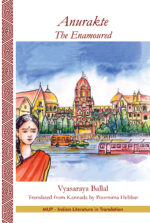
Anurakte- The Enamoured
₹390.00Author: Vyasaraya Ballal Translator: Poornima Hebbar
There are many rags-to-riches stories around the city of Mumbai. However, here is a story of transformation of a woman and her true self in the city of dreams. Set in Mangalore and Mumbai of the late 1940s, Anurakte- The Enamoured is an elegantly written story of a woman and her changing worldview over a period of time. Sumithra, a young woman with ordinary dreams and aspirations, comes to the then Bombay in search of livelihood. Little did she know that her experiences in the city and her zest for an independent life would transform her into a different person. She breaks the shell and resolves not to look back. The book is a poignant tale of love, loss, betrayal, family, relationships and traditions. The culturescape of Mumbai beautifully intertwines with her dreams. It is as much a story of the vibrancy of Mumbai as it is about Sumithra’s journey towards freedom.
Interested readers may write to us at mup@manipal.edu about purchasing the book.
Also available on
-
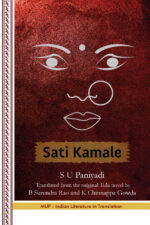
Sati Kamale
₹240.00Author: S U Paniyadi Translators: B Surendra Rao, K Chinnappa Gowda
This eponymous novel is centred on Kamale, who is an embodiment of wifely virtue. For fifteen long years Kamale lives the life of a widow to the outside world, nurturing the hopes of reuniting with the husband one day. Alone in the room, each night she wears her marks of a married woman with the dagger gifted by Umesha next to her. It could be seen as an exposition on the then existing indigenous discourse in India in the 19th century and early 20th century. Kamale, in her rigorous commitment and in retrieving her husband from ‘death’, is fashioned after Savithri in an intertextual reference to Mahabharata’s episode of “Satyavan and Savithri”. The novel might look conservative for the present-day reader, but it is a representative literary work of the time when Paniyadi, among many others, wanted to regain the independent status of the Tulu language which had somehow slipped out of its pedestal.
Interested readers may write to us at mup@manipal.edu about purchasing the book.
Also available on
-
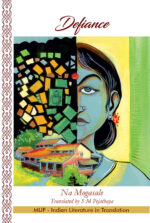
Defiance
₹495.00Defiance is a captivating tale of the march of globalization and its impact on the lives and times of the Santher Guthu family in Ombathkere, a village located between Mangaluru and Kasaragodu. Set in the picturesque Malabar coast of Karnataka in the late 20th Century, the novel takes the reader through four generations of the family. Ambakke, the protagonist, along with her brother Sankappa Hegde, the third-generation descendants of the family form the lifeblood of this story of human relationships in the midst of time and change. The novel is born out of deep contemplation of a community in the face of transition. There is anxiety that grips this part of Karnataka in the wake of modernity. The vast canvas of the novel and the depiction of folk culture provides a unique touch to the saga of the community. Defiance is a novel about traditions and the fear of losing out to modernity. It is about change and the desire to remain rooted.
Interested readers may write to us at mup@manipal.edu about purchasing the book.
Also available on