
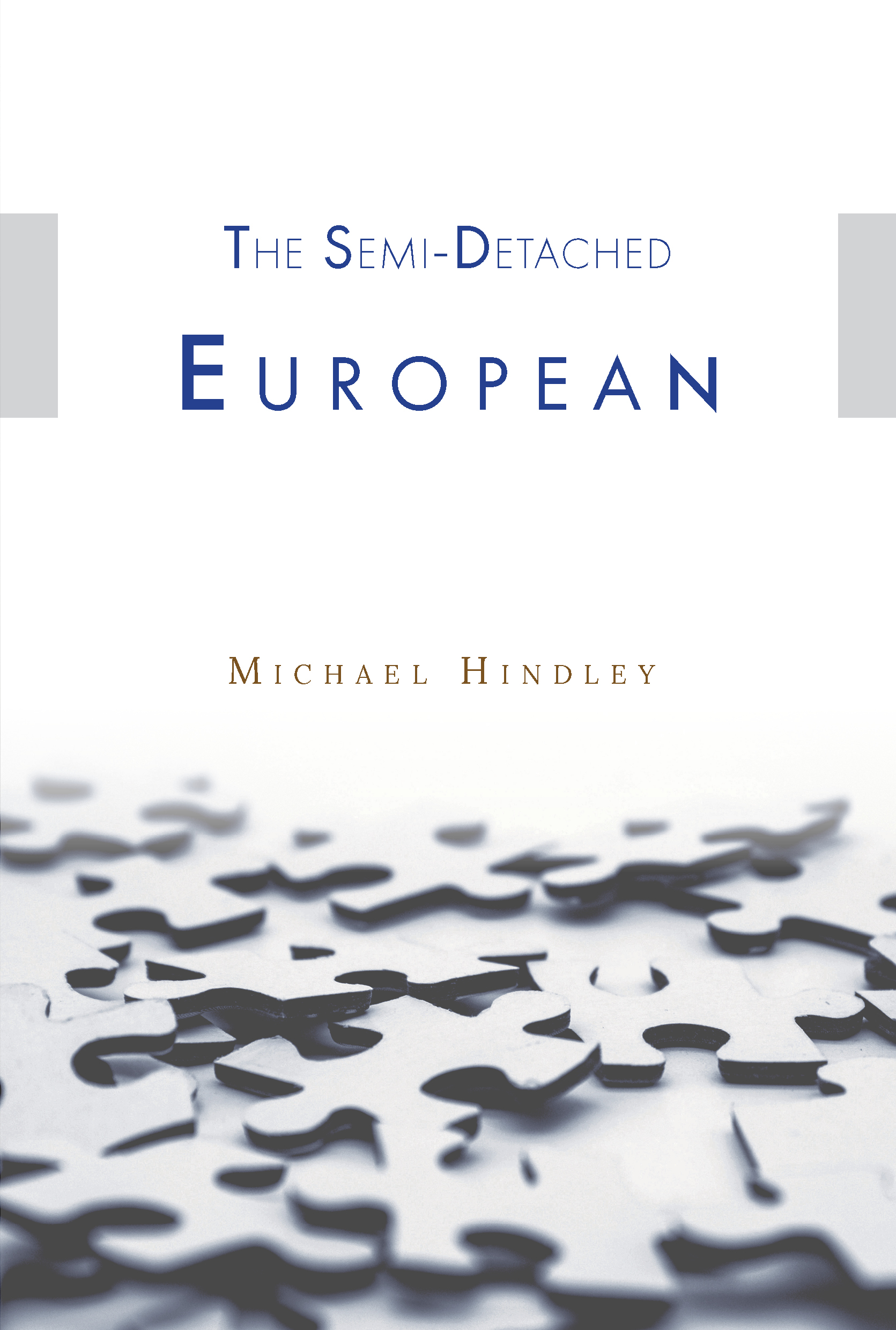
The Semi-Detached European
₹350.00
Author: Michael Hindley
The European Union has emerged as a world economic power from the ashes of the Second World War. Starting with the post-war settlement, the book takes a broad and informed view of Britain’s changing relationship with this dynamic development. The successful attempt to revive democracy and establish economic recovery in Western Europe was fuelled by Franco-German reconciliation but Britain remained benevolently aloof. Britain’s own recovery was not as successful as that of the emerging “Common Market”, and so Britain’s political elite looked to Europe to replace the markets it was losing worldwide only to be spurned by her long-time rival France. Thereon, Britain played an influential role, especially in the development of the “internal market”. However, Britain never quite lost the tag of being semi-detached – wanting to take the benefits but always wary of surrendering national sovereignty for the alleged greater good. This book reviews the vital role played by major actors in Europe’s integration, including the decisive duel between Margaret Thatcher and Jacques Delors about the nature of the Europe. It provides an assessment of the epoch-making events of the fall of Berlin Wall which opened the possibility of a reunited Europe.
In this book, the author also describes his own “Europeanization” as a student, and then as an active politician who engaged in Europe’s transformation first-hand.
Interested customers may write to us at mup@manipal.edu about purchasing the book.
Also available on |
eBook available on |
| Format |
|---|
Customer Reviews
There are no reviews yet.
Related products
-
Internationalization of Higher Education: The Dynamics of Educational Ecology
₹500.00Editors: H Vinod Bhat, Neeta InamdarThe mobility of scholars seeking knowledge has been a part of the university ideal for centuries. History holds testimony to the fact that these mobilities have also altered the lives of people in different regions. Universities have played a pivotal role in the movement of people across borders and the resultant transformation of societies due to transcultural interactions.In this book, the editors have brought together ideas on the changing dynamics of these mobilities of scholars and the interconnectedness of higher education institutions in today’s world. An attempt is also made to record the implications of these international collaborations in knowledge generation and dissemination within the educational ecology. The notion of educational ecology is explored through the articles in the book to comprehend the power play that exists in the dimension and the direction of internationalization of higher education. All this is done with the hope that the opening up of education to global opportunities may, over a period of time, lead to equitable distribution of opportunities worldwide.Interested readers may write to us at mup@manipal.edu about purchasing the book.
International Edition available on 
South Asia Edition available on -

A Concise Textbook of Drug Regulatory Affairs
₹290.00This book has 12 chapters covering nearly all the areas of Drug Regulatory Affairs. Various aspects of Drug Regulatory Affairs such as new drug approval procedure, pharmacovigilance, product recall, evolution of drug regulations in the United States of America (USA) and process of drug approval in the USA and European Union, bioequivalence regulations, electronic Common Technical Documents (eCTD), environmental regulations, orphan drugs pharmaceutical pricing and control policy, Pharmacovigilance system in India and the USA, Product Recall, regulations of pharmaceutical drug promotion and Pharmacy Practice regulations are covered in this book. As a whole, the book is a comprehensive reference book on regulatory affairs and will be very useful for the practicing professionals and students alike.
Interested readers may write to us at mup@manipal.edu about purchasing the book.
Also available on
-
Ayurvedic Inheritance- A Reader’s Companion
₹650.00Author: M S Valiathan
In ancient India, learning spanned four quarters of one’s life. Learning was sought from the teacher, from one’s individual effort, from fellow students and in the last quarter, from the school of life itself. This book belongs to the third quarter for students of Ayurveda regardless of their background in medicine, science, or humanities. Apart from topics in the eight branches of Ayurveda, the book also deals with Ayurvedic Biology which seeks to study the concepts and procedures of Ayurveda with the tools of modern biology. M S Valiathan is a National Research Professor of the Government of India. He is a medical graduate from the University of Kerala and completed his postgraduate training in general surgery from the University of Liverpool and other hospitals in the UK. He did his specialisation in cardiac surgery from the Johns Hopkins and Georgetown University Hospitals in the US. He was a cardiac surgeon for over three decades. His shift to Ayurvedic studies resulted in the publication of three volumes on Caraka, Susruta and Vagbhata, and an Introduction to Ayurveda. The Department of Science and Technology set up a Task Force in Ayurvedic Biology under his chairmanship to promote research in the nascent discipline.
Interested readers may write to us at mup@manipal.edu about purchasing the book.
International Edition available on South Asia Edition available on
-
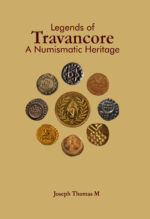
Legends of Travancore – A Numismatic Heritage
₹1,250.00The Kingdom of Travancore in the Southern part of India was a native state in British India which was well known for its progressive outlook. Its enlightened royalty ruled the country as Sree Padmanabha Dasa. They had in place a well oiled administrative mechanism that implemented various programs and reforms, resulting in an overall development of Travancore. Though Travancore was under the colonial rulers, there was a well-orchestrated administrative machinery for coinage. Coins were minted as per the specifications ordered by the periodically issued Royal Proclamations. It is creditable that Travancore retained its independence in its functioning to a large extent. This book is an insight into the coins of Modern Travancore (from 1729 AD) which not only reflects the religious beliefs of the rulers, but also sketches the socio-political atmosphere of the period. Dr Joseph Thomas hailing from Thiruvananthapuram, is a Professor of Urology at Manipal University in India. His passion for collecting coins developed into a serious numismatic pursuit. His special area of interest is the study of the history of Venad and Travancore. His detailed study of the Travancore coins and the various related issues give an insight into the rich numismatic heritage of modern Travancore. He is a Life Member of the Philatelic and Numismatic Association of Thiruvananthapuram and a Life Member of the South Indian Numismatic Society, Chennai.
Interested readers may write to us at mup@manipal.edu about purchasing the book.
Also available on
-

Pharmaceutical Consumer Complaints: A Guide to Academia and Pharmaceutical Industry
₹795.00Editors: Girish Pai Kulyadi, Muddukrishna B S, Richa Ajay Dayaramani
This book is an excellent guide in analyzing consumer complaints and will aid the students who are yet to gain industry experience. It is necessary for resolving consumer complaints in pharmaceutical industry where such concerns are frequently received. The case studies provide a vivid description of defects that will help identify the nature of the issue, possible root cause of such complaints, and subsequent remediation.
Interested readers may write to us at mup@manipal.edu about purchasing the book.
Also available on
-
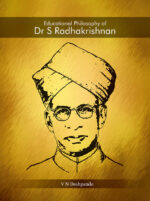
Educational Philosophy of Dr S Radhakrishnan
₹495.00Author: V N Deshpande
Educational Philosophy of Dr S Radhakrishnan effectively presents Radhakrishnan’s thoughts, highlighting their relevance to the present day. The author has at length discussed Indian Philosophy in comparison with the Western thought and successfully established that the East-West synthesis as propagated by Radhakrishnan is the need of the hour. The readers will also get an account of Radhakrishnan’s life story in the backdrop of the political history of pre and post-Independent India. This book is Dr V N Deshpande’s posthumous publication.
Interested readers may write to us at mup@manipal.edu about purchasing the book.
Also available on
-
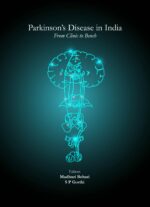
Parkinson’s Disease in India: From Clinic to Bench
₹1,500.00Editors: Madhuri Behari, SP Gorthi
The book fills a void in the knowledge about difference in Parkinson’s disease as seen India, if any from the rest of the world. It will provide a reference for any student of neurology wanting to learn the finer nuances of Parkinson’s disease in India. The book is written by Indian authors who have studied different aspects of Parkinson’s disease in depth, covering all aspects of Parkinson’s disease. The book is painstakingly drafted to cover all aspects of Parkinson’s disease from demography, etiology, clinical features (both motor and non-motor), complications, treatment modalities, its impact on the sufferer and the family and the financial aspect.
Interested readers may write to us at mup@manipal.edu about purchasing the book.
Also available on
-
Early Buddhist Artisans and their Architectural Vocabulary
₹1,600.00Author: S Settar
The early Buddhist architectural vocabulary, being the first of its kind, maintained its monopoly for about half a millennium, beginning from the third century BCE. To begin with, it was oral, not written. The Jain, Hindu, and other Indian sectarian builders later developed their vocabulary on this foundation, though not identically. An attempt is made here to understand this vocabulary and the artisans who first made use of it.
In the epigraphic ledger, the first reference to the mythical creator of the universe, the Visvakarma (Visakama), is made on the thupas at Sanchi and Kanaganahalli; the earliest excavators of cave temples, comprising five specialists – selavdhaki, nayikamisa, kadhicaka, mahakataka and mithaka – as well as a team of master-architects and supervisors, called the navakamis, appear at Kanheri. Besides these, there were also others called avesanis, atevasinas, acaryas, and upajjhayas all over the Buddhist world. The list does not end with these, because there were yet others called vadhakis (carpenters), seli-vadhakis (stonecutters), sela-rupakas (stone sculptors), mithakas (polishers), and so on. All these artisans who have recorded their life stories on the stone surface are identified, and their professional contributions evaluated here for the first time.
Interested readers may write to us at mup@manipal.edu about purchasing the book.
International Edition available on
South Asia Edition available on
Be the first to review “The Semi-Detached European”
You must be logged in to post a review.