
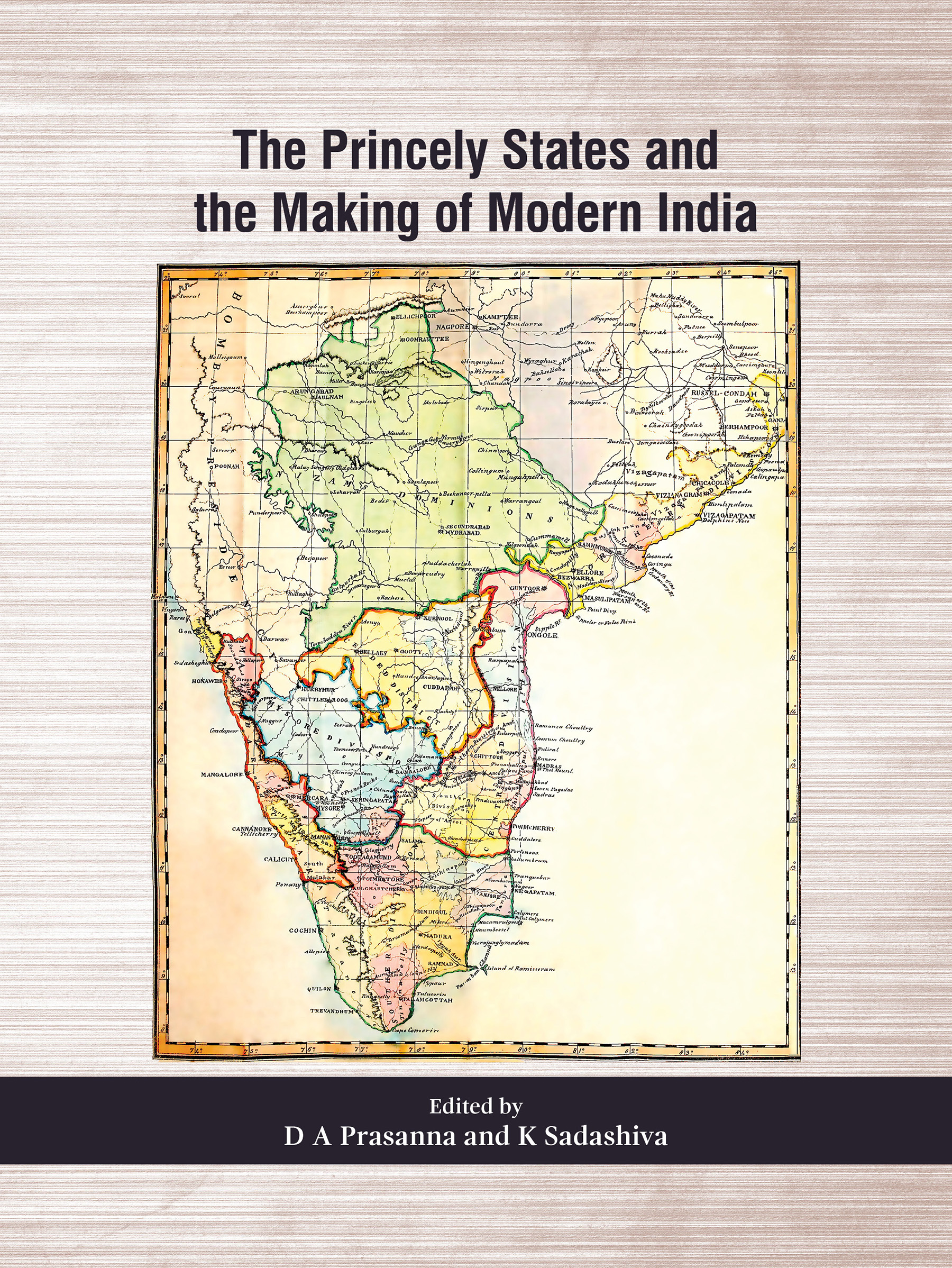
The Princely States and the Making of Modern India
₹640.00
Editors: D A Prasanna, K Sadashiva
India’s Princely States have enjoyed only a minor place in the narrative of modern nationhood. Certain Princely States used the dynamics of transfer of power to carve autonomy from the colonial British to advance their societies. Some of the Princely States modernized their education, public health and industrial sectors way ahead of the British administered territories. Prof Washbrook provides a macro picture of the dynamics in the Princely States of South India and sees a distinctive and indigenous form of modernity. Hierarchy, religion, heredity and caste were not obliterated for rationalism and secularism. As socialism and pseudo-secularism are fading away, the significance of the indigenous forms of modernity of the Princely States becomes more relevant to understand India in the 21st century. Ten historian thought leaders provide an interesting perspective to make it a compelling read. K Sadashiva is the architect of this book. As he developed the theme and brought together historians from various parts of the world, an interesting tapestry was woven. He is a historian actively researching the Indian Union, the Princely States and the rise of political power of caste and class in independent India. D A Prasanna has an interest in history, visual art, public health and education. He has supported new initiatives in these fields and has actively nurtured ideas to result in outcomes.
Interested readers may write to us at mup@manipal.edu about purchasing the book.

| Author | |
|---|---|
| Format |
Customer Reviews
There are no reviews yet.
Related products
-
The Path of Proofs – Pramanapaddhati of Sri Jayatirtha
₹250.00Author: Shrinivasa Varakhedi
Epistemology of the Dvaita school of thought is presented in this short monograph Pramāṇapaddhati – the Path of Proofs, authored by Śrī Jayatīrtha. Epistemology is the science of knowledge that deals with the origin and nature of cognitive events and their means.
Ācārya Madhva, the proponent of the Dvaita school, has explained about the epistemology of this new school in his works. Since Madhva’s language is profound and the elucidations are scattered over his several works, it is difficult to comprehend for a novice. Hence, Pramāṇapaddhati was composed by his successor of third generation Śrī Jayatīrtha. The simple and captivating
style of this work is sure to ignite the interest in the readers to conduct further study in detail. This work is not only regarded as a standard textbook of Dvaita studies, but also considered as a basic authentic work in the Dvaita dialectic literature.This work is rendered into English by Prof Shrinivasa Varakhedi adopting the mirror-translation method.
Interested readers may write to us at mup@manipal.edu about purchasing the book.Also available on
-

The Practice of Geopolitics
₹850.00Author: M D Nalapat
Intended to be a Practioner’s Guide to Geopolitics, the book provides a look into the thought processes that generate correct and timely analysis of global events. Geopolitics needs to weave within its analytical grasp economics, society, strategy and even culture, as the science deals with overall national capabilities as well as the mutal synergy and frictions between nations. Although a broad range of subjects has been covered in the book, each is anchored in the ground reality of events having a profound impact on the lives of citizens and on world events. The growing interconnectedness of the globe has resulted in a need to do away with the popular west centric models of international relations and to view events not through that single prism but from a holistic viewpoint that accepts the relevance and maturity of different histories and geographies. What the book provides is an alternative Weltanschauung to the dominant models of geopolitical analysis, so that the science is enabled to cross beyond the narrow boundaries which have confined. The scope and applicability of its analysis. The rise of Asia needs a geopolitical vision unique to the continent, and this is what has been provided by Professor Nalapat.
Interested readers may write to us at mup@manipal.edu about purchasing the book.
Also available on
-
Lectures on Matrix and Graph Methods
₹580.00Lectures on Matrix and Graph Methods Lectures on Matrix and Graph Methods portrays selected lectures delivered by leading Mathematicians and Statisticians in the International Workshop on Combinatorial Matrix Theory and Generalized Inverses of Matrices organized by Department of Statistics, Manipal University, Manipal, India, during January 2-7, 2012. This book covers the topics even beyond the traditional applications of matrix theory and spectral theory of graphs. Graph Theoretic Applications to Computing the Nucleolus of an Assignment Game by T E S Raghavan and Introduction to Yantra Magic Squares and Agrippa-type Magic Matrices by G P H Styan et al. are among those topics. Also, an interview with S K Mitra in 1993 by G P H Styan and Simo Puntanen is presented here.
Ravindra B Bapat, Steve Kirkland, K Manjunatha Prasad, Simo Puntanen Ravindra B Bapat is at the Indian Statistical Institute, Delhi Centre. His main areas of interest are combinatorial matrix theory, matrices and graphs, and generalized inverses. He is a Fellow of the Indian Academy of Sciences, Indian National Science Academy and a J C Bose Fellow. He served as the President of the Indian Mathematical Society during 2007-2008. Steve Kirkland is a Stokes Professor at the National University of Ireland Maynooth. His research interests include non-negative matrix theory, spectral graph theory, and combinatorial matrix theory. He is currently the Editor-in-chief of the journal ?Linear and Multilinear Algebra?, and the President of the International Linear Algebra Society. K Manjunatha Prasad earned his PhD from Indian Statistical Institute. Currently, he is a Professor of Mathematics at Department of Statistics, Manipal University, Manipal. His research interests are matrix theory, generalized inverse, ring theory and projective modules. Simo Puntanen earned his PhD in statistics from the University of Tampere (Finland) in 1987, where he is presently a Lecturer.
Interested readers may write to us at mup@manipal.edu about purchasing the book.Also available on
-

Pharmaceutical Consumer Complaints: A Guide to Academia and Pharmaceutical Industry
₹795.00Editors: Girish Pai Kulyadi, Muddukrishna B S, Richa Ajay Dayaramani
This book is an excellent guide in analyzing consumer complaints and will aid the students who are yet to gain industry experience. It is necessary for resolving consumer complaints in pharmaceutical industry where such concerns are frequently received. The case studies provide a vivid description of defects that will help identify the nature of the issue, possible root cause of such complaints, and subsequent remediation.
Interested readers may write to us at mup@manipal.edu about purchasing the book.
Also available on
-
Educational Philosophy of Dr S Radhakrishnan
₹495.00Author: V N Deshpande
Educational Philosophy of Dr S Radhakrishnan effectively presents Radhakrishnan’s thoughts, highlighting their relevance to the present day. The author has at length discussed Indian Philosophy in comparison with the Western thought and successfully established that the East-West synthesis as propagated by Radhakrishnan is the need of the hour. The readers will also get an account of Radhakrishnan’s life story in the backdrop of the political history of pre and post-Independent India. This book is Dr V N Deshpande’s posthumous publication.
Interested readers may write to us at mup@manipal.edu about purchasing the book.
Also available on
-
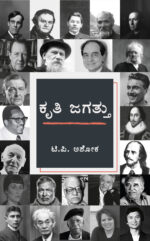
Kriti Jagattu
₹310.00Author: T P Ashok
ಪ್ರೊ. ಟಿ. ಪಿ. ಅಶೋಕ ಅವರ ಇತ್ತೀಚಿನ ಕೃತಿ ಕೃತಿ ಜಗತ್ತು ಇಪ್ಪತ್ತಾರು ಪ್ರಬಂಧಗಳನ್ನು ಒಳಗೊಂಡ ಪುಸ್ತಕವಾಗಿದ್ದು, ವಿವಿಧ ದೇಶಗಳು, ಭಾಷೆಗಳು, ಸಂಪ್ರದಾಯಗಳು, ಪ್ರಕಾರಗಳು ಇತ್ಯಾದಿಗಳಿಗೆ ಸಂಬಂಧಿಸಿದ ಕೃತಿಗಳನ್ನು ಪರಿಚಯಿಸುವ, ವಿಶ್ಲೇಷಿಸುವ, ವಿಮರ್ಶಿಸುವ ಮತ್ತು ಸ್ಪಷ್ಟಪಡಿಸುವ ಮತ್ತು ಸಾಹಿತ್ಯದ ಒಂದು ನೋಟವನ್ನು ನೀಡುತ್ತದೆ. ಇಡೀ ಪ್ರಪಂಚ. ಪ್ರಬಂಧಗಳು ಸಾಮಾಜಿಕ, ಸಾಂಸ್ಕೃತಿಕ ಮತ್ತು ರಾಜಕೀಯ ಘಟನೆಗಳಿಗೆ ಮತ್ತು ಕಳೆದ ಐನೂರು ವರ್ಷಗಳಲ್ಲಿ ನೈತಿಕ, ಮಾನಸಿಕ ಮತ್ತು ಆಧ್ಯಾತ್ಮಿಕ ಬಿಕ್ಕಟ್ಟುಗಳಿಗೆ ಪ್ರಪಂಚದಾದ್ಯಂತದ ಶ್ರೇಷ್ಠ ಬರಹಗಾರರ ಪ್ರತಿಕ್ರಿಯೆಯನ್ನು ಪರಿಣಾಮಕಾರಿಯಾಗಿ ಪ್ರಸ್ತುತಪಡಿಸುತ್ತವೆ. ಈ ಕೃತಿ ಪ್ರಪಂಚವು ಕನ್ನಡ ಸಾಹಿತ್ಯ ಪ್ರಪಂಚದೊಂದಿಗೆ ಸಂಬಂಧವನ್ನು ಸ್ಥಾಪಿಸುತ್ತದೆ ಮತ್ತು ಆದ್ದರಿಂದ ಪುಸ್ತಕದ ವಿಶೇಷ ಮಹತ್ವವನ್ನು ಹೊಂದಿದೆ.
Interested readers may write to us at mup@manipal.edu about purchasing the book.
Also available on
-
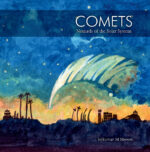
Comets – Nomads of the Solar System
₹290.00This book introduces the general reader to the world of comets – those celestial visitors from the outer Solar System that occasionally visit the Earth’s neighbourhood and put up spectacular shows in the night sky. The world had geared up for just such a show at the end of 2013, when Comet ISON was expected to light up the night sky. Using the occasion to bring the world of comets to those interested, this book is a delightful read about the quirky world of these unpredictable visitors. Apart from lucidly and accurately updating the reader about what comets are, where they come from, why is it that they assume the fantastic shapes they do etc. “Comets” also regales the reader with myths about comets in various cultural contexts, snippets about famous comets in the history of mankind, anecdotes on comet discoveries and discoverers, the bewildering procedures followed while naming comets and much more. The book takes a hard look at the hype surrounding the fiery expectations about Comet ISON an cautions the reader that, while there was a good chance of the comet blazing forth in the skies of December 2013, there was a realistic chance that the comet would not survive its close encounter with the Sun. Sadly, the pessimistic predictions came true and the comet disintegrated as it went around the Sun. As we wait for chance to throw us a Great Comet to gaze at in the future, “Comets: Nomads of the Solar System” is an excellent guide to prepare for the event!
Interested customers may write to us at mup@manipal.edu about purchasing the book.
Also available on
-
Early Buddhist Artisans and their Architectural Vocabulary
₹1,600.00Author: S Settar
The early Buddhist architectural vocabulary, being the first of its kind, maintained its monopoly for about half a millennium, beginning from the third century BCE. To begin with, it was oral, not written. The Jain, Hindu, and other Indian sectarian builders later developed their vocabulary on this foundation, though not identically. An attempt is made here to understand this vocabulary and the artisans who first made use of it.
In the epigraphic ledger, the first reference to the mythical creator of the universe, the Visvakarma (Visakama), is made on the thupas at Sanchi and Kanaganahalli; the earliest excavators of cave temples, comprising five specialists – selavdhaki, nayikamisa, kadhicaka, mahakataka and mithaka – as well as a team of master-architects and supervisors, called the navakamis, appear at Kanheri. Besides these, there were also others called avesanis, atevasinas, acaryas, and upajjhayas all over the Buddhist world. The list does not end with these, because there were yet others called vadhakis (carpenters), seli-vadhakis (stonecutters), sela-rupakas (stone sculptors), mithakas (polishers), and so on. All these artisans who have recorded their life stories on the stone surface are identified, and their professional contributions evaluated here for the first time.
Interested readers may write to us at mup@manipal.edu about purchasing the book.
International Edition available on

South Asia Edition available on
Be the first to review “The Princely States and the Making of Modern India”
You must be logged in to post a review.