
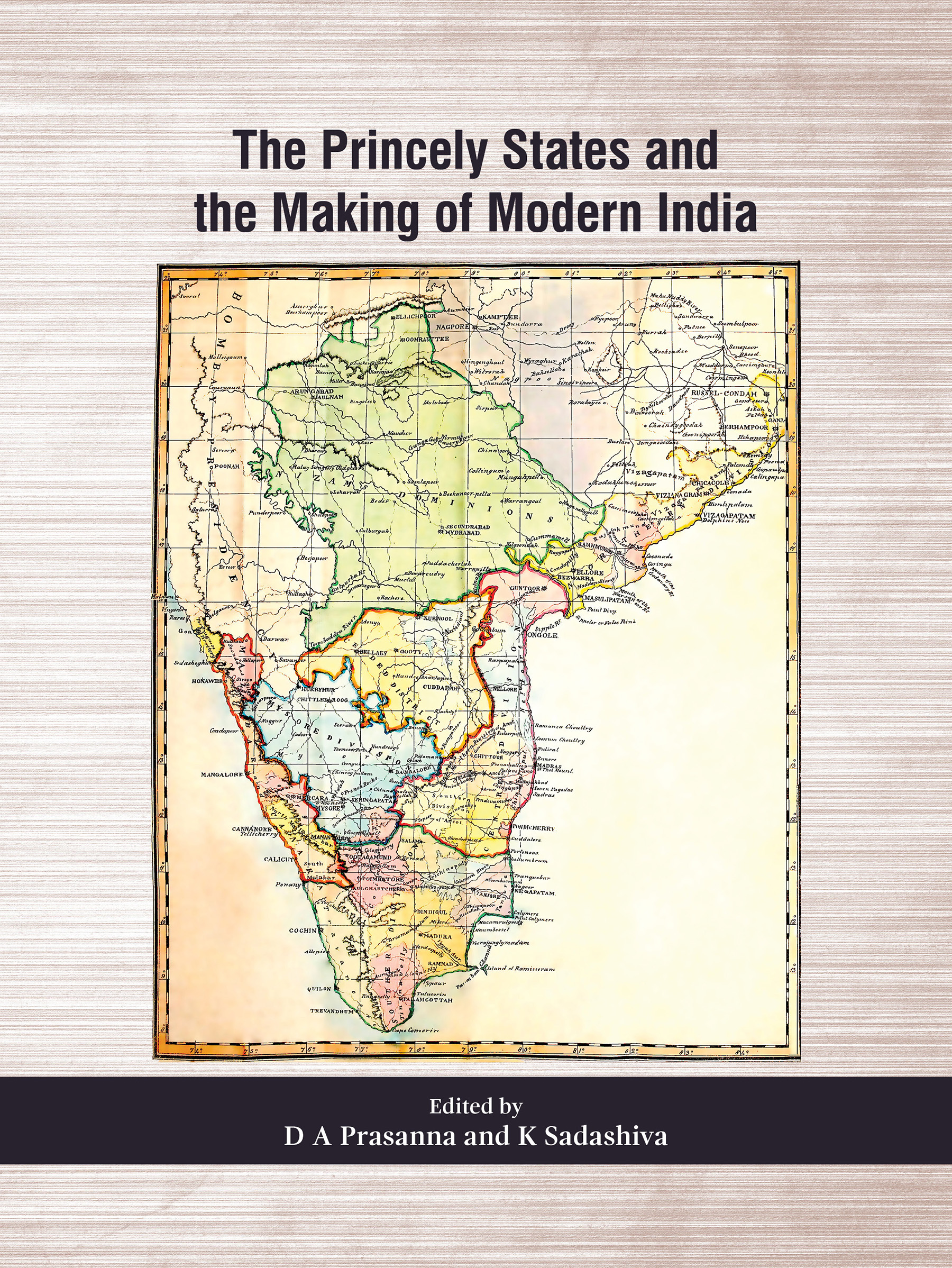
The Princely States and the Making of Modern India
₹640.00
Editors: D A Prasanna, K Sadashiva
India’s Princely States have enjoyed only a minor place in the narrative of modern nationhood. Certain Princely States used the dynamics of transfer of power to carve autonomy from the colonial British to advance their societies. Some of the Princely States modernized their education, public health and industrial sectors way ahead of the British administered territories. Prof Washbrook provides a macro picture of the dynamics in the Princely States of South India and sees a distinctive and indigenous form of modernity. Hierarchy, religion, heredity and caste were not obliterated for rationalism and secularism. As socialism and pseudo-secularism are fading away, the significance of the indigenous forms of modernity of the Princely States becomes more relevant to understand India in the 21st century. Ten historian thought leaders provide an interesting perspective to make it a compelling read. K Sadashiva is the architect of this book. As he developed the theme and brought together historians from various parts of the world, an interesting tapestry was woven. He is a historian actively researching the Indian Union, the Princely States and the rise of political power of caste and class in independent India. D A Prasanna has an interest in history, visual art, public health and education. He has supported new initiatives in these fields and has actively nurtured ideas to result in outcomes.
Interested readers may write to us at mup@manipal.edu about purchasing the book.

| Author | |
|---|---|
| Format |
Related products
-

Transformation Beyond Sight
₹395.00Author: Jibu Thomas
Transformation Beyond Sight is a gripping narrative of the author’s experience in the hospital administration of Kasturba Hospital (KH), Manipal. As an experiential account, the present book provides insights into the thoughts, concerns, and apprehensions of prospective hospital administrators, and spotlights the vital role played by a hospital administrator in the day-to-day operations of KH, which is also an advanced healthcare facility.This book draws attention to the transformational quality of the author’s experiences to emphasize that the evolution in leadership and management of the teaching hospital went hand-in-hand with the transformation of the author’s administrative skills, and his own persona as a diligent administrator. The biographical undertone also provides an insight into the complex and dynamic healthcare environment, alongside the competencies, creativity, and mindfulness necessary for an administrator. This book narrates a hospital administrator’s engagements with the traditional processes and his attempts to bring about effective changes in the management and monitoring of operations of KH and the overall management of a healthcare facility.
Interested readers may write to us at mup@manipal.edu about purchasing the book.
Also available on
-
Christa Shaka 1800 Ra Modalina Mysooru ithihaasa
₹295.00Author: D S Achuta Rao Translator: S Narendra Prasad
೧೮೦೦ ಕ್ರಿ. ಶ. ದ ಹಿಂದಿನ ಮೈಸೂರು ಇತಿಹಾಸವು ಪ್ರೊ. ಡಿ ಎಸ್ ಅಚ್ಯುತ ರಾವ್ ಅವರ ಜೀವನ ಮತ್ತು ಕೆಲಸದ ಬಗ್ಗೆ. ಮೈಸೂರು ಇತಿಹಾಸದ ಕುರಿತಾದ ಅವರ ಸಂಶೋಧನೆಯು 1940-65ರ ಅವಧಿಯಲ್ಲಿ ಅವರು ಪ್ರಕಟಿಸಿದ ಹತ್ತು ಸೂಚ್ಯಂಕ ಲೇಖನಗಳಿಂದ ಪ್ರತಿನಿಧಿಸುತ್ತದೆ. ಅವರು ಭಾರತದ ಇತಿಹಾಸ ಮತ್ತು ಅದರ ಅದ್ಭುತ ಭೂತಕಾಲವನ್ನು ಸಕ್ರಿಯವಾಗಿ ಜನಪ್ರಿಯಗೊಳಿಸಿದರು. ಮಹಾರಾಜಾಸ್ ಕಾಲೇಜ್ ಹಿಸ್ಟರಿ ಸೊಸೈಟಿ, ಭಾರತದ ವಸಾಹತು ಸಂಶೋಧಕರು ಮತ್ತು ಕನ್ನಡ ವಿಶ್ವಕೋಶದಲ್ಲಿ ಮೈಸೂರು ಸರ್ಕಾರದ ಉಪಕ್ರಮದಿಂದ ಭಾರತೀಯ ಇತಿಹಾಸದಲ್ಲಿ ಉಪಕ್ರಮಗಳನ್ನು ಪ್ರಸ್ತುತಪಡಿಸುವುದರಿಂದ ಅಂತಹ ಮೂರು ಲೇಖನಗಳನ್ನು ಸೇರಿಸಲಾಗಿದೆ. ಎರಡನೇ ಭಾಗದಲ್ಲಿ ಅವರ ಜೀವನಚರಿತ್ರೆಯಲ್ಲಿ, ಅವರ ವಿದ್ಯಾರ್ಥಿಗಳು ಮತ್ತು ಮಕ್ಕಳು ಶಿಕ್ಷಕ ಮತ್ತು ತಂದೆಯಾಗಿ ಅವರ ಜೀವನದ ಬಗ್ಗೆ ಬರೆದಿದ್ದಾರೆ, ಅವರ ಅವಧಿಯ ಸಂದರ್ಭವನ್ನು ಒದಗಿಸಿದ್ದಾರೆ. ಪುಸ್ತಕವು ಕಳೆದ ಶತಮಾನದ ಮಧ್ಯದಲ್ಲಿ ಇತಿಹಾಸ ಸಂಶೋಧನೆಗೆ ಆಸಕ್ತಿದಾಯಕ ವಿಂಡೋವನ್ನು ಪ್ರಸ್ತುತಪಡಿಸುತ್ತದೆ.
Interested readers may write to us at mup@manipal.edu about purchasing the book.
Also available on
-
Journalism and Journalism Education in Developing Countries
₹550.00Editors: Beate Illg, Beatrice Dernbach
Free and fair media are at the heart of any democratic set up. A thriving field of journalism and zealous and ethical journalists in that sense become torch bearers of a brighter and promising tomorrow. In this light, the status of journalists, the most important actors in the field becomes increasingly important as a matter of study. They act as gatekeepers of information that is flooding in the era of new media, a wave that is not so new anymore. Their roles remain intact and even becomes prominent in the chaos of many-to-many communication.
Not concentrating on specific countries, selected contributions in the book reflect on the developments of media and journalism education across different countries. Introducing the book with an overview about the state-of-the-art of journalism education and the research on a meta level, the book moves on to talk about media studies in the Asian countries and in Arab world, the African States and Brazil.
The recent economic and social developments present both opportunities and risks for journalism. Freedom of expression and freedom of press, even in democratic countries, are under pressure. This book provides an international perspective on the different aspects of journalism – the situation in which journalists work, their working conditions, educational backgrounds, struggles and successes. It is aimed at an international public interested in the field of journalism and freedom of speech. It addresses journalists, trainers and academics. Furthermore, institutions in the field of development cooperation, education or cultural policy and cultural education are the focus of this work. Though the book is focused on journalism and journalism education in developing countries, contributions are from across the globe. This book is an interesting read for all those who care about a vital media landscape and an open democratic society.Interested readers may write to us at mup@manipal.edu about purchasing the book.
Also available on
-
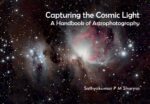
Capturing the Cosmic Light – A Handbook of Astrophotography
₹670.00Author: Sathyakumar P M Sharma
The Handbook of Astrophotography is the first book dedicated to Astronomical Imaging through modest equipment, and the first to be published in India. It is a chronicle of the techniques learnt and employed by the author and is by no means proprietary. It is assumed that the reader is equipped with the basic knowledge to use a digital camera. After showing the many methods to capture the Cosmos, the book shows how to process these images. It is designed to be a handbook and not a user manual. The author hopes that the reader will be confident in astronomical imaging and develop his/her own techniques after reading the book. Sathyakumar started Astrophotography in January 2006 with a homemade wooden star-tracking mount and a camera borrowed from a friend. He later used his homemade Newtonian reflector telescope and an inexpensive digital camera to capture photos of the Moon. With an MSc in Aerospace engineering from the University of Salford, Manchester, he joined Opticstar Ltd, as a design engineer. There he was trained on the latest of astronomical instruments available for the amateur astrophotographer and eventually purchased the Celestron C8 Schmidt cassegrain telescope and the CG-5 Equatorial mount. Currently, he uses a GSO 6 inch RC telescope and an HEQ5-PRO computerized mount as well as an Orion 80ED Apochromatic telescope for astrophotography. He also owns an Astrotrac to take wide field vistas of the Cosmos. He is now employed as a Scientific Officer at Karnataka Science and Technology Promotion Society, Department of Science and Technology, Govt. of Karnataka.
Interested readers may write to us at mup@manipal.edu about purchasing the book.
Also available on
-
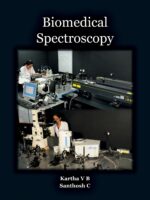
Biomedical Spectroscopy
₹2,950.00Author: Santhosh C, Vasudevan Baskaran Kartha
Biomedical spectroscopy is the output of the intensive discussions of the authors and the medical professionals of Kasturba Medical College, Manipal University. The ?Centre for Laser Spectroscopy?, a centre for developing biomedical applications of laser spectroscopic methods, was established at Manipal University in 1997. The scientists of the Centre, together with the physicians, surgeons, and pathologists of the KMC, initiated a number of research programs in this area. The main aim of the Centre was to develop spectroscopic methods for early detection, screening, monitoring therapy and identification of disease markers, with special emphasis on various cancers, so that these techniques can be applied for routine healthcare applications. Outcome of these research activities are covered in the book. A common platform of information can provide a more open communication enabling faster and better evolution of the spectroscopic methods for biomedical applications.
Interested readers may write to us at mup@manipal.edu about purchasing the book.
International Edition available on 
South Asia Edition available on -
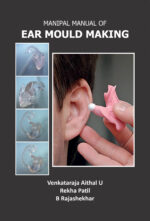
Manipal Manual of Ear Mould Making
₹195.00Authors: Venkataraja Aithal U, Rekha Patil and B Rajashekhar
Manipal Manual of Ear Mould Making is a comprehensive workbook of value to students of Audiology & hearing professionals who wish to understand the nuances of this skill that is paramount for optimization of hearing aid fitting. This is a compilation of the authors? years of experience in the deft skills of ear mould making and patient care in Manipal Ear Mould lab. Considerable efforts have gone in to bringing out this manual by incorporating appropriate pictures, stepwise procedures and simple instructions. This manual, besides appraising the readers of the procedure would also assist them in learning the dos and donts picked up out of the authors? clinical experience. This will be a reflection of our ongoing efforts to derive the best out of the rapidly developing technology in the area of hearing impairment.
Interested readers may write to us at mup@manipal.edu about purchasing the book.
Also available on
-
COVID19: A Multidimensional Response
₹2,200.00Editors: N Udupa, Raviaraja NS, Chiranjay Mukhopadhya,
COVID-19 disease is caused by the SARS-CoV-2 virus, first detected in November-December 2019 in Wuhan, China. Thus far, more than 7 million people have been infected with the novel coronavirus across the globe, and the count is increasing with every passing day. Even though it causes severe respiratory problems, the majority of patients show mild symptoms, and pathogenesis is under investigation. Although several drugs are being developed and many of them are undergoing clinical trials, currently there are no approved drugs/vaccines to cure this disease. Personal hygiene and social distancing are important means to prevent the spread of this disease. With the advancements in scientific research, humankind is hoping to find a potent drug/vaccine for this disease at the earliest. The health care professionals and scientific community are at their maximum in combating this viral infection. In this book, an attempt is made to compile various aspects of COVID-19 in a single platform, which include aetiology, epidemiology, its clinical manifestations, diagnosis, pathological, clinical and therapeutic facets, comorbidities, risk factors, and the essential precautionary measures. This book comprises around 29 chapters contributed by various experts from research and clinical backgrounds.
Interested readers may write to us at mup@manipal.edu about purchasing the book.
Also available on
-
The Practice of Geopolitics
₹850.00Author: M D Nalapat
Intended to be a Practioner’s Guide to Geopolitics, the book provides a look into the thought processes that generate correct and timely analysis of global events. Geopolitics needs to weave within its analytical grasp economics, society, strategy and even culture, as the science deals with overall national capabilities as well as the mutal synergy and frictions between nations. Although a broad range of subjects has been covered in the book, each is anchored in the ground reality of events having a profound impact on the lives of citizens and on world events. The growing interconnectedness of the globe has resulted in a need to do away with the popular west centric models of international relations and to view events not through that single prism but from a holistic viewpoint that accepts the relevance and maturity of different histories and geographies. What the book provides is an alternative Weltanschauung to the dominant models of geopolitical analysis, so that the science is enabled to cross beyond the narrow boundaries which have confined. The scope and applicability of its analysis. The rise of Asia needs a geopolitical vision unique to the continent, and this is what has been provided by Professor Nalapat.
Interested readers may write to us at mup@manipal.edu about purchasing the book.
Also available on