
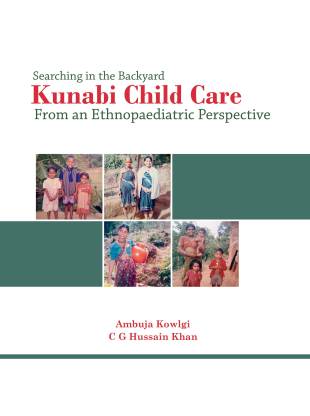
Searching in the Backyard: Kunabi Child Care From an Ethnopaediatric Perspective
₹480.00
Authors: Ambuja Kowlgi, C G Hussain Khan
This work on ethnopaediatrics is a thick description and a critical analysis of the plural mix of child health care that exists among the Kunabi tribe, a marginalized tribal population in the forests of Western Karnataka. It points out the gaps that exist between modern health providers and the indigenous people. It shows how these gaps could be resolved if bottom-up ethnopaediatric approach is adopted. The volume will be beneficial to planners, policy makers, and modern health care providers who are involved in reproductive and child health programs in India. Ambuja Kowlgi is an anthropologist by profession and acclaimed as one of the best ethnographic fieldworker in her alma mater. She is a freelance consultant in anthropological analysis, translations, and editing. She has published articles in national and international journals. C G Hussain Khan is UGC Emeritus Fellow at the Department of Anthropology, Karnatak University and member of the National Advisory Committee, Anthropological Survey of India. He has served as ? Coordinator, International Diploma in Reproductive Health Management, Karnatak University Dharwad; Chairman, Anthropology Department, Karnatak University; Dean, Faculty of Social Sciences; and member, UGC Curriculum Development Committee (Anthropology). He has worked on WHO projects and, published books and articles in national and international journals.
Interested readers may write to us at mup@manipal.edu about purchasing the book.

| Author | |
|---|---|
| Format |
Customer Reviews
There are no reviews yet.
Related products
-
Geoffrey Bawa – A Conscious Perception
₹650.00This book is all about giving the readers a peek view into the life of Geoffrey Bawa; Sri Lanka’s most famous architect… a book that reveals an insight into his work through his most famous projects accompanied by beautiful hand drawn illustrations. Alluring and simply authentic, these self-narrative illustrations are a result of a personal experience. This book will give readers an understanding of how successfully Geoffrey Bawa had inculcated spaces, vistas and landscape with that of the built environment bringing about a touch of Modern Tropism and fusing it together with the rich culture and traditions of Sri Lanka.
Interested readers may write to us at mup@manipal.edu about purchasing the book.
Also available on
-
Capturing the Cosmic Light – A Handbook of Astrophotography
₹670.00Author: Sathyakumar P M Sharma
The Handbook of Astrophotography is the first book dedicated to Astronomical Imaging through modest equipment, and the first to be published in India. It is a chronicle of the techniques learnt and employed by the author and is by no means proprietary. It is assumed that the reader is equipped with the basic knowledge to use a digital camera. After showing the many methods to capture the Cosmos, the book shows how to process these images. It is designed to be a handbook and not a user manual. The author hopes that the reader will be confident in astronomical imaging and develop his/her own techniques after reading the book. Sathyakumar started Astrophotography in January 2006 with a homemade wooden star-tracking mount and a camera borrowed from a friend. He later used his homemade Newtonian reflector telescope and an inexpensive digital camera to capture photos of the Moon. With an MSc in Aerospace engineering from the University of Salford, Manchester, he joined Opticstar Ltd, as a design engineer. There he was trained on the latest of astronomical instruments available for the amateur astrophotographer and eventually purchased the Celestron C8 Schmidt cassegrain telescope and the CG-5 Equatorial mount. Currently, he uses a GSO 6 inch RC telescope and an HEQ5-PRO computerized mount as well as an Orion 80ED Apochromatic telescope for astrophotography. He also owns an Astrotrac to take wide field vistas of the Cosmos. He is now employed as a Scientific Officer at Karnataka Science and Technology Promotion Society, Department of Science and Technology, Govt. of Karnataka.
Interested readers may write to us at mup@manipal.edu about purchasing the book.
Also available on
-
The Path of Proofs – Pramanapaddhati of Sri Jayatirtha
₹250.00Author: Shrinivasa Varakhedi
Epistemology of the Dvaita school of thought is presented in this short monograph Pramāṇapaddhati – the Path of Proofs, authored by Śrī Jayatīrtha. Epistemology is the science of knowledge that deals with the origin and nature of cognitive events and their means.
Ācārya Madhva, the proponent of the Dvaita school, has explained about the epistemology of this new school in his works. Since Madhva’s language is profound and the elucidations are scattered over his several works, it is difficult to comprehend for a novice. Hence, Pramāṇapaddhati was composed by his successor of third generation Śrī Jayatīrtha. The simple and captivating
style of this work is sure to ignite the interest in the readers to conduct further study in detail. This work is not only regarded as a standard textbook of Dvaita studies, but also considered as a basic authentic work in the Dvaita dialectic literature.This work is rendered into English by Prof Shrinivasa Varakhedi adopting the mirror-translation method.
Interested readers may write to us at mup@manipal.edu about purchasing the book.Also available on
-

Journalism and Journalism Education in Developing Countries
₹550.00Editors: Beate Illg, Beatrice Dernbach
Free and fair media are at the heart of any democratic set up. A thriving field of journalism and zealous and ethical journalists in that sense become torch bearers of a brighter and promising tomorrow. In this light, the status of journalists, the most important actors in the field becomes increasingly important as a matter of study. They act as gatekeepers of information that is flooding in the era of new media, a wave that is not so new anymore. Their roles remain intact and even becomes prominent in the chaos of many-to-many communication.
Not concentrating on specific countries, selected contributions in the book reflect on the developments of media and journalism education across different countries. Introducing the book with an overview about the state-of-the-art of journalism education and the research on a meta level, the book moves on to talk about media studies in the Asian countries and in Arab world, the African States and Brazil.
The recent economic and social developments present both opportunities and risks for journalism. Freedom of expression and freedom of press, even in democratic countries, are under pressure. This book provides an international perspective on the different aspects of journalism – the situation in which journalists work, their working conditions, educational backgrounds, struggles and successes. It is aimed at an international public interested in the field of journalism and freedom of speech. It addresses journalists, trainers and academics. Furthermore, institutions in the field of development cooperation, education or cultural policy and cultural education are the focus of this work. Though the book is focused on journalism and journalism education in developing countries, contributions are from across the globe. This book is an interesting read for all those who care about a vital media landscape and an open democratic society.Interested readers may write to us at mup@manipal.edu about purchasing the book.
Also available on
-
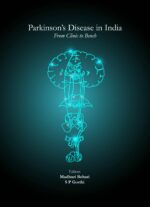
Parkinson’s Disease in India: From Clinic to Bench
₹1,500.00Editors: Madhuri Behari, SP Gorthi
The book fills a void in the knowledge about difference in Parkinson’s disease as seen India, if any from the rest of the world. It will provide a reference for any student of neurology wanting to learn the finer nuances of Parkinson’s disease in India. The book is written by Indian authors who have studied different aspects of Parkinson’s disease in depth, covering all aspects of Parkinson’s disease. The book is painstakingly drafted to cover all aspects of Parkinson’s disease from demography, etiology, clinical features (both motor and non-motor), complications, treatment modalities, its impact on the sufferer and the family and the financial aspect.
Interested readers may write to us at mup@manipal.edu about purchasing the book.
Also available on
-

Linear Algebra with Applications
₹650.00Linear Algebra with Applications portrays selected articles published earlier by Prof Ravindra B Bapat in various reputed journals. This volume published in honour of Prof Bapat, on the occasion of his 60th birthday, consists of his original research articles written in the area of (i) Permanent, Determinant and their applications, (ii) Non-negative Matrices, (iii) Matrix Methods in Statistics and Graph theory, and (iv) Generalized Inverses of a Matrix. Starting with an article A Generalization of a Theorem of Ky Fan on Simplicial Maps, his first article published in 1980, several articles probing the properties of permanent and determinant, characterization of generalized inverses, spectral properties of graphs, and applications of matrix methods in statistics are compiled in this volume. The articles selected in this book will certainly inspire the young linear algebraists and provide several matrix techniques to solve different problems in the area of applied linear algebra.
Interested readers may write to us at mup@manipal.edu about purchasing the book.
Also available on
-

Biomedical Spectroscopy
₹2,950.00Author: Santhosh C, Vasudevan Baskaran Kartha
Biomedical spectroscopy is the output of the intensive discussions of the authors and the medical professionals of Kasturba Medical College, Manipal University. The ?Centre for Laser Spectroscopy?, a centre for developing biomedical applications of laser spectroscopic methods, was established at Manipal University in 1997. The scientists of the Centre, together with the physicians, surgeons, and pathologists of the KMC, initiated a number of research programs in this area. The main aim of the Centre was to develop spectroscopic methods for early detection, screening, monitoring therapy and identification of disease markers, with special emphasis on various cancers, so that these techniques can be applied for routine healthcare applications. Outcome of these research activities are covered in the book. A common platform of information can provide a more open communication enabling faster and better evolution of the spectroscopic methods for biomedical applications.
Interested readers may write to us at mup@manipal.edu about purchasing the book.
International Edition available on 
South Asia Edition available on -

Writing the self in Illness: Reading the Experiential through the Medical Memoir
₹240.00Author: Amala Poli
Writing the Self in Illness: Reading the Experiential Through the Medical Memoir is MUP’s refreshing venture into the developing fields of Medical and Health Humanities with an aim to consider the necessity of the narrative knowledge as complementary to the contemporary notions of well-being, illness, and healthcare.
Is individual happiness contingent on health and well-being “How does one find happiness in the throes of illness” In the present-day scenario, wherein medical practice is largely dominated by evidence-based understanding, diagnostic language, and problem-solving methods, the discipline of Medical Humanities emerges with a reciprocal dialogue between Humanities, Social Sciences, Health, and Medicine. The study of varied experiential narratives – literary works and unmediated accounts of patients and healthcare professionals, is foregrounded in Medical Humanities to amplify knowledge and understanding about the complexity of encounters with illness and their transformational quality in a nuanced manner. Both thought-provoking and informative, this publication brings about the anecdotal form of personal narratives in the light of medical discourses along with the specific cultural context of the narrative.
The present publication seeks to be an important reading for students and academics in the field of medical humanities, health professionals or medical practitioners, as well as scholars aspiring to venture into this flourishing field.Interested readers may write to us at mup@manipal.edu about purchasing the book.
Also available on
Be the first to review “Searching in the Backyard: Kunabi Child Care From an Ethnopaediatric Perspective”
You must be logged in to post a review.