

Life and Art of K K Hebbar
₹2,000.00
Author: Haridas Bhat Editors: Rekha Rao, Rajani Prasanna Translators: Sandhya Vasudev, Rukma Vasudev
K K Hebbar was a trailblazer in Indian art. His contributions to modern Indian art as an artist, teacher, and art administrator are unparalleled. What is ‘Indian’ in modern Indian art has been a subject of discussion since the beginning of the modernist movement. Hebbar’s oeuvre is an answer to that question. It is modern and yet, intensely Indian, both in terms of subjects and treatment. Hebbar remained rooted in his native soil. His line drawings are a treasure of Indian art. No one has surpassed them in their delicacy and lyricism.
This biography is Mr Bhat’s affectionate account of his friend Hebbar’s life and art. The strength of Hebbar’s character comes through in his narration. Integrity and self-discipline were Hebbar’s defining qualities. Arguably, the man was greater than his work. And that makes his story intriguing. This biography of a major artist is a welcome addition to the meagre literature on Indian artists.
Interested customers may write to us at mup@manipal.edu about purchasing the book.
Also available on |
Out of stock
| Author | Haridas Bhat, Rajani Prasanna, Rekha Rao, Rukma Vasudev, Sandhya Vasudev |
|---|---|
| Format |
Customer Reviews
There are no reviews yet.
Related products
-
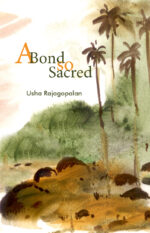
A Bond So Sacred
₹450.00A Bond So Sacred tells the story of Raman, a satyagrahi, who adopts Kokila, an orphan. He leaves the five year old in the care of his mother while he plunges into the freedom struggle. His nationalist fervour, however, clashes with his love for Amina, his charming neighbour who wants parental approval to their marriage. Raman’s mother is as staunch a Brahmin as Amina’s father is a Muslim. Will Raman be able to get their consent. The joy of India becoming an independent nation is marred by Gandhiji’s death. Raman’s fellow satyagrahis have gone their ways and he finds himself with no role to play in a rapidly changing country. Meanwhile, Kokila, his protégée, has her own battles to fight. As the years bring them together again, Kokila discovers truths about Raman that she would never have imagined. She is forced to confront the ghosts of the past, his and hers.
Interested readers may write to us at mup@manipal.edu about purchasing the book.
Also available on
-

Post Googlism and Other Short Stories
₹350.00Author: R C Natarajan
This collection of short stories is for the fast-paced millennials, whom the author calls “The Post Googlist Generation” who want everything hastily, at their finger-tips and on the go. The language has also shrunk in size to allow the pace. The world-view of this generation is that what cannot be done through an app cannot and should not be done. Their expectations of a story are a striking start, a quickly built middle and an interesting end. Stories in the collection seek to meet these expectations of this generation talking to them in their own language. They also echo the changing lives and changing aspirations of the time.
Interested readers may write to us at mup@manipal.edu about purchasing the book.
Also available on
-
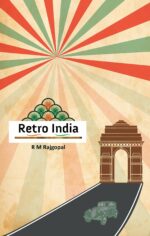
Retro India
₹350.00Author: R M Rajgopal
Retro India is, in essence, a trip down the memory lane, meandering through the sixties, seventies, eighties and nineties of the twentieth century. Today’s youth would battle with the fact that India had experienced a sweeping change from what it was in just as recently as thirty years ago. What kind of a moribund economy could engender a continuing state of shortages, high inflation, low growth, a paucity of jobs, rampant smuggling, and a foreign exchange situation that was perpetually perilous! It took major political and economical transformations to remove the shackles that then bound the economy. This narrative provides a clear bridge between the then and now for the younger generations. And for the older reader, it provides a heap of nostalgia. In the latter half of the twentieth century, the changes in India have been vast and comprehensive. In these decades, economic indicators such as India’s growth in GDP rate, the proliferation of the number of Airlines in the Indian skies, the multiplying of car models, the flourishing of telephone connections and moving on to the world of mobiles, televisions going colour from black and white to operating with over a thousand channels, India turning digital, and so on clearly directs that India had taken a crucial turn in its history. India has changed. And how! The Indian consumer grins. This is notwithstanding the fact that poverty is endemic and the gulf between the rich and the poor.
Interested readers may write to us at mup@manipal.edu about purchasing the book.
Also available on
-
Capturing the Cosmic Light – A Handbook of Astrophotography
₹670.00Author: Sathyakumar P M Sharma
The Handbook of Astrophotography is the first book dedicated to Astronomical Imaging through modest equipment, and the first to be published in India. It is a chronicle of the techniques learnt and employed by the author and is by no means proprietary. It is assumed that the reader is equipped with the basic knowledge to use a digital camera. After showing the many methods to capture the Cosmos, the book shows how to process these images. It is designed to be a handbook and not a user manual. The author hopes that the reader will be confident in astronomical imaging and develop his/her own techniques after reading the book. Sathyakumar started Astrophotography in January 2006 with a homemade wooden star-tracking mount and a camera borrowed from a friend. He later used his homemade Newtonian reflector telescope and an inexpensive digital camera to capture photos of the Moon. With an MSc in Aerospace engineering from the University of Salford, Manchester, he joined Opticstar Ltd, as a design engineer. There he was trained on the latest of astronomical instruments available for the amateur astrophotographer and eventually purchased the Celestron C8 Schmidt cassegrain telescope and the CG-5 Equatorial mount. Currently, he uses a GSO 6 inch RC telescope and an HEQ5-PRO computerized mount as well as an Orion 80ED Apochromatic telescope for astrophotography. He also owns an Astrotrac to take wide field vistas of the Cosmos. He is now employed as a Scientific Officer at Karnataka Science and Technology Promotion Society, Department of Science and Technology, Govt. of Karnataka.
Interested readers may write to us at mup@manipal.edu about purchasing the book.
Also available on
-
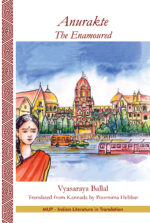
Anurakte- The Enamoured
₹390.00Author: Vyasaraya Ballal Translator: Poornima Hebbar
There are many rags-to-riches stories around the city of Mumbai. However, here is a story of transformation of a woman and her true self in the city of dreams. Set in Mangalore and Mumbai of the late 1940s, Anurakte- The Enamoured is an elegantly written story of a woman and her changing worldview over a period of time. Sumithra, a young woman with ordinary dreams and aspirations, comes to the then Bombay in search of livelihood. Little did she know that her experiences in the city and her zest for an independent life would transform her into a different person. She breaks the shell and resolves not to look back. The book is a poignant tale of love, loss, betrayal, family, relationships and traditions. The culturescape of Mumbai beautifully intertwines with her dreams. It is as much a story of the vibrancy of Mumbai as it is about Sumithra’s journey towards freedom.
Interested readers may write to us at mup@manipal.edu about purchasing the book.
Also available on
-
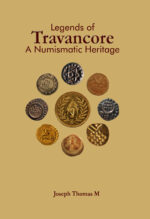
Legends of Travancore – A Numismatic Heritage
₹1,250.00The Kingdom of Travancore in the Southern part of India was a native state in British India which was well known for its progressive outlook. Its enlightened royalty ruled the country as Sree Padmanabha Dasa. They had in place a well oiled administrative mechanism that implemented various programs and reforms, resulting in an overall development of Travancore. Though Travancore was under the colonial rulers, there was a well-orchestrated administrative machinery for coinage. Coins were minted as per the specifications ordered by the periodically issued Royal Proclamations. It is creditable that Travancore retained its independence in its functioning to a large extent. This book is an insight into the coins of Modern Travancore (from 1729 AD) which not only reflects the religious beliefs of the rulers, but also sketches the socio-political atmosphere of the period. Dr Joseph Thomas hailing from Thiruvananthapuram, is a Professor of Urology at Manipal University in India. His passion for collecting coins developed into a serious numismatic pursuit. His special area of interest is the study of the history of Venad and Travancore. His detailed study of the Travancore coins and the various related issues give an insight into the rich numismatic heritage of modern Travancore. He is a Life Member of the Philatelic and Numismatic Association of Thiruvananthapuram and a Life Member of the South Indian Numismatic Society, Chennai.
Interested readers may write to us at mup@manipal.edu about purchasing the book.
Also available on
-
A Handful of Sesame
₹310.00Author: Srinivas B Vaidya, Translator: Maithreyi Karnoor
With a captivating start, A Handful of Sesame plunges us into the heart of the dying years of the 1857 mutiny. But the mutiny is largely a backdrop to the novel. When Kamalanabh of Kashi is manipulated by an impoverished Brahmin of Navalgund into marrying his daughter, the novel becomes basically the story of an internal migration. This is rare, and it remains one of the strengths of the novel. We are so used to speaking of migration across the postcolonial bridge and accredited national borders that we forget that India is a country of endless internal migrations – in the past and the present.
Interested readers may write to us at mup@manipal.edu about purchasing the book.
Also available on
-
Comets – Nomads of the Solar System
₹290.00This book introduces the general reader to the world of comets – those celestial visitors from the outer Solar System that occasionally visit the Earth’s neighbourhood and put up spectacular shows in the night sky. The world had geared up for just such a show at the end of 2013, when Comet ISON was expected to light up the night sky. Using the occasion to bring the world of comets to those interested, this book is a delightful read about the quirky world of these unpredictable visitors. Apart from lucidly and accurately updating the reader about what comets are, where they come from, why is it that they assume the fantastic shapes they do etc. “Comets” also regales the reader with myths about comets in various cultural contexts, snippets about famous comets in the history of mankind, anecdotes on comet discoveries and discoverers, the bewildering procedures followed while naming comets and much more. The book takes a hard look at the hype surrounding the fiery expectations about Comet ISON an cautions the reader that, while there was a good chance of the comet blazing forth in the skies of December 2013, there was a realistic chance that the comet would not survive its close encounter with the Sun. Sadly, the pessimistic predictions came true and the comet disintegrated as it went around the Sun. As we wait for chance to throw us a Great Comet to gaze at in the future, “Comets: Nomads of the Solar System” is an excellent guide to prepare for the event!
Interested customers may write to us at mup@manipal.edu about purchasing the book.
Also available on
Be the first to review “Life and Art of K K Hebbar”
You must be logged in to post a review.