

Lady Lokasundari Raman: Reflections of Her Early Life and Times
₹380.00
Lady Lokasundari Raman was a charismatic person in her own right, as well as a devoted helpmate to her scientist-husband, Sir C V Raman. The book traces her early life in Madurai, Chennai and Calcutta, and we get a glimpse of the role of a young woman in the early decades of the twentieth century as she went forward bearing the many responsibilities of an extended family. This biography brings to light details of an unconventional wedding that had to be postponed due to societal pressures and an unconventional marriage between two great individuals.
Interested customers may write to us at mup@manipal.edu about purchasing the book.
Also available on |
Out of stock
| Author |
|---|
Related products
-
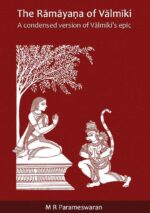
The Ramayana of Valmiki: A condensed version of Valmiki’s epic
₹340.00Author: M R Parameswaran
The world’s greatest epic poem Valmikiramayana, composed over 2,500 years ago, is loved by countless millions of men and women of all religions. The present book is the first condensed version in English of the most reliable version of Valmikiramayana, the Critical Edition prepared by Baroda Oriental Research Institute, India.
Interested readers may write to us at mup@manipal.edu about purchasing the book.Also available on
-
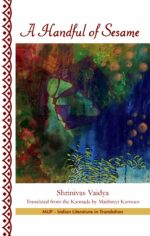
A Handful of Sesame
₹310.00Author: Srinivas B Vaidya, Translator: Maithreyi Karnoor
With a captivating start, A Handful of Sesame plunges us into the heart of the dying years of the 1857 mutiny. But the mutiny is largely a backdrop to the novel. When Kamalanabh of Kashi is manipulated by an impoverished Brahmin of Navalgund into marrying his daughter, the novel becomes basically the story of an internal migration. This is rare, and it remains one of the strengths of the novel. We are so used to speaking of migration across the postcolonial bridge and accredited national borders that we forget that India is a country of endless internal migrations – in the past and the present.
Interested readers may write to us at mup@manipal.edu about purchasing the book.
Also available on
-
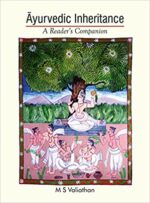
Ayurvedic Inheritance- A Reader’s Companion
₹650.00Author: M S Valiathan
In ancient India, learning spanned four quarters of one’s life. Learning was sought from the teacher, from one’s individual effort, from fellow students and in the last quarter, from the school of life itself. This book belongs to the third quarter for students of Ayurveda regardless of their background in medicine, science, or humanities. Apart from topics in the eight branches of Ayurveda, the book also deals with Ayurvedic Biology which seeks to study the concepts and procedures of Ayurveda with the tools of modern biology. M S Valiathan is a National Research Professor of the Government of India. He is a medical graduate from the University of Kerala and completed his postgraduate training in general surgery from the University of Liverpool and other hospitals in the UK. He did his specialisation in cardiac surgery from the Johns Hopkins and Georgetown University Hospitals in the US. He was a cardiac surgeon for over three decades. His shift to Ayurvedic studies resulted in the publication of three volumes on Caraka, Susruta and Vagbhata, and an Introduction to Ayurveda. The Department of Science and Technology set up a Task Force in Ayurvedic Biology under his chairmanship to promote research in the nascent discipline.
Interested readers may write to us at mup@manipal.edu about purchasing the book.
International Edition available on 
South Asia Edition available on
-
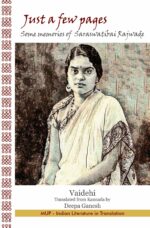
Just a few pages: Some Memories of Saraswatibai Rajwade
₹210.00Author: Vaidehi, Translator: Deepa Ganesh
This book is a coming together of two women writers of modern Kannada literature; one from its early period, the other, a contemporary. Saraswati Bai Rajwade, the early writer, became a fable, a mythology, leaving behind only the shadows of her writing. Vaidehi, the contemporary writer, reinvents Rajwade from the folds of history and gives her a life in the present. Saraswati Bai Rajwade was born into a poor family in the Dakshina Kannada of yore. By chance, she stepped into theatre and later into films. But all the glory that came to her unexpectedly, vanished just as suddenly. She later became the wife of a rich and high official, travelled abroad and underwent immense suffering. In her pain and loneliness, she took to books and also began to write and attained glory as a writer. In the last years of her life, she returned to a life of austerity and anonymity. Vaidehi has collected bits and pieces from her life and writing, presenting before us a unique tapestry. In this tapestry, Vaidehi?s perceptions criss-cross with Rajwade?s life and writing. Art does not reside in the object, but in its close encounter with life. This work unfolds before us as a grand illustration of such twin narratives.
Interested readers may write to us at mup@manipal.edu about purchasing the book.
Also available on
-
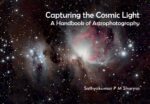
Capturing the Cosmic Light – A Handbook of Astrophotography
₹670.00Author: Sathyakumar P M Sharma
The Handbook of Astrophotography is the first book dedicated to Astronomical Imaging through modest equipment, and the first to be published in India. It is a chronicle of the techniques learnt and employed by the author and is by no means proprietary. It is assumed that the reader is equipped with the basic knowledge to use a digital camera. After showing the many methods to capture the Cosmos, the book shows how to process these images. It is designed to be a handbook and not a user manual. The author hopes that the reader will be confident in astronomical imaging and develop his/her own techniques after reading the book. Sathyakumar started Astrophotography in January 2006 with a homemade wooden star-tracking mount and a camera borrowed from a friend. He later used his homemade Newtonian reflector telescope and an inexpensive digital camera to capture photos of the Moon. With an MSc in Aerospace engineering from the University of Salford, Manchester, he joined Opticstar Ltd, as a design engineer. There he was trained on the latest of astronomical instruments available for the amateur astrophotographer and eventually purchased the Celestron C8 Schmidt cassegrain telescope and the CG-5 Equatorial mount. Currently, he uses a GSO 6 inch RC telescope and an HEQ5-PRO computerized mount as well as an Orion 80ED Apochromatic telescope for astrophotography. He also owns an Astrotrac to take wide field vistas of the Cosmos. He is now employed as a Scientific Officer at Karnataka Science and Technology Promotion Society, Department of Science and Technology, Govt. of Karnataka.
Interested readers may write to us at mup@manipal.edu about purchasing the book.
Also available on
-
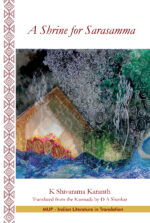
A Shrine for Sarasamma
₹180.00Author: Shivarama Karanth Translator: D A Shankar
A Shrine for Sarasamma is the English translation of Sarasammana Samadhi written by K Shivarama Karanth in 1937, in his early thirties. It offers one of the most authentic and searing accounts of Indian womanhood, which consistently, and through the ages, has suffered deep anguish, humiliation and crushing insult from the oppressive patriarchal culture prevalent in all parts of India and among all castes and classes. The novel is a classic in Kannada and the English translation is an attempt to bring to the English reading audience a taste of the regional classic.
Interested readers may write to us at mup@manipal.edu about purchasing the book.
Also available on
-
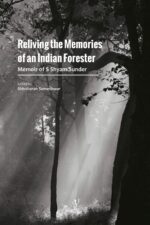
Reliving the memories of an Indian forester: Memoir of S Shyam Sunder
₹450.00Editor: Shiv Someshwar
Shyam Sunder’s memoir is a series of vignettes, from numerous comedic to a tragic few. The life narrated is varied and never short of excitement – being ten yards from a charging tusker or a foot away from a King Cobra; defying orders of the chief minister; being hauled up for contempt of the high court, and discussing with Indira Gandhi the best way to eat avocados. Possessed of wit and passion, the narration lays bare the hubris of popular discourse on noble forest livelihoods, and unflinchingly narrates neglect of rural communities, as well as of forests, at times by the callous imposition of rules and regulations.
Interested readers may write to us at mup@manipal.edu about purchasing the book.
Also available on
-
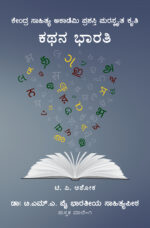
Kathana Bharathi
₹300.00Author: T P Ashoka
ಕಥನ ಭಾರತಿಯು ವಿವಿಧ ಭಾರತೀಯ ಭಾಷೆಗಳಾದ ಕನ್ನಡ, ಹಿಂದಿ, ಬೆಂಗಾಲಿ, ಗುಜರಾತಿ, ಮಲಯಾಳಂ, ಮರಾಠಿ, ಒರಿಯಾ, ಪಂಜಾಬಿ ಮತ್ತು ಉರ್ದುಗಳಲ್ಲಿ ಬರೆಯಲಾದ ಆಧುನಿಕ ಶ್ರೇಷ್ಠ ಸಾಹಿತ್ಯದ ಇಪ್ಪತ್ತು ಸಾಹಿತ್ಯ ವಿಮರ್ಶಾತ್ಮಕ ಪ್ರಬಂಧಗಳ ಸಂಗ್ರಹವಾಗಿದೆ. ಪುಸ್ತಕದಲ್ಲಿ ಚರ್ಚಿಸಲಾದ ಭಾರತೀಯ ಲೇಖಕರಲ್ಲಿ ಜನಪ್ರಿಯ ಲೇಖಕರಾದ ಅಲೋಕ್ ಭಲ್ಲಾ, ಅಮೃತಾ ಪ್ರೀತಮ್, ಬೇಗಂ ರೋಕ್ವಿಯಾ ಸಖಾವತ್ ಹುಸೇನ್, ಭೀಮರಾವ್ ರಾಮ್ಜಿ ಅಂಬೇಡ್ಕರ್, ಭೀಶಮ್ ಸಾಹ್ನಿ, ಚಂದ್ರಶೇಖರ ಕಂಬಾರ, ಗಿರೀಶ್ ರಘುನಾಥ್ ಕಾರ್ನಾಡ್, ಗೋಪಿನಾಥ್ ಮೊಹಾಂತಿ, ಜಾನಕಿ ಶ್ರೀನಿವಾಸ ಮೂರ್ತಿ (ವೈದೇಹಿ, ಕೋತಾ ಸುನಿವಾಸ ಮೂರ್ತಿ) ಸೇರಿದ್ದಾರೆ. ಶಿವರಾಮ ಕಾರಂತ್, ಲಕ್ಷ್ಮಣ ಮಾನೆ, ಮಹಾಶ್ವೇತಾದೇವಿ, ಮಾಸ್ತಿ ವೆಂಕಟೇಶ ಅಯ್ಯಂಗಾರ್, ಮೋಹನ್ದಾಸ್ ಕರಮಚಂದ್ ಗಾಂಧಿ, ಮುನ್ಷಿ ಪ್ರೇಮಚಂದ್, ಪನ್ನಾಲಾಲ್ ನಾನಾಲಾಲ್ ಪಟೇಲ್, ರವೀಂದ್ರನಾಥ ಠಾಗೋರ್, ಸಾದತ್ ಹಸನ್ ಮಂಟೋ, ತಕಳಿ ಶಿವಶಂಕರ ಪಿಳ್ಳೈ, ಉಡುಪಿ ರಾಜಗೋಪಾಲಾಚಾರ್ಯ ಅನಂತಮೂರ್ತಿ ಮತ್ತು ಯಶಪಾಲ. ಇಪ್ಪತ್ತು ಸಾಹಿತ್ಯ ವಿಮರ್ಶಾತ್ಮಕ ಪ್ರಬಂಧಗಳು ತಮ್ಮ ಆಯ್ದ ಬರಹಗಳನ್ನು ಪರಿಶೀಲಿಸುತ್ತವೆ, ಪರಿಚಯಿಸುತ್ತವೆ, ಚರ್ಚಿಸುತ್ತವೆ ಮತ್ತು ವ್ಯಾಖ್ಯಾನಿಸುತ್ತವೆ. ಕಳೆದ ನೂರೈವತ್ತು ವರ್ಷಗಳಲ್ಲಿ ಭಾರತೀಯ ಶ್ರೇಷ್ಠ ಲೇಖಕರು ತಮ್ಮ ಸಮಯ ಮತ್ತು ಜಾಗಕ್ಕೆ ಹೇಗೆ ಪ್ರತಿಕ್ರಿಯಿಸಿದ್ದಾರೆ ಮತ್ತು ಪ್ರತಿಕ್ರಿಯಿಸಿದ್ದಾರೆ ಎಂಬುದನ್ನು ಈ ಲೇಖನಗಳು ಪರಿಶೀಲಿಸುತ್ತವೆ. ವಸಾಹತುಶಾಹಿ ಅನುಭವ, ವಿಭಜನೆಯ ಆಘಾತ ಮತ್ತು ಸ್ವಾತಂತ್ರ್ಯಾನಂತರದ ಸಾಮಾಜಿಕ ರಾಜಕೀಯ ಬೆಳವಣಿಗೆಗಳು ಈ ಬರಹಗಾರರ ಬರಹಗಳಲ್ಲಿ ಪ್ರಬಲ ನಿರೂಪಣೆಗಳು ಮತ್ತು ರೂಪಕಗಳ ರೂಪದಲ್ಲಿ ಅಭಿವ್ಯಕ್ತಿಯನ್ನು ಕಂಡುಕೊಂಡಿವೆ. ಟಿ ಪಿ ಅಶೋಕ ಅವರ ಕಥನ ಭಾರತಿ ಈ ಬರಹಗಳ ವಿಮರ್ಶೆ. ಆಧುನಿಕ ಭಾರತೀಯ ಸಾಹಿತ್ಯದಲ್ಲಿನ ಈ ಅಧ್ಯಯನಗಳು ಆಧುನಿಕ ಭಾರತೀಯ ಸಾಹಿತ್ಯ ವಿಮರ್ಶೆಗೆ ಅಮೂಲ್ಯ ಕೊಡುಗೆಯಾಗಿದೆ. ಪುಸ್ತಕವು ಸಾಹಿತ್ಯದ ವಿದ್ಯಾರ್ಥಿಗಳು, ಸಂಶೋಧಕರು ಮತ್ತು ಶಿಕ್ಷಕರಿಗೆ ಆಸಕ್ತಿದಾಯಕ ಓದುವಿಕೆಯನ್ನು ಒದಗಿಸುತ್ತದೆ ಆದರೆ ಸಾಮಾನ್ಯ ಓದುಗರನ್ನೂ ಆಕರ್ಷಿಸುತ್ತದೆ.
Interested readers may write to us at mup@manipal.edu about purchasing the book.Also available on