
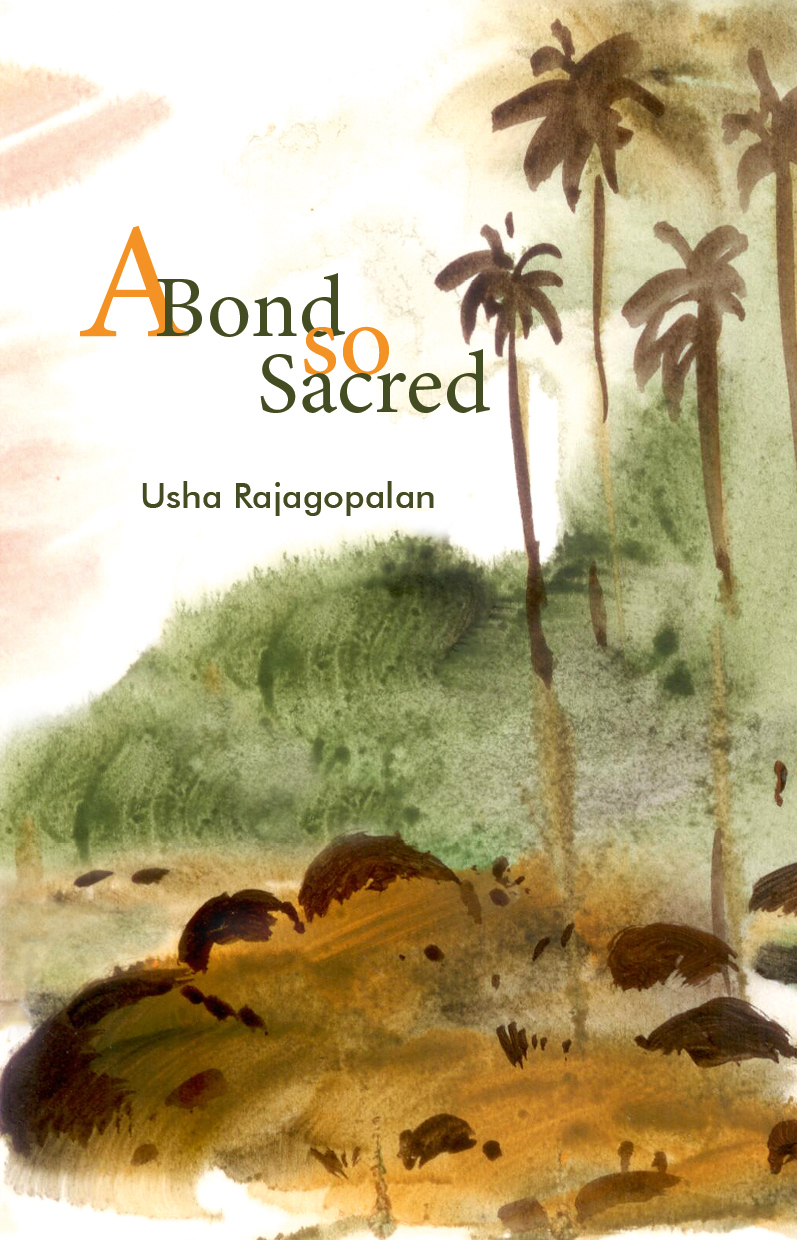
A Bond So Sacred
₹450.00
A Bond So Sacred tells the story of Raman, a satyagrahi, who adopts Kokila, an orphan. He leaves the five year old in the care of his mother while he plunges into the freedom struggle. His nationalist fervour, however, clashes with his love for Amina, his charming neighbour who wants parental approval to their marriage. Raman’s mother is as staunch a Brahmin as Amina’s father is a Muslim. Will Raman be able to get their consent. The joy of India becoming an independent nation is marred by Gandhiji’s death. Raman’s fellow satyagrahis have gone their ways and he finds himself with no role to play in a rapidly changing country. Meanwhile, Kokila, his protégée, has her own battles to fight. As the years bring them together again, Kokila discovers truths about Raman that she would never have imagined. She is forced to confront the ghosts of the past, his and hers.
Interested readers may write to us at mup@manipal.edu about purchasing the book.
Also available on

| Format |
|---|
Customer Reviews
There are no reviews yet.
Related products
-

Colours of the Rainbow
₹450.00Author: Umesh Bhat
The author, through Colours of the Rainbow, tells us that everyone is destined for his/her own rainbow with a pot of gold at the other end if, one has a will, works hard on it, and with a little bit of luck. The book narrates the dream journey of a village boy.
Interested readers may write to us at mup@manipal.edu about purchasing the book.
Also available on
-

Post Googlism and Other Short Stories
₹350.00Author: R C Natarajan
This collection of short stories is for the fast-paced millennials, whom the author calls “The Post Googlist Generation” who want everything hastily, at their finger-tips and on the go. The language has also shrunk in size to allow the pace. The world-view of this generation is that what cannot be done through an app cannot and should not be done. Their expectations of a story are a striking start, a quickly built middle and an interesting end. Stories in the collection seek to meet these expectations of this generation talking to them in their own language. They also echo the changing lives and changing aspirations of the time.
Interested readers may write to us at mup@manipal.edu about purchasing the book.
Also available on
-
Just a few pages: Some Memories of Saraswatibai Rajwade
₹210.00Author: Vaidehi, Translator: Deepa Ganesh
This book is a coming together of two women writers of modern Kannada literature; one from its early period, the other, a contemporary. Saraswati Bai Rajwade, the early writer, became a fable, a mythology, leaving behind only the shadows of her writing. Vaidehi, the contemporary writer, reinvents Rajwade from the folds of history and gives her a life in the present. Saraswati Bai Rajwade was born into a poor family in the Dakshina Kannada of yore. By chance, she stepped into theatre and later into films. But all the glory that came to her unexpectedly, vanished just as suddenly. She later became the wife of a rich and high official, travelled abroad and underwent immense suffering. In her pain and loneliness, she took to books and also began to write and attained glory as a writer. In the last years of her life, she returned to a life of austerity and anonymity. Vaidehi has collected bits and pieces from her life and writing, presenting before us a unique tapestry. In this tapestry, Vaidehi?s perceptions criss-cross with Rajwade?s life and writing. Art does not reside in the object, but in its close encounter with life. This work unfolds before us as a grand illustration of such twin narratives.
Interested readers may write to us at mup@manipal.edu about purchasing the book.
Also available on
-

The Practice of Geopolitics
₹850.00Author: M D Nalapat
Intended to be a Practioner’s Guide to Geopolitics, the book provides a look into the thought processes that generate correct and timely analysis of global events. Geopolitics needs to weave within its analytical grasp economics, society, strategy and even culture, as the science deals with overall national capabilities as well as the mutal synergy and frictions between nations. Although a broad range of subjects has been covered in the book, each is anchored in the ground reality of events having a profound impact on the lives of citizens and on world events. The growing interconnectedness of the globe has resulted in a need to do away with the popular west centric models of international relations and to view events not through that single prism but from a holistic viewpoint that accepts the relevance and maturity of different histories and geographies. What the book provides is an alternative Weltanschauung to the dominant models of geopolitical analysis, so that the science is enabled to cross beyond the narrow boundaries which have confined. The scope and applicability of its analysis. The rise of Asia needs a geopolitical vision unique to the continent, and this is what has been provided by Professor Nalapat.
Interested readers may write to us at mup@manipal.edu about purchasing the book.
Also available on
-
Valmiki Ramayana – Critical Essays
₹250.00Author: M R Parameswaran
This book critically engages with several important events and statements found in Valmiki’s epic poem, the Ramayana composed over 2500 years ago. Though certain methods were followed to preserve the Vedic texts, no serious methods were adopted to preserve the text of Ramayana. The poem spread to all parts of India and beyond through narrators of the epic who sometimes added their own explanatory verses to conform to local customs and traditions. In the second half of the 20th century, scholars at the Baroda Oriental Research Institute, after many years of labour and examination of over 2000 different manuscripts, compiled what is now accepted as the most reliable version of the poem. Based on this critical edition, a condensed English version by Dr Parameswaran was earlier published by the Manipal University Press. In the present book, Dr Parameswaran reviews the critical interpretations of scholars like Sheldon Pollock, R P Goldman and Wendy Doniger and has analytic responses to many unanswered questions. About the book: Dr M R Parameswaran has taught Mathematics as well as Sanskrit at the University of Manitoba in Winnipeg, Canada. His work Studies in Srivaishnavism, has been well received by academic scholars and Srivaishnavas.
Interested readers may write to us at mup@manipal.edu about purchasing the book.Also available on
-
Retro India
₹350.00Author: R M Rajgopal
Retro India is, in essence, a trip down the memory lane, meandering through the sixties, seventies, eighties and nineties of the twentieth century. Today’s youth would battle with the fact that India had experienced a sweeping change from what it was in just as recently as thirty years ago. What kind of a moribund economy could engender a continuing state of shortages, high inflation, low growth, a paucity of jobs, rampant smuggling, and a foreign exchange situation that was perpetually perilous! It took major political and economical transformations to remove the shackles that then bound the economy. This narrative provides a clear bridge between the then and now for the younger generations. And for the older reader, it provides a heap of nostalgia. In the latter half of the twentieth century, the changes in India have been vast and comprehensive. In these decades, economic indicators such as India’s growth in GDP rate, the proliferation of the number of Airlines in the Indian skies, the multiplying of car models, the flourishing of telephone connections and moving on to the world of mobiles, televisions going colour from black and white to operating with over a thousand channels, India turning digital, and so on clearly directs that India had taken a crucial turn in its history. India has changed. And how! The Indian consumer grins. This is notwithstanding the fact that poverty is endemic and the gulf between the rich and the poor.
Interested readers may write to us at mup@manipal.edu about purchasing the book.
Also available on
-
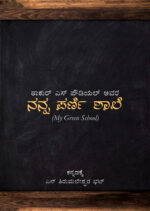
Nanna Parni Shaale
₹290.00Author: Thakur S Powdyel Translator: N T Bhat
ನನ್ನ ಪರ್ಣ ಶಾಲೆ ಠಾಕೂರ್ ಎಸ್ ಪಡೆಯಲು ಅವರು ಇಂಗ್ಲಿಷಿನಲ್ಲಿ ರಚಿಸಿದ ಪುಸ್ತಕದ ಕನ್ನಡ ಅನುವಾದ, ಭೂತಾನ್ ರಾಜ್ಯದಲ್ಲಿ ರಾಷ್ಟ್ರವ್ಯಾಪಿಯಾಗಿ ಅಳವಡಿಸಲಾದ ಶಿಕ್ಷಣ ಯೋಜನೆಯನ್ನು ಪೌಡಿಯಲ್ “ಮೈ ಗ್ರೀನ್ ಸ್ಕೂಲ್” ಎಂಬ ಹೆಸರಿನಲ್ಲಿ ವಿವರಿಸಿದ್ದಾರೆ. ಮೂಲದ ಇಂಗ್ಲಿಷ್ ಶೀರ್ಷಿಕೆ ಹೊಂದಿಕೊಳ್ಳುವಂತ ಈ ಅನುವಾದಕ್ಕೆ ಪರ್ಣ ಶಾಲೆ ಎಂಬ ಶೀರ್ಷಿಕೆಯನ್ನು ನೀಡಲಾಗಿದೆ. ವಿದ್ಯಾರ್ಥಿ ವ್ಯಕ್ತಿತ್ವ ವನ್ನು ಸರ್ವಾಂಗೀಣ ವಾಗಿ ರೂಪಿಸುವ ಉದಾತ್ತ ಧೈರ್ಯವನ್ನು ಶಿಕ್ಷಣವು ಹೊಂದಿರಬೇಕೆಂಬುದನ್ನು ಈ ಪುಸ್ತಕದಲ್ಲಿ ಗಂಭೀರವಾಗಿ ಪ್ರತಿ ಪಾದಿಸುತ್ತಾರೆ. ಮನುಷ್ಯನು ಪ್ರಕೃತಿಯೊಂದಿಗೆ ತಾದಾತ್ಮ್ಯ ಭಾವವನ್ನು ಹೊಂದಿಕೊಳ್ಳುವುದು ಸರ್ವಾಂಗೀಣ ವ್ಯಕ್ತಿತ್ವದಲ್ಲಿ ಆಂತರ್ಗತವಾಗಿದೆ. ಶಿಕ್ಷಣಕ್ಕೆ, ಶಿಕ್ಷಣ ಸಂಸ್ಥೆಗಳಿಗೆ ಈ ಲಕ್ಷ್ಯವೂ ಇರಬೇಕೆಂಬುದು ಸ್ವತಸ್ಸಿದ್ದ. ಈ ನಿಟ್ಟಿನಲ್ಲಿ ಉದಾತ್ತ ಶಿಕ್ಷಣ ನೀಡುವ ಶಾಲೆಯನ್ನು ಗ್ರೀನ್ ಸ್ಕೂಲ್ ಎಂದು ಕರೆಯುವುದು ಸರ್ವಥಾ ಸ ರಿ. ಅಂತೆಯೇ ಈ ಶಿಕ್ಷಣ ನೀತಿಯನ್ನು ಭಾರತದಲ್ಲೂ ವ್ಯಾಪಕವಾಗಿ ಅಳವಡಿಸುವುದು ಅಪೇಕ್ಷಣೀಯ.
Also available on
eBook available on

-
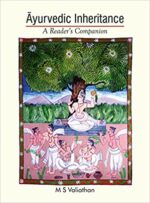
Ayurvedic Inheritance- A Reader’s Companion
₹650.00Author: M S Valiathan
In ancient India, learning spanned four quarters of one’s life. Learning was sought from the teacher, from one’s individual effort, from fellow students and in the last quarter, from the school of life itself. This book belongs to the third quarter for students of Ayurveda regardless of their background in medicine, science, or humanities. Apart from topics in the eight branches of Ayurveda, the book also deals with Ayurvedic Biology which seeks to study the concepts and procedures of Ayurveda with the tools of modern biology. M S Valiathan is a National Research Professor of the Government of India. He is a medical graduate from the University of Kerala and completed his postgraduate training in general surgery from the University of Liverpool and other hospitals in the UK. He did his specialisation in cardiac surgery from the Johns Hopkins and Georgetown University Hospitals in the US. He was a cardiac surgeon for over three decades. His shift to Ayurvedic studies resulted in the publication of three volumes on Caraka, Susruta and Vagbhata, and an Introduction to Ayurveda. The Department of Science and Technology set up a Task Force in Ayurvedic Biology under his chairmanship to promote research in the nascent discipline.
Interested readers may write to us at mup@manipal.edu about purchasing the book.
International Edition available on 
South Asia Edition available on
Be the first to review “A Bond So Sacred”
You must be logged in to post a review.