
Uma Ram served as a Professor of English at Government Kakatiya Post-Graduate College in Jagdalpur (Bastar) for over three decades. She is the co-author of Tribal Songs, Ballads, and Oral Epics of Bastar. Uma is also an empanelled columnist with The Times of India and has contributed to the Speaking Tree column, where she has written extensively on topics related to tribal spirituality.
Uma has translated several works into English, including the Kannada classics Mankutimmana Kagga by D V Gundappa and Vachanas by Sarvajna. She is a recipient of the Sarasa Award for Translation.
-
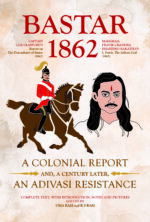
Bastar, 1862
₹850.00In the summers of 1861 and 1862, Captain CLR Glasfurd, a British India bureaucrat, toured Bastar on horseback. His Report on the Dependency of Bastar, originally an official tour document, offers a glimpse into the Gond-inhabited region of Dandakaranya, north of the Godavari River, mentioned in the Ramayana. Glasfurd’s account sheds light on the early days of British India, the empire’s expansion into India’s hinterlands, and the complexities of imperialism. It also explores the rise of commerce-centric ‘development,’ presenting both its positive and negative aspects.
A century later, in the same land Glasfurd once surveyed, a very different story unfolded.
I, Pravir, the Adivasi God is the personal account of Pravir Chandra Bhanjdeo Kakatiya, the last Maharajah of Bastar, deeply revered by his people and remembered across India for his tragic end at the handsof the State in 1966. Crowned at the age of seven after the sudden death of his mother, Pravir was raised under the care of English governesses and, as a teenager, signed the Deed of Accession merging the State of Bastar into the Indian Union. Initially idealistic, he soon found himself alienated in the new republic, his idealism shattered by betrayal. Officially declared insane, though later proven sane, Pravir was stripped of his title, impoverished, and assassinated in 1966, before he turned forty. This is his story, in his own words.Interested readers may write to us at mup@manipal.edu about purchasing the book.
Also available on