
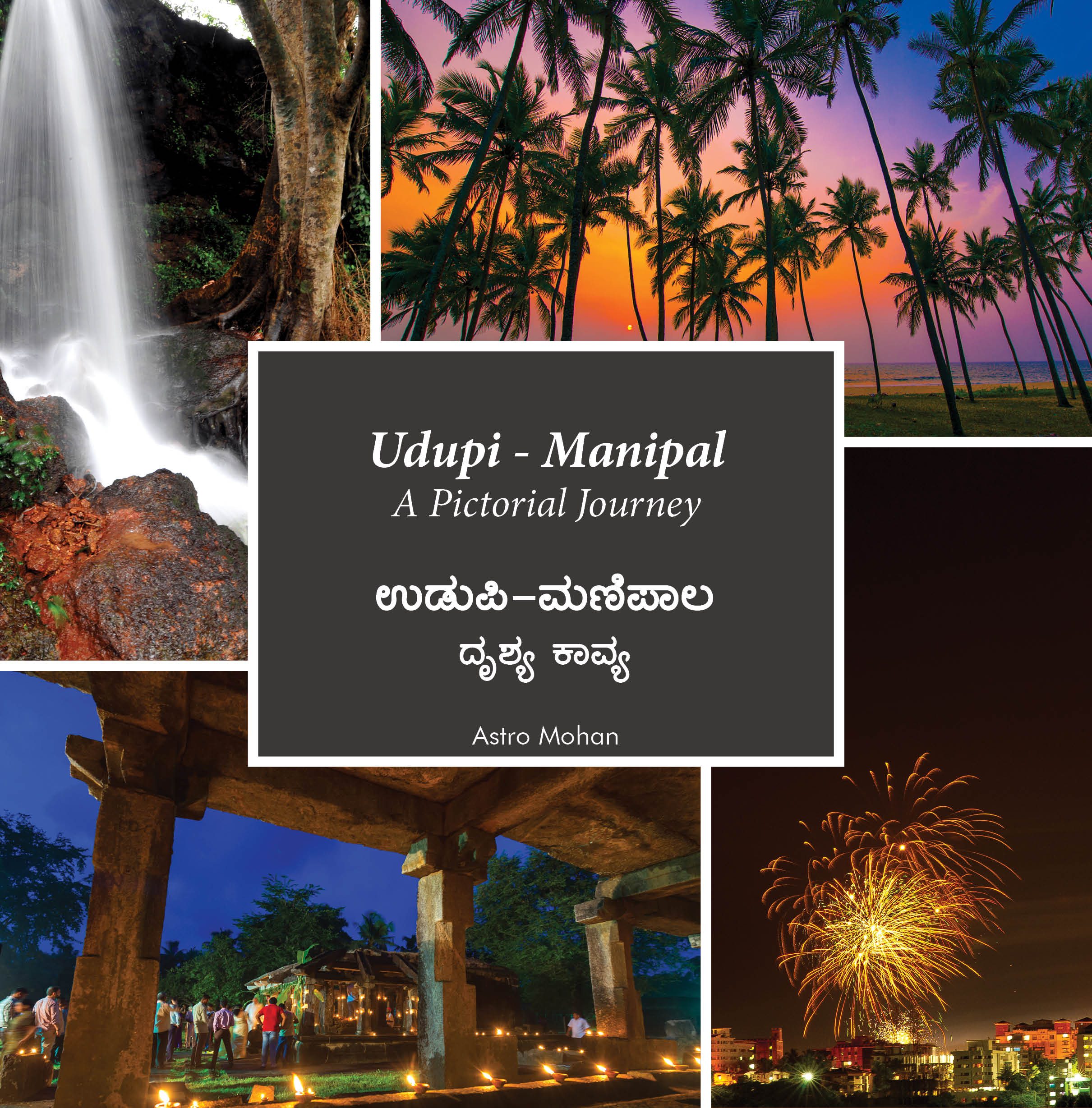
Udupi – Manipal: A Pictorial Journey
₹650.00
Author: Astro Mohan
This picturesque book celebrates the history and life of Udupi and Manipal and takes the reader on a photographic tour. Most breath-taking locales are presented with rich, full-colour images taken by Astro Mohan. These images, combined with redolent text, in both English and Kannada, illustrates a plethora of visual wonders: ancient megaliths, scenic islands, magnificent artwork, white-sand seashores, rainforests, and both classic and innovative architecture. Loaded with information for each location, it is the perfect travel partner and comprehensive guide for an enriching and authentic travel experience in Udupi-Manipal. Experience well-known festivals such as Ganesh Chaturthi to lesser-known cultural fiestas like Bhootharadhane and Dollu Kunita or architectural wonders like the Kalluchappara or Katale Basadi with this. Immerse yourself in the temple city of Udupi and the cosmopolitan town of Manipal with this book. Begin your journey now!
Interested customers may write to us at mup@manipal.edu about purchasing the book.
Also available on |
| Author | |
|---|---|
| Format |
Related products
-
Comets – Nomads of the Solar System
₹290.00This book introduces the general reader to the world of comets – those celestial visitors from the outer Solar System that occasionally visit the Earth’s neighbourhood and put up spectacular shows in the night sky. The world had geared up for just such a show at the end of 2013, when Comet ISON was expected to light up the night sky. Using the occasion to bring the world of comets to those interested, this book is a delightful read about the quirky world of these unpredictable visitors. Apart from lucidly and accurately updating the reader about what comets are, where they come from, why is it that they assume the fantastic shapes they do etc. “Comets” also regales the reader with myths about comets in various cultural contexts, snippets about famous comets in the history of mankind, anecdotes on comet discoveries and discoverers, the bewildering procedures followed while naming comets and much more. The book takes a hard look at the hype surrounding the fiery expectations about Comet ISON an cautions the reader that, while there was a good chance of the comet blazing forth in the skies of December 2013, there was a realistic chance that the comet would not survive its close encounter with the Sun. Sadly, the pessimistic predictions came true and the comet disintegrated as it went around the Sun. As we wait for chance to throw us a Great Comet to gaze at in the future, “Comets: Nomads of the Solar System” is an excellent guide to prepare for the event!
Interested customers may write to us at mup@manipal.edu about purchasing the book.
Also available on
-

A Birder’s Handbook to Manipal
₹655.00The third edition of A Birder’s Handbook to Manipal documents 260 species of birds observed in Manipal since 2009. It is more concise and informative than the previous editions, covers more species and has up-to-date maps and documentation notes. This edition also comes with a waterproof quick-ID guide for easy use in the field, as well as bird sounds. Ramit Singal is a former student of Manipal Institute of Technology. He founded the Manipal Birders’ Club and authored the first and second editions of this book. In the past, he has been associated with Centre for Wildlife Studies and Nature Conservation Foundation as well as a number of short-term projects across the country. He enjoys spreading the love for birds amongst others and has been working with bird-related citizen science projects over the past few years.
interested readers may write to us at mup@manipal.edu about purchasing the book.
Also available on
-
The Ramayana of Valmiki: A condensed version of Valmiki’s epic
₹340.00Author: M R Parameswaran
The world’s greatest epic poem Valmikiramayana, composed over 2,500 years ago, is loved by countless millions of men and women of all religions. The present book is the first condensed version in English of the most reliable version of Valmikiramayana, the Critical Edition prepared by Baroda Oriental Research Institute, India.
Interested readers may write to us at mup@manipal.edu about purchasing the book.Also available on
-

Post Googlism and Other Short Stories
₹350.00Author: R C Natarajan
This collection of short stories is for the fast-paced millennials, whom the author calls “The Post Googlist Generation” who want everything hastily, at their finger-tips and on the go. The language has also shrunk in size to allow the pace. The world-view of this generation is that what cannot be done through an app cannot and should not be done. Their expectations of a story are a striking start, a quickly built middle and an interesting end. Stories in the collection seek to meet these expectations of this generation talking to them in their own language. They also echo the changing lives and changing aspirations of the time.
Interested readers may write to us at mup@manipal.edu about purchasing the book.
Also available on
-

Colours of the Rainbow
₹450.00Author: Umesh Bhat
The author, through Colours of the Rainbow, tells us that everyone is destined for his/her own rainbow with a pot of gold at the other end if, one has a will, works hard on it, and with a little bit of luck. The book narrates the dream journey of a village boy.
Interested readers may write to us at mup@manipal.edu about purchasing the book.
Also available on
-
Valmiki Ramayana – Critical Essays
₹250.00Author: M R Parameswaran
This book critically engages with several important events and statements found in Valmiki’s epic poem, the Ramayana composed over 2500 years ago. Though certain methods were followed to preserve the Vedic texts, no serious methods were adopted to preserve the text of Ramayana. The poem spread to all parts of India and beyond through narrators of the epic who sometimes added their own explanatory verses to conform to local customs and traditions. In the second half of the 20th century, scholars at the Baroda Oriental Research Institute, after many years of labour and examination of over 2000 different manuscripts, compiled what is now accepted as the most reliable version of the poem. Based on this critical edition, a condensed English version by Dr Parameswaran was earlier published by the Manipal University Press. In the present book, Dr Parameswaran reviews the critical interpretations of scholars like Sheldon Pollock, R P Goldman and Wendy Doniger and has analytic responses to many unanswered questions. About the book: Dr M R Parameswaran has taught Mathematics as well as Sanskrit at the University of Manitoba in Winnipeg, Canada. His work Studies in Srivaishnavism, has been well received by academic scholars and Srivaishnavas.
Interested readers may write to us at mup@manipal.edu about purchasing the book.Also available on
-
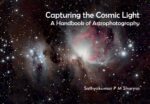
Capturing the Cosmic Light – A Handbook of Astrophotography
₹670.00Author: Sathyakumar P M Sharma
The Handbook of Astrophotography is the first book dedicated to Astronomical Imaging through modest equipment, and the first to be published in India. It is a chronicle of the techniques learnt and employed by the author and is by no means proprietary. It is assumed that the reader is equipped with the basic knowledge to use a digital camera. After showing the many methods to capture the Cosmos, the book shows how to process these images. It is designed to be a handbook and not a user manual. The author hopes that the reader will be confident in astronomical imaging and develop his/her own techniques after reading the book. Sathyakumar started Astrophotography in January 2006 with a homemade wooden star-tracking mount and a camera borrowed from a friend. He later used his homemade Newtonian reflector telescope and an inexpensive digital camera to capture photos of the Moon. With an MSc in Aerospace engineering from the University of Salford, Manchester, he joined Opticstar Ltd, as a design engineer. There he was trained on the latest of astronomical instruments available for the amateur astrophotographer and eventually purchased the Celestron C8 Schmidt cassegrain telescope and the CG-5 Equatorial mount. Currently, he uses a GSO 6 inch RC telescope and an HEQ5-PRO computerized mount as well as an Orion 80ED Apochromatic telescope for astrophotography. He also owns an Astrotrac to take wide field vistas of the Cosmos. He is now employed as a Scientific Officer at Karnataka Science and Technology Promotion Society, Department of Science and Technology, Govt. of Karnataka.
Interested readers may write to us at mup@manipal.edu about purchasing the book.
Also available on
-
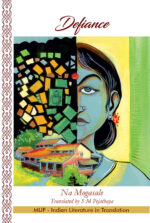
Defiance
₹495.00Defiance is a captivating tale of the march of globalization and its impact on the lives and times of the Santher Guthu family in Ombathkere, a village located between Mangaluru and Kasaragodu. Set in the picturesque Malabar coast of Karnataka in the late 20th Century, the novel takes the reader through four generations of the family. Ambakke, the protagonist, along with her brother Sankappa Hegde, the third-generation descendants of the family form the lifeblood of this story of human relationships in the midst of time and change. The novel is born out of deep contemplation of a community in the face of transition. There is anxiety that grips this part of Karnataka in the wake of modernity. The vast canvas of the novel and the depiction of folk culture provides a unique touch to the saga of the community. Defiance is a novel about traditions and the fear of losing out to modernity. It is about change and the desire to remain rooted.
Interested readers may write to us at mup@manipal.edu about purchasing the book.
Also available on