
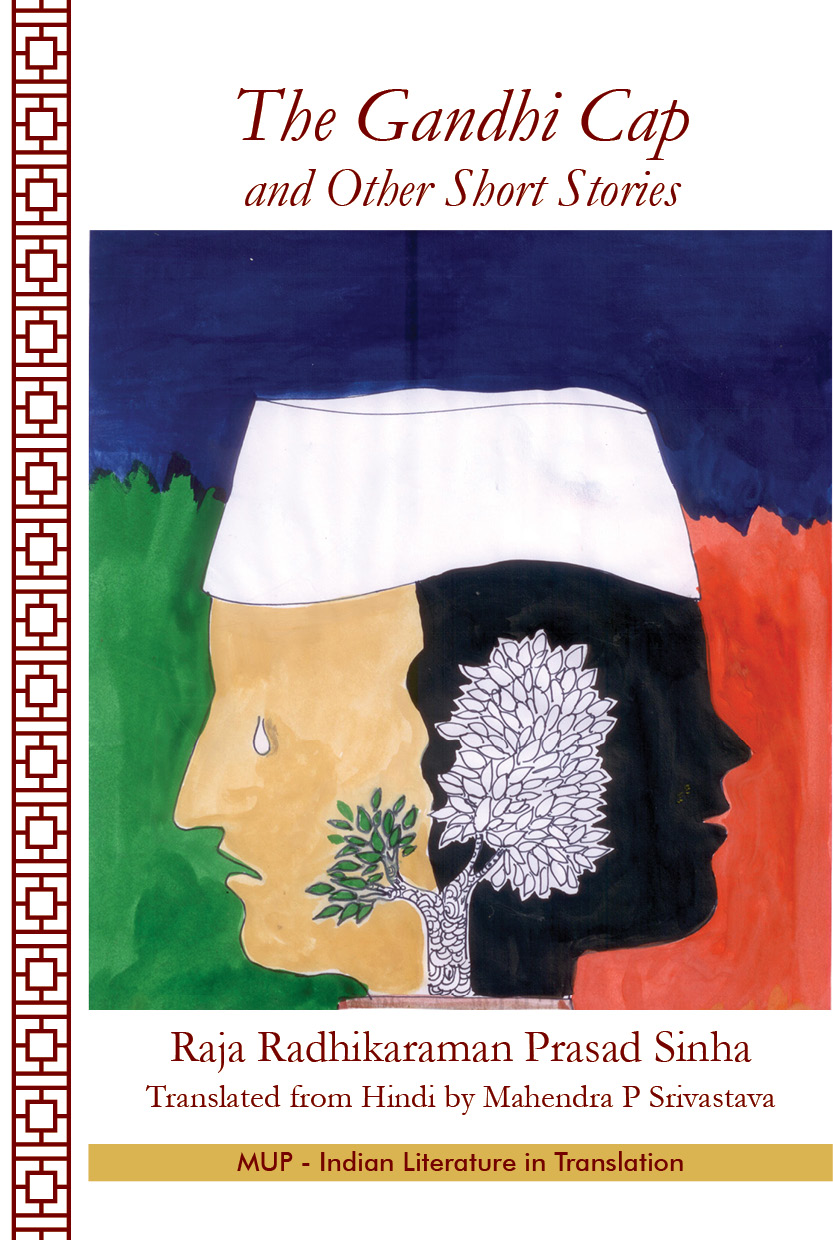
The Gandhi Cap and Other Short Stories
₹345.00
Author: Raja Radhikaraman Prasad Sinha, Translator: Mahendra P Srivastava
The book The Gandhi Cap and Other Short Stories offers a glimpse into the lifetime of work of a forgotten pioneer of Hindi fiction, Raja Radhikaraman Prasad Sinha. It is ironic that one cannot find a single book by this author who was so dedicated to Hindi literature. The stories in this collection are a testament not only to the contributions of Sinha to Hindi fiction but also, reflect the depth of political and social milieu of the times. Many readers will be moved by the elements patriotism, feminism, secularism, and spiritualism in these stories. Strong female characters are common in most of these stories. These characters provide both a moral fulcrum to the stories as well as reflect the struggle of women to balance prevailing customs with modernity. Some of these stories provide sharp political and social commentary that still have currency (The Gandhi Cap). Sinha incorporates a unique style of writing that uses lyrical prose and poetry together. He even employs a dialogue between the storyteller and a social gathering in the form of an epilogue, to offer a discourse on social dilemma about women’s plight to become modern while admonishing them to retain their Indian essence (An Expensive Bargain). We hope the readers will enjoy this wonderful collection.
Interested readers may write to us at mup@manipal.edu about purchasing the book.

Related products
-
Pot of Butter and other short stories
₹250.00Author: Sunanda Belgaumkar Translator: Sa Usha, Vaijayanti Suryanarayana
Pot of Butter and other Short Stories is a collection of nine short stories, originally composed by Sunanda Belgaumkar in Kannada, handpicked and translated from her collections – Kajjaya and Koduvudenu Kombudenu. The bulk of her literary work including the stories in this book are inspired by the experiences in her early life, in the rustic and robust atmosphere of Dharwad. Her stories are predominantly semiautobiographical, laced with a liberal dose of artistic freedom.
This collection weaves together her writings on the underprivileged and marginalized as seen from the comfort of her palatial home, but rendered with compassion and empathy. Often, we find her narrative infused with self-directed questions such as, “What if I was in her shoes? ” or “Could that have been me? ” These stories are reflections on human nature, suffering, and destiny. There is hope, there is despair. There is love, there is longing. There is defeat, and there is triumph. In her stories, an oft-recurring metaphor for picking up one’s life after loss is a scorching summer followed by a torrential downpour and subsequently a plant springing to life.
As a translation, this book attempts to introduce Sunanda Belgaumkar’s literary and artistic creations to the non-Kannada reader, retaining as much of the indigenous elements of the original writings as possible. In doing so, it seeks to preserve the cultural climate of North Karnataka as it was around fifty years ago.
Interested readers may write to us at mup@manipal.edu about purchasing the book.
Also available on
-
Anurakte- The Enamoured
₹390.00Author: Vyasaraya Ballal Translator: Poornima Hebbar
There are many rags-to-riches stories around the city of Mumbai. However, here is a story of transformation of a woman and her true self in the city of dreams. Set in Mangalore and Mumbai of the late 1940s, Anurakte- The Enamoured is an elegantly written story of a woman and her changing worldview over a period of time. Sumithra, a young woman with ordinary dreams and aspirations, comes to the then Bombay in search of livelihood. Little did she know that her experiences in the city and her zest for an independent life would transform her into a different person. She breaks the shell and resolves not to look back. The book is a poignant tale of love, loss, betrayal, family, relationships and traditions. The culturescape of Mumbai beautifully intertwines with her dreams. It is as much a story of the vibrancy of Mumbai as it is about Sumithra’s journey towards freedom.
Interested readers may write to us at mup@manipal.edu about purchasing the book.
Also available on
-
Capturing the Cosmic Light – A Handbook of Astrophotography
₹670.00Author: Sathyakumar P M Sharma
The Handbook of Astrophotography is the first book dedicated to Astronomical Imaging through modest equipment, and the first to be published in India. It is a chronicle of the techniques learnt and employed by the author and is by no means proprietary. It is assumed that the reader is equipped with the basic knowledge to use a digital camera. After showing the many methods to capture the Cosmos, the book shows how to process these images. It is designed to be a handbook and not a user manual. The author hopes that the reader will be confident in astronomical imaging and develop his/her own techniques after reading the book. Sathyakumar started Astrophotography in January 2006 with a homemade wooden star-tracking mount and a camera borrowed from a friend. He later used his homemade Newtonian reflector telescope and an inexpensive digital camera to capture photos of the Moon. With an MSc in Aerospace engineering from the University of Salford, Manchester, he joined Opticstar Ltd, as a design engineer. There he was trained on the latest of astronomical instruments available for the amateur astrophotographer and eventually purchased the Celestron C8 Schmidt cassegrain telescope and the CG-5 Equatorial mount. Currently, he uses a GSO 6 inch RC telescope and an HEQ5-PRO computerized mount as well as an Orion 80ED Apochromatic telescope for astrophotography. He also owns an Astrotrac to take wide field vistas of the Cosmos. He is now employed as a Scientific Officer at Karnataka Science and Technology Promotion Society, Department of Science and Technology, Govt. of Karnataka.
Interested readers may write to us at mup@manipal.edu about purchasing the book.
Also available on
-
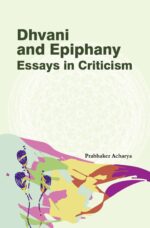
Dhvani and Epiphany: Essays in Criticism
₹270.00Author: Prabhaker Acharya
Dhvani and Epiphany examines the work of major Indian poets like Nissim Ezekiel and Arun Kolatkar; the struggle of young poets to find an audience; and the art of fiction. But its main focus is on the nature of creativity. How does an artist communicate his meaning? What makes a work genuinely creative? Through a sensitive exploration of poetry- ranging from the simple poems of a child, Poorna Prajna, to the complex “Byzantium Poems” of Yeats- the first seven essays try to show how a poem comes to life when it speaks to us and we listen to its dhvani and respond.
Even in fiction, it is not all realism. There is irony in exploring the paradoxical nature of reality; events taking on symbolic overtones; and epiphany, moments of illumination and insights – when surprising correspondences are seen. Writers cannot surprise and delight their audience if they themselves are not surprised and delighted by such insights.
Interested readers may write to us at mup@manipal.edu about purchasing the book.
Also available on
-
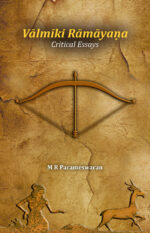
Valmiki Ramayana – Critical Essays
₹250.00Author: M R Parameswaran
This book critically engages with several important events and statements found in Valmiki’s epic poem, the Ramayana composed over 2500 years ago. Though certain methods were followed to preserve the Vedic texts, no serious methods were adopted to preserve the text of Ramayana. The poem spread to all parts of India and beyond through narrators of the epic who sometimes added their own explanatory verses to conform to local customs and traditions. In the second half of the 20th century, scholars at the Baroda Oriental Research Institute, after many years of labour and examination of over 2000 different manuscripts, compiled what is now accepted as the most reliable version of the poem. Based on this critical edition, a condensed English version by Dr Parameswaran was earlier published by the Manipal University Press. In the present book, Dr Parameswaran reviews the critical interpretations of scholars like Sheldon Pollock, R P Goldman and Wendy Doniger and has analytic responses to many unanswered questions. About the book: Dr M R Parameswaran has taught Mathematics as well as Sanskrit at the University of Manitoba in Winnipeg, Canada. His work Studies in Srivaishnavism, has been well received by academic scholars and Srivaishnavas.
Interested readers may write to us at mup@manipal.edu about purchasing the book.Also available on
-
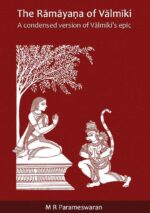
The Ramayana of Valmiki: A condensed version of Valmiki’s epic
₹340.00Author: M R Parameswaran
The world’s greatest epic poem Valmikiramayana, composed over 2,500 years ago, is loved by countless millions of men and women of all religions. The present book is the first condensed version in English of the most reliable version of Valmikiramayana, the Critical Edition prepared by Baroda Oriental Research Institute, India.
Interested readers may write to us at mup@manipal.edu about purchasing the book.Also available on
-
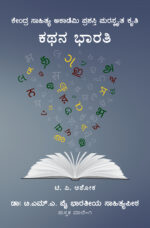
Kathana Bharathi
₹300.00Author: T P Ashoka
ಕಥನ ಭಾರತಿಯು ವಿವಿಧ ಭಾರತೀಯ ಭಾಷೆಗಳಾದ ಕನ್ನಡ, ಹಿಂದಿ, ಬೆಂಗಾಲಿ, ಗುಜರಾತಿ, ಮಲಯಾಳಂ, ಮರಾಠಿ, ಒರಿಯಾ, ಪಂಜಾಬಿ ಮತ್ತು ಉರ್ದುಗಳಲ್ಲಿ ಬರೆಯಲಾದ ಆಧುನಿಕ ಶ್ರೇಷ್ಠ ಸಾಹಿತ್ಯದ ಇಪ್ಪತ್ತು ಸಾಹಿತ್ಯ ವಿಮರ್ಶಾತ್ಮಕ ಪ್ರಬಂಧಗಳ ಸಂಗ್ರಹವಾಗಿದೆ. ಪುಸ್ತಕದಲ್ಲಿ ಚರ್ಚಿಸಲಾದ ಭಾರತೀಯ ಲೇಖಕರಲ್ಲಿ ಜನಪ್ರಿಯ ಲೇಖಕರಾದ ಅಲೋಕ್ ಭಲ್ಲಾ, ಅಮೃತಾ ಪ್ರೀತಮ್, ಬೇಗಂ ರೋಕ್ವಿಯಾ ಸಖಾವತ್ ಹುಸೇನ್, ಭೀಮರಾವ್ ರಾಮ್ಜಿ ಅಂಬೇಡ್ಕರ್, ಭೀಶಮ್ ಸಾಹ್ನಿ, ಚಂದ್ರಶೇಖರ ಕಂಬಾರ, ಗಿರೀಶ್ ರಘುನಾಥ್ ಕಾರ್ನಾಡ್, ಗೋಪಿನಾಥ್ ಮೊಹಾಂತಿ, ಜಾನಕಿ ಶ್ರೀನಿವಾಸ ಮೂರ್ತಿ (ವೈದೇಹಿ, ಕೋತಾ ಸುನಿವಾಸ ಮೂರ್ತಿ) ಸೇರಿದ್ದಾರೆ. ಶಿವರಾಮ ಕಾರಂತ್, ಲಕ್ಷ್ಮಣ ಮಾನೆ, ಮಹಾಶ್ವೇತಾದೇವಿ, ಮಾಸ್ತಿ ವೆಂಕಟೇಶ ಅಯ್ಯಂಗಾರ್, ಮೋಹನ್ದಾಸ್ ಕರಮಚಂದ್ ಗಾಂಧಿ, ಮುನ್ಷಿ ಪ್ರೇಮಚಂದ್, ಪನ್ನಾಲಾಲ್ ನಾನಾಲಾಲ್ ಪಟೇಲ್, ರವೀಂದ್ರನಾಥ ಠಾಗೋರ್, ಸಾದತ್ ಹಸನ್ ಮಂಟೋ, ತಕಳಿ ಶಿವಶಂಕರ ಪಿಳ್ಳೈ, ಉಡುಪಿ ರಾಜಗೋಪಾಲಾಚಾರ್ಯ ಅನಂತಮೂರ್ತಿ ಮತ್ತು ಯಶಪಾಲ. ಇಪ್ಪತ್ತು ಸಾಹಿತ್ಯ ವಿಮರ್ಶಾತ್ಮಕ ಪ್ರಬಂಧಗಳು ತಮ್ಮ ಆಯ್ದ ಬರಹಗಳನ್ನು ಪರಿಶೀಲಿಸುತ್ತವೆ, ಪರಿಚಯಿಸುತ್ತವೆ, ಚರ್ಚಿಸುತ್ತವೆ ಮತ್ತು ವ್ಯಾಖ್ಯಾನಿಸುತ್ತವೆ. ಕಳೆದ ನೂರೈವತ್ತು ವರ್ಷಗಳಲ್ಲಿ ಭಾರತೀಯ ಶ್ರೇಷ್ಠ ಲೇಖಕರು ತಮ್ಮ ಸಮಯ ಮತ್ತು ಜಾಗಕ್ಕೆ ಹೇಗೆ ಪ್ರತಿಕ್ರಿಯಿಸಿದ್ದಾರೆ ಮತ್ತು ಪ್ರತಿಕ್ರಿಯಿಸಿದ್ದಾರೆ ಎಂಬುದನ್ನು ಈ ಲೇಖನಗಳು ಪರಿಶೀಲಿಸುತ್ತವೆ. ವಸಾಹತುಶಾಹಿ ಅನುಭವ, ವಿಭಜನೆಯ ಆಘಾತ ಮತ್ತು ಸ್ವಾತಂತ್ರ್ಯಾನಂತರದ ಸಾಮಾಜಿಕ ರಾಜಕೀಯ ಬೆಳವಣಿಗೆಗಳು ಈ ಬರಹಗಾರರ ಬರಹಗಳಲ್ಲಿ ಪ್ರಬಲ ನಿರೂಪಣೆಗಳು ಮತ್ತು ರೂಪಕಗಳ ರೂಪದಲ್ಲಿ ಅಭಿವ್ಯಕ್ತಿಯನ್ನು ಕಂಡುಕೊಂಡಿವೆ. ಟಿ ಪಿ ಅಶೋಕ ಅವರ ಕಥನ ಭಾರತಿ ಈ ಬರಹಗಳ ವಿಮರ್ಶೆ. ಆಧುನಿಕ ಭಾರತೀಯ ಸಾಹಿತ್ಯದಲ್ಲಿನ ಈ ಅಧ್ಯಯನಗಳು ಆಧುನಿಕ ಭಾರತೀಯ ಸಾಹಿತ್ಯ ವಿಮರ್ಶೆಗೆ ಅಮೂಲ್ಯ ಕೊಡುಗೆಯಾಗಿದೆ. ಪುಸ್ತಕವು ಸಾಹಿತ್ಯದ ವಿದ್ಯಾರ್ಥಿಗಳು, ಸಂಶೋಧಕರು ಮತ್ತು ಶಿಕ್ಷಕರಿಗೆ ಆಸಕ್ತಿದಾಯಕ ಓದುವಿಕೆಯನ್ನು ಒದಗಿಸುತ್ತದೆ ಆದರೆ ಸಾಮಾನ್ಯ ಓದುಗರನ್ನೂ ಆಕರ್ಷಿಸುತ್ತದೆ.
Interested readers may write to us at mup@manipal.edu about purchasing the book.Also available on
-

Colours of the Rainbow
₹450.00Author: Umesh Bhat
The author, through Colours of the Rainbow, tells us that everyone is destined for his/her own rainbow with a pot of gold at the other end if, one has a will, works hard on it, and with a little bit of luck. The book narrates the dream journey of a village boy.
Interested readers may write to us at mup@manipal.edu about purchasing the book.
Also available on