

Bhāratīya Trikoṇamiti Śāstra
₹550.00
Author: Venugopal D Heroor
Indian Trigonometry was developed as a powerful mathematical tool for Siddhantic Astronomy. The book, Bharatiya Trikonamiti sastra (Hindu Trigonometry) deals with all the relevant topics of Indian trigonometry, including trigonometrical identities and other formulas, trigonometrical tables, methods of interpolation and trigonometrical series, etc. The subject matter is discussed in eleven chapters divided into 80 sections and 50 sub-sections, involving translations of 250 verses spread over in 38 classical Sanskrit works and based on 42 research articles published in 16 research journals. By including material of the late Aryabhata School or Kerala Aryabhata School, the author has made the book comprehensive and up-to-date. Indeed, the book is fascinating and significant. It is a definite contribution in the study of the history of Indian mathematics. The book is the English version of the Kannada book of the same title.
Interested readers may write to us at mup@manipal.edu about purchasing the book.

| Author | |
|---|---|
| Format |
Related products
-
Internationalization of Higher Education: The Dynamics of Educational Ecology
₹500.00Editors: H Vinod Bhat, Neeta InamdarThe mobility of scholars seeking knowledge has been a part of the university ideal for centuries. History holds testimony to the fact that these mobilities have also altered the lives of people in different regions. Universities have played a pivotal role in the movement of people across borders and the resultant transformation of societies due to transcultural interactions.In this book, the editors have brought together ideas on the changing dynamics of these mobilities of scholars and the interconnectedness of higher education institutions in today’s world. An attempt is also made to record the implications of these international collaborations in knowledge generation and dissemination within the educational ecology. The notion of educational ecology is explored through the articles in the book to comprehend the power play that exists in the dimension and the direction of internationalization of higher education. All this is done with the hope that the opening up of education to global opportunities may, over a period of time, lead to equitable distribution of opportunities worldwide.Interested readers may write to us at mup@manipal.edu about purchasing the book.
International Edition available on 
South Asia Edition available on -
Journalism and Journalism Education in Developing Countries
₹550.00Editors: Beate Illg, Beatrice Dernbach
Free and fair media are at the heart of any democratic set up. A thriving field of journalism and zealous and ethical journalists in that sense become torch bearers of a brighter and promising tomorrow. In this light, the status of journalists, the most important actors in the field becomes increasingly important as a matter of study. They act as gatekeepers of information that is flooding in the era of new media, a wave that is not so new anymore. Their roles remain intact and even becomes prominent in the chaos of many-to-many communication.
Not concentrating on specific countries, selected contributions in the book reflect on the developments of media and journalism education across different countries. Introducing the book with an overview about the state-of-the-art of journalism education and the research on a meta level, the book moves on to talk about media studies in the Asian countries and in Arab world, the African States and Brazil.
The recent economic and social developments present both opportunities and risks for journalism. Freedom of expression and freedom of press, even in democratic countries, are under pressure. This book provides an international perspective on the different aspects of journalism – the situation in which journalists work, their working conditions, educational backgrounds, struggles and successes. It is aimed at an international public interested in the field of journalism and freedom of speech. It addresses journalists, trainers and academics. Furthermore, institutions in the field of development cooperation, education or cultural policy and cultural education are the focus of this work. Though the book is focused on journalism and journalism education in developing countries, contributions are from across the globe. This book is an interesting read for all those who care about a vital media landscape and an open democratic society.Interested readers may write to us at mup@manipal.edu about purchasing the book.
Also available on
-

Childhood Cancer
₹185.00Authors: H S Ballal, P D Gupta
Childhood Cancer is a major medical problem in most of the societies of the modern world. Though enough literature is available on the subject, it is not easily intelligible to common people. An ordinary parent whose ward is affected by any form of childhood cancer would beat a loss without the basic information. This book is aimed at educating a non-professional who wishes to grasp the problem in detail and in a simple way. The book primarily deals with the signs and symptoms of cancer in children which enable early detection. It is written in a lucid manner to remove the myth among parents that diagnosis of cancer in children amounts to a death sentence. Many of the childhood cancers, if detected early, can be cured completely, and the patients can live the rest of their lives like any other normal people. The book is an attempt to create this awareness among parents through proper information about the disease. Further, the book would also serve as a manual for MBBS students and professionals in other fields for primary treatment and management of the childhood cancer patients.
Interested customers may write to us at mup@manipal.edu about purchasing the book.
Also available on
-
The Path of Proofs – Pramanapaddhati of Sri Jayatirtha
₹250.00Author: Shrinivasa Varakhedi
Epistemology of the Dvaita school of thought is presented in this short monograph Pramāṇapaddhati – the Path of Proofs, authored by Śrī Jayatīrtha. Epistemology is the science of knowledge that deals with the origin and nature of cognitive events and their means.
Ācārya Madhva, the proponent of the Dvaita school, has explained about the epistemology of this new school in his works. Since Madhva’s language is profound and the elucidations are scattered over his several works, it is difficult to comprehend for a novice. Hence, Pramāṇapaddhati was composed by his successor of third generation Śrī Jayatīrtha. The simple and captivating
style of this work is sure to ignite the interest in the readers to conduct further study in detail. This work is not only regarded as a standard textbook of Dvaita studies, but also considered as a basic authentic work in the Dvaita dialectic literature.This work is rendered into English by Prof Shrinivasa Varakhedi adopting the mirror-translation method.
Interested readers may write to us at mup@manipal.edu about purchasing the book.Also available on
-
Capturing the Cosmic Light – A Handbook of Astrophotography
₹670.00Author: Sathyakumar P M Sharma
The Handbook of Astrophotography is the first book dedicated to Astronomical Imaging through modest equipment, and the first to be published in India. It is a chronicle of the techniques learnt and employed by the author and is by no means proprietary. It is assumed that the reader is equipped with the basic knowledge to use a digital camera. After showing the many methods to capture the Cosmos, the book shows how to process these images. It is designed to be a handbook and not a user manual. The author hopes that the reader will be confident in astronomical imaging and develop his/her own techniques after reading the book. Sathyakumar started Astrophotography in January 2006 with a homemade wooden star-tracking mount and a camera borrowed from a friend. He later used his homemade Newtonian reflector telescope and an inexpensive digital camera to capture photos of the Moon. With an MSc in Aerospace engineering from the University of Salford, Manchester, he joined Opticstar Ltd, as a design engineer. There he was trained on the latest of astronomical instruments available for the amateur astrophotographer and eventually purchased the Celestron C8 Schmidt cassegrain telescope and the CG-5 Equatorial mount. Currently, he uses a GSO 6 inch RC telescope and an HEQ5-PRO computerized mount as well as an Orion 80ED Apochromatic telescope for astrophotography. He also owns an Astrotrac to take wide field vistas of the Cosmos. He is now employed as a Scientific Officer at Karnataka Science and Technology Promotion Society, Department of Science and Technology, Govt. of Karnataka.
Interested readers may write to us at mup@manipal.edu about purchasing the book.
Also available on
-
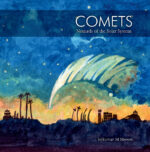
Comets – Nomads of the Solar System
₹290.00This book introduces the general reader to the world of comets – those celestial visitors from the outer Solar System that occasionally visit the Earth’s neighbourhood and put up spectacular shows in the night sky. The world had geared up for just such a show at the end of 2013, when Comet ISON was expected to light up the night sky. Using the occasion to bring the world of comets to those interested, this book is a delightful read about the quirky world of these unpredictable visitors. Apart from lucidly and accurately updating the reader about what comets are, where they come from, why is it that they assume the fantastic shapes they do etc. “Comets” also regales the reader with myths about comets in various cultural contexts, snippets about famous comets in the history of mankind, anecdotes on comet discoveries and discoverers, the bewildering procedures followed while naming comets and much more. The book takes a hard look at the hype surrounding the fiery expectations about Comet ISON an cautions the reader that, while there was a good chance of the comet blazing forth in the skies of December 2013, there was a realistic chance that the comet would not survive its close encounter with the Sun. Sadly, the pessimistic predictions came true and the comet disintegrated as it went around the Sun. As we wait for chance to throw us a Great Comet to gaze at in the future, “Comets: Nomads of the Solar System” is an excellent guide to prepare for the event!
Interested customers may write to us at mup@manipal.edu about purchasing the book.
Also available on
-
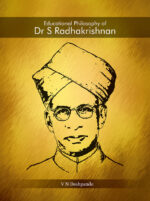
Educational Philosophy of Dr S Radhakrishnan
₹495.00Author: V N Deshpande
Educational Philosophy of Dr S Radhakrishnan effectively presents Radhakrishnan’s thoughts, highlighting their relevance to the present day. The author has at length discussed Indian Philosophy in comparison with the Western thought and successfully established that the East-West synthesis as propagated by Radhakrishnan is the need of the hour. The readers will also get an account of Radhakrishnan’s life story in the backdrop of the political history of pre and post-Independent India. This book is Dr V N Deshpande’s posthumous publication.
Interested readers may write to us at mup@manipal.edu about purchasing the book.
Also available on
-
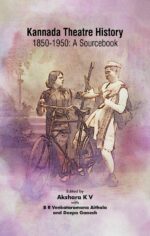
Kannada Theatre History 1850-1950: A Sourcebook
₹250.00Edited by: Akshara K V with
This source book on Kannada theatre history is a valuable contribution to the larger field of Indian Theatre Studies. Avoiding the shortcuts of an overview or a Wikipedia-like assemblage of information, it delves into the lives, histories, struggles, debates and anecdotes surrounding some of the most pioneering figures in the shaping of Kannada theatre between 1850-1950. The selection of primary sources, most of which are being made available in English for the first time, is nothing short of a revelation in the way it illuminates insights into the actual making and thinking of theatre practice. Here we have a model of how the construct of ‘Indian Theatre’ can be textured, inflected, individuated and problematized at regional, local and intracultural levels. Rustom Bharucha .This book is a labour of love by scholars who not only love Kannada theatre, but want to pass on their enjoyment of it. Delving deep into folklore oral history, local history, gossip debate and discourse, the editors bring out the world of Kannada theatres in pluralistic terms. Scholarship and playfulness combine to create a powerful act of storytelling where the book itself mimics the career of Kannada theatre. As an anthology it becomes an initiation rite, an introduction to all the great figures, not as hagiography but as nuanced analysis. Big questions and little questions combine to create both a sense of combativeness and a wonderful feeling of homecoming. Like tricksters, they break the binaries of tradition and modernity, treating it almost like a bad play which needs new scripts and new performers. A wonderful anthology. A deeply desi book, with all the cosmopolitanism of world theatre.
Interested readers may write to us at mup@manipal.edu about purchasing the book.
Also available on