
Basic Concepts of Intellectual Property Rights
₹190.00
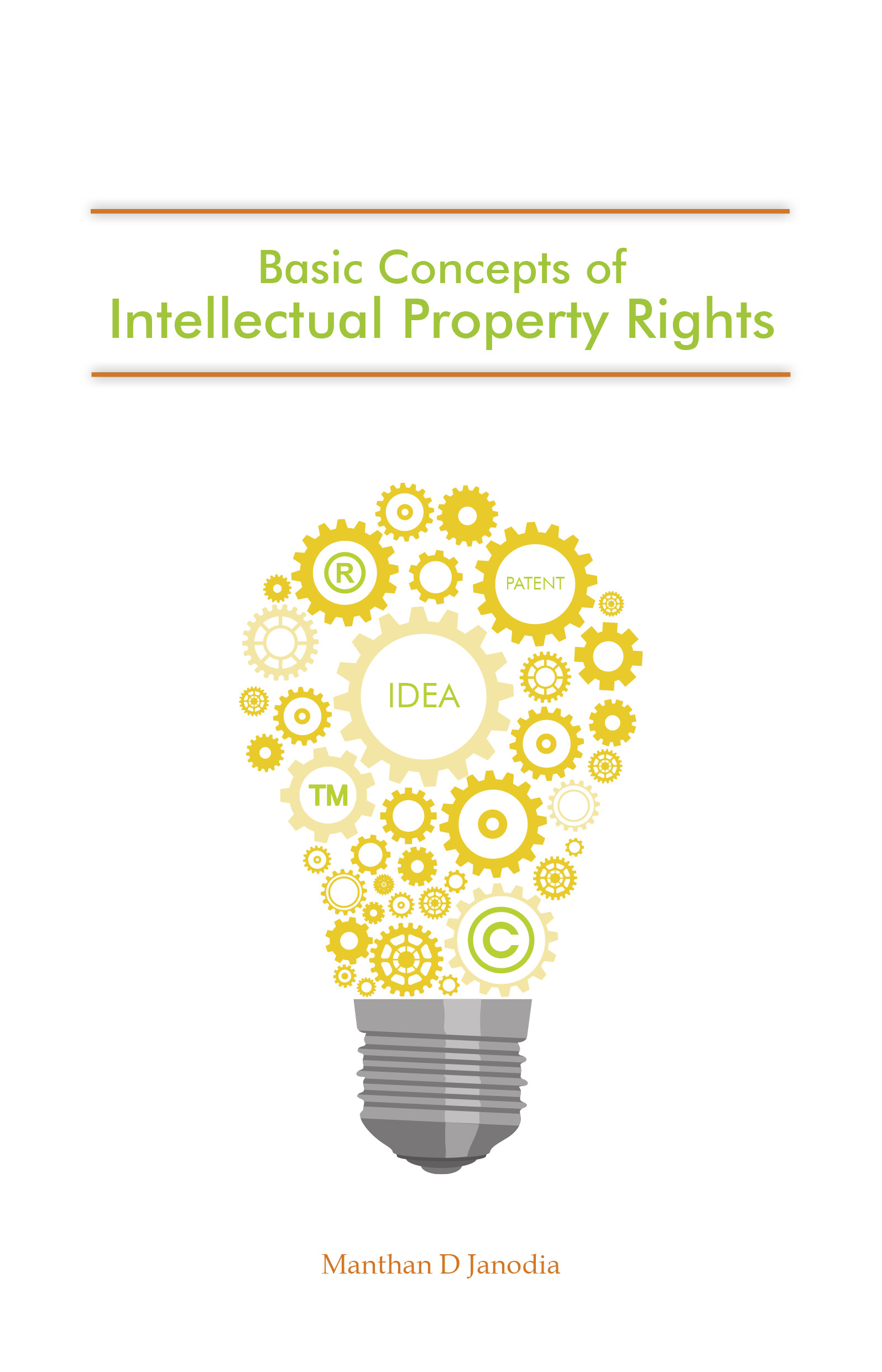
This book on Intellectual Property Rights (IPRs) is aimed at undergraduate and post graduate students, research scholars and faculty members. The objective is to sensitize undergraduate and post graduate students regarding various aspects of IPRs, provide guidance to research scholars regarding safeguards to put in place for potentially patentable research and serve as a ready reckoner to faculty members interested to apply for patents but do not have a comprehensive information in various aspects of filing a patent application.
The book aims to simplify the complex issue of patent through hypothetical examples. This will help readers comprehend subject in an easy way. The book deliberately avoids the discussion on history of IPRs, General Agreement on Tariffs and Trade (GATT) negotiations and its background, culmination of GATT round of negotiations into World Trade Organization (WTO). These issues need a comprehensive discussion and are not the objectives of the book. The book is divided into eight short and simple chapters. At the end of the chapter a few Self Study Exercises are given for readers to recapitulate what they have read in that chapter. This may provide required foundation in understanding what is commonly referred to as “dry subject” of IPR. Overall, the book aims to provide required information regarding Intellectual Property Rights, focusing on patents, in simple and easily understandable language.
Interested customers may write to us at mup@manipal.edu about purchasing the book.
Also available on |
Out of stock
| Author |
|---|
Related products
-
Comets – Nomads of the Solar System
₹290.00This book introduces the general reader to the world of comets – those celestial visitors from the outer Solar System that occasionally visit the Earth’s neighbourhood and put up spectacular shows in the night sky. The world had geared up for just such a show at the end of 2013, when Comet ISON was expected to light up the night sky. Using the occasion to bring the world of comets to those interested, this book is a delightful read about the quirky world of these unpredictable visitors. Apart from lucidly and accurately updating the reader about what comets are, where they come from, why is it that they assume the fantastic shapes they do etc. “Comets” also regales the reader with myths about comets in various cultural contexts, snippets about famous comets in the history of mankind, anecdotes on comet discoveries and discoverers, the bewildering procedures followed while naming comets and much more. The book takes a hard look at the hype surrounding the fiery expectations about Comet ISON an cautions the reader that, while there was a good chance of the comet blazing forth in the skies of December 2013, there was a realistic chance that the comet would not survive its close encounter with the Sun. Sadly, the pessimistic predictions came true and the comet disintegrated as it went around the Sun. As we wait for chance to throw us a Great Comet to gaze at in the future, “Comets: Nomads of the Solar System” is an excellent guide to prepare for the event!
Interested customers may write to us at mup@manipal.edu about purchasing the book.
Also available on
-
Journalism and Journalism Education in Developing Countries
₹550.00Editors: Beate Illg, Beatrice Dernbach
Free and fair media are at the heart of any democratic set up. A thriving field of journalism and zealous and ethical journalists in that sense become torch bearers of a brighter and promising tomorrow. In this light, the status of journalists, the most important actors in the field becomes increasingly important as a matter of study. They act as gatekeepers of information that is flooding in the era of new media, a wave that is not so new anymore. Their roles remain intact and even becomes prominent in the chaos of many-to-many communication.
Not concentrating on specific countries, selected contributions in the book reflect on the developments of media and journalism education across different countries. Introducing the book with an overview about the state-of-the-art of journalism education and the research on a meta level, the book moves on to talk about media studies in the Asian countries and in Arab world, the African States and Brazil.
The recent economic and social developments present both opportunities and risks for journalism. Freedom of expression and freedom of press, even in democratic countries, are under pressure. This book provides an international perspective on the different aspects of journalism – the situation in which journalists work, their working conditions, educational backgrounds, struggles and successes. It is aimed at an international public interested in the field of journalism and freedom of speech. It addresses journalists, trainers and academics. Furthermore, institutions in the field of development cooperation, education or cultural policy and cultural education are the focus of this work. Though the book is focused on journalism and journalism education in developing countries, contributions are from across the globe. This book is an interesting read for all those who care about a vital media landscape and an open democratic society.Interested readers may write to us at mup@manipal.edu about purchasing the book.
Also available on
-
Capturing the Cosmic Light – A Handbook of Astrophotography
₹670.00Author: Sathyakumar P M Sharma
The Handbook of Astrophotography is the first book dedicated to Astronomical Imaging through modest equipment, and the first to be published in India. It is a chronicle of the techniques learnt and employed by the author and is by no means proprietary. It is assumed that the reader is equipped with the basic knowledge to use a digital camera. After showing the many methods to capture the Cosmos, the book shows how to process these images. It is designed to be a handbook and not a user manual. The author hopes that the reader will be confident in astronomical imaging and develop his/her own techniques after reading the book. Sathyakumar started Astrophotography in January 2006 with a homemade wooden star-tracking mount and a camera borrowed from a friend. He later used his homemade Newtonian reflector telescope and an inexpensive digital camera to capture photos of the Moon. With an MSc in Aerospace engineering from the University of Salford, Manchester, he joined Opticstar Ltd, as a design engineer. There he was trained on the latest of astronomical instruments available for the amateur astrophotographer and eventually purchased the Celestron C8 Schmidt cassegrain telescope and the CG-5 Equatorial mount. Currently, he uses a GSO 6 inch RC telescope and an HEQ5-PRO computerized mount as well as an Orion 80ED Apochromatic telescope for astrophotography. He also owns an Astrotrac to take wide field vistas of the Cosmos. He is now employed as a Scientific Officer at Karnataka Science and Technology Promotion Society, Department of Science and Technology, Govt. of Karnataka.
Interested readers may write to us at mup@manipal.edu about purchasing the book.
Also available on
-
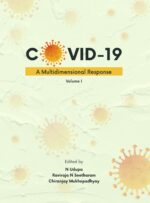
COVID19: A Multidimensional Response
₹2,200.00Editors: N Udupa, Raviaraja NS, Chiranjay Mukhopadhya,
COVID-19 disease is caused by the SARS-CoV-2 virus, first detected in November-December 2019 in Wuhan, China. Thus far, more than 7 million people have been infected with the novel coronavirus across the globe, and the count is increasing with every passing day. Even though it causes severe respiratory problems, the majority of patients show mild symptoms, and pathogenesis is under investigation. Although several drugs are being developed and many of them are undergoing clinical trials, currently there are no approved drugs/vaccines to cure this disease. Personal hygiene and social distancing are important means to prevent the spread of this disease. With the advancements in scientific research, humankind is hoping to find a potent drug/vaccine for this disease at the earliest. The health care professionals and scientific community are at their maximum in combating this viral infection. In this book, an attempt is made to compile various aspects of COVID-19 in a single platform, which include aetiology, epidemiology, its clinical manifestations, diagnosis, pathological, clinical and therapeutic facets, comorbidities, risk factors, and the essential precautionary measures. This book comprises around 29 chapters contributed by various experts from research and clinical backgrounds.
Interested readers may write to us at mup@manipal.edu about purchasing the book.
Also available on
-
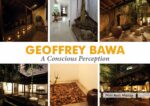
Geoffrey Bawa – A Conscious Perception
₹650.00This book is all about giving the readers a peek view into the life of Geoffrey Bawa; Sri Lanka’s most famous architect… a book that reveals an insight into his work through his most famous projects accompanied by beautiful hand drawn illustrations. Alluring and simply authentic, these self-narrative illustrations are a result of a personal experience. This book will give readers an understanding of how successfully Geoffrey Bawa had inculcated spaces, vistas and landscape with that of the built environment bringing about a touch of Modern Tropism and fusing it together with the rich culture and traditions of Sri Lanka.
Interested readers may write to us at mup@manipal.edu about purchasing the book.
Also available on
-
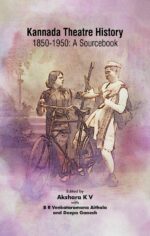
Kannada Theatre History 1850-1950: A Sourcebook
₹250.00Edited by: Akshara K V with
This source book on Kannada theatre history is a valuable contribution to the larger field of Indian Theatre Studies. Avoiding the shortcuts of an overview or a Wikipedia-like assemblage of information, it delves into the lives, histories, struggles, debates and anecdotes surrounding some of the most pioneering figures in the shaping of Kannada theatre between 1850-1950. The selection of primary sources, most of which are being made available in English for the first time, is nothing short of a revelation in the way it illuminates insights into the actual making and thinking of theatre practice. Here we have a model of how the construct of ‘Indian Theatre’ can be textured, inflected, individuated and problematized at regional, local and intracultural levels. Rustom Bharucha .This book is a labour of love by scholars who not only love Kannada theatre, but want to pass on their enjoyment of it. Delving deep into folklore oral history, local history, gossip debate and discourse, the editors bring out the world of Kannada theatres in pluralistic terms. Scholarship and playfulness combine to create a powerful act of storytelling where the book itself mimics the career of Kannada theatre. As an anthology it becomes an initiation rite, an introduction to all the great figures, not as hagiography but as nuanced analysis. Big questions and little questions combine to create both a sense of combativeness and a wonderful feeling of homecoming. Like tricksters, they break the binaries of tradition and modernity, treating it almost like a bad play which needs new scripts and new performers. A wonderful anthology. A deeply desi book, with all the cosmopolitanism of world theatre.
Interested readers may write to us at mup@manipal.edu about purchasing the book.
Also available on
-
Culture and Creativity: Selected Writings of N Manu Chakravarthy
₹450.00Author: Manu Chakravarthy Editor: Unni Krishnan Karikkat
Culture and Creativity is a collection of essays of N Manu Chakravarthy, a prominent culture critic known for his discourses on music, cinema, literature and several aspects of culture and philosophy. This book illustrates the intellectual and ethical perspectives that shape his discussions on wide range of issues. These discussions are reflective of the inspiration he draws from his father Prof G N Chakravarthy and his teachers Prof C D Narasimhaiah, Prof U R Ananthamurthy, and Prof B Damodara Rao. The ideas of Ivan Illich and Noam Chomsky, and his friend D R Nagaraj are also instrumental in framing the critical nature of his interpretations. The essays in this book encompass Prof Manu Chakravarthy’s perspectives on religion, secularism, tradition, and modernity. The references to Sri Narayanaguru, M K Gandhi, Rabindranath Tagore, and the interview with Gustavo Esteva, evince his preoccupation with madhyamamarga. They also foreground his views on nationalism, metaphysics, media, politics and the crises of the third world and India in a globalised context. This work is a testimony to the form of scholarship he values.
Interested readers may write to us at mup@manipal.edu about purchasing the book.
Also available on
-

The Practice of Geopolitics
₹850.00Author: M D Nalapat
Intended to be a Practioner’s Guide to Geopolitics, the book provides a look into the thought processes that generate correct and timely analysis of global events. Geopolitics needs to weave within its analytical grasp economics, society, strategy and even culture, as the science deals with overall national capabilities as well as the mutal synergy and frictions between nations. Although a broad range of subjects has been covered in the book, each is anchored in the ground reality of events having a profound impact on the lives of citizens and on world events. The growing interconnectedness of the globe has resulted in a need to do away with the popular west centric models of international relations and to view events not through that single prism but from a holistic viewpoint that accepts the relevance and maturity of different histories and geographies. What the book provides is an alternative Weltanschauung to the dominant models of geopolitical analysis, so that the science is enabled to cross beyond the narrow boundaries which have confined. The scope and applicability of its analysis. The rise of Asia needs a geopolitical vision unique to the continent, and this is what has been provided by Professor Nalapat.
Interested readers may write to us at mup@manipal.edu about purchasing the book.
Also available on