
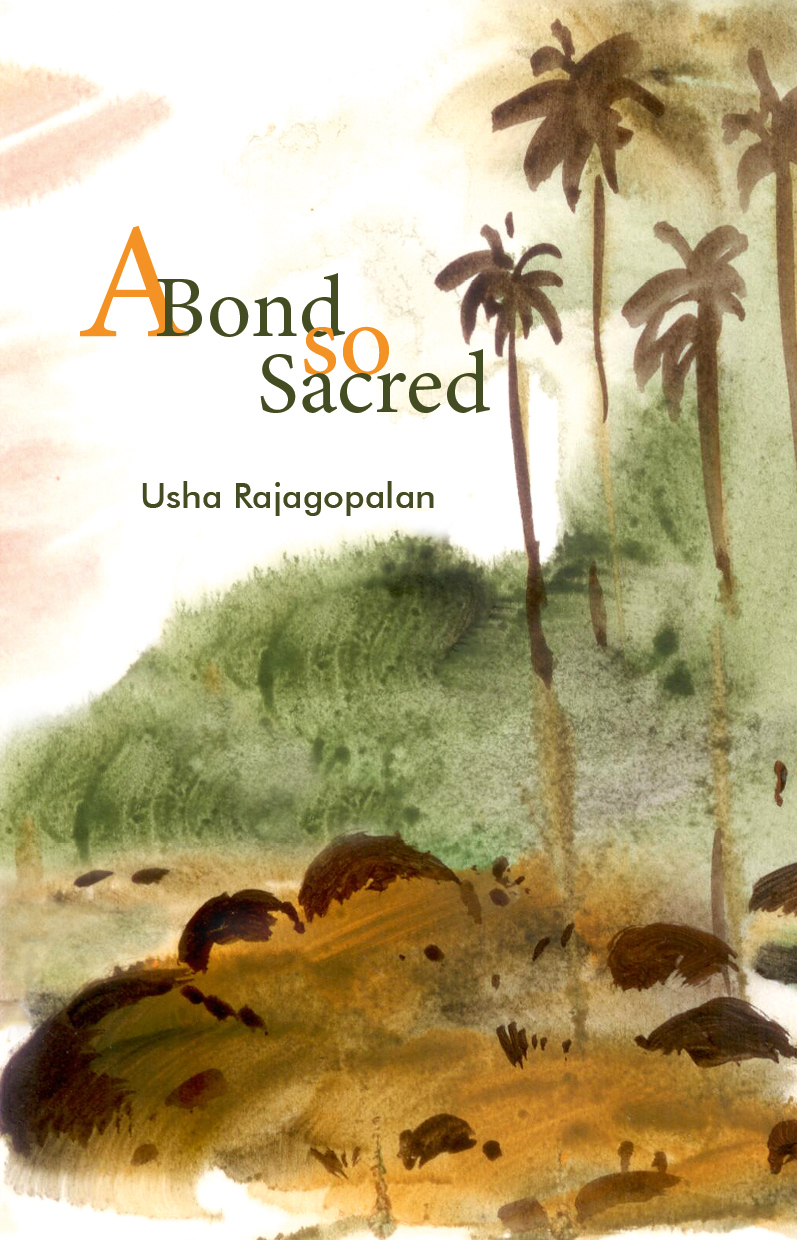
A Bond So Sacred
₹450.00
A Bond So Sacred tells the story of Raman, a satyagrahi, who adopts Kokila, an orphan. He leaves the five year old in the care of his mother while he plunges into the freedom struggle. His nationalist fervour, however, clashes with his love for Amina, his charming neighbour who wants parental approval to their marriage. Raman’s mother is as staunch a Brahmin as Amina’s father is a Muslim. Will Raman be able to get their consent. The joy of India becoming an independent nation is marred by Gandhiji’s death. Raman’s fellow satyagrahis have gone their ways and he finds himself with no role to play in a rapidly changing country. Meanwhile, Kokila, his protégée, has her own battles to fight. As the years bring them together again, Kokila discovers truths about Raman that she would never have imagined. She is forced to confront the ghosts of the past, his and hers.
Interested readers may write to us at mup@manipal.edu about purchasing the book.
Also available on

| Format |
|---|
Related products
-
Just a few pages: Some Memories of Saraswatibai Rajwade
₹210.00Author: Vaidehi, Translator: Deepa Ganesh
This book is a coming together of two women writers of modern Kannada literature; one from its early period, the other, a contemporary. Saraswati Bai Rajwade, the early writer, became a fable, a mythology, leaving behind only the shadows of her writing. Vaidehi, the contemporary writer, reinvents Rajwade from the folds of history and gives her a life in the present. Saraswati Bai Rajwade was born into a poor family in the Dakshina Kannada of yore. By chance, she stepped into theatre and later into films. But all the glory that came to her unexpectedly, vanished just as suddenly. She later became the wife of a rich and high official, travelled abroad and underwent immense suffering. In her pain and loneliness, she took to books and also began to write and attained glory as a writer. In the last years of her life, she returned to a life of austerity and anonymity. Vaidehi has collected bits and pieces from her life and writing, presenting before us a unique tapestry. In this tapestry, Vaidehi?s perceptions criss-cross with Rajwade?s life and writing. Art does not reside in the object, but in its close encounter with life. This work unfolds before us as a grand illustration of such twin narratives.
Interested readers may write to us at mup@manipal.edu about purchasing the book.
Also available on
-
Ancient Stone Riddles: Megaliths of the Indian Subcontinent
₹185.00Ancient Stone Riddles is an introduction to the fascinating but less-known monuments called megaliths in the context of the Indian subcontinent. The book seeks to present the current understanding among archaeologists and other researchers in a lucid manner to the general reader, while stimulating thought on the many questions that linger about these remnants from our distant past and the people and cultures that built them. It also discusses recent research about the knowledge systems possessed by the megalith builders, including the possibility that some of these monuments were erected to observe celestial cycles.
Interested customers may write to us at mup@manipal.edu about purchasing the book.
Also available on
-
A Handful of Sesame
₹310.00Author: Srinivas B Vaidya, Translator: Maithreyi Karnoor
With a captivating start, A Handful of Sesame plunges us into the heart of the dying years of the 1857 mutiny. But the mutiny is largely a backdrop to the novel. When Kamalanabh of Kashi is manipulated by an impoverished Brahmin of Navalgund into marrying his daughter, the novel becomes basically the story of an internal migration. This is rare, and it remains one of the strengths of the novel. We are so used to speaking of migration across the postcolonial bridge and accredited national borders that we forget that India is a country of endless internal migrations – in the past and the present.
Interested readers may write to us at mup@manipal.edu about purchasing the book.
Also available on
-
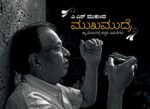
Mukha Mudre – Kyamaradalli Kannada Saahitigalu
₹690.00Author: A N Mukunda
ಪೋರ್ಟ್ರೇಟ್ ಅಂದರೆ ಕೇವಲ ಭಾವಚಿತ್ರವಲ್ಲ, ಅದೊಂದು ‘ವಿಶಿಷ್ಟ ಭಾವಚಿತ್ರ’ ಅಥವಾ ‘ವ್ಯಕ್ತಿತ್ವ ಚಿತ್ರ’ ಎನ್ನುವ ಮುಕುಂದರ ನಿಲುವು ಈ ಛಾಯಾಚಿತ್ರಗಳಲ್ಲಿ ಮೂರ್ತವಾಗಿ ವ್ಯಕ್ತವಾಗಿದೆ. ವ್ಯಕ್ತಿಯ ಮುಖವೇ ಅವನ ವ್ಯಕ್ತಿತ್ವದ ಸಮರ್ಪಕ ಅಭಿವ್ಯಕ್ತಿ ಎಂಬ ಪ್ರಬಲವಾದ ನಂಬಿಕೆ ಹಾಗೂ ವಿಶ್ವಾಸಗಳನ್ನು ಇಟ್ಟುಕೊಂಡಿರುವ ಮುಕುಂದರು ಅತ್ಯಂತ ಸಂಯಮದಿಂದ ಏಕಾಗ್ರತೆಯಿಂದ ಕಾದು ಸೆರೆಹಿಡಿದ ‘ಮಾಂತ್ರಿಕ ಕ್ಷಣ’ಗಳಿಂದಾಗಿ ಈ ಎಲ್ಲ ಭಾವಚಿತ್ರಗಳಿಗೆ ಏಕಕಾಲಕ್ಕೆ ಅಧಿಕೃತತೆ ಮತ್ತು ಆಪ್ತತೆ ಲಭ್ಯವಾಗಿವೆ. ಇಂತಹ ‘ಫೋಟೋ ಪುಸ್ತಕ’ವೊಂದು ಕನ್ನಡದಲ್ಲಿ ಪ್ರಕಟವಾಗುತ್ತಿರುವುದು ಇದೇ ಮೊದಲು.
Interested readers may write to us at mup@manipal.edu about purchasing the book.
Also available on
-
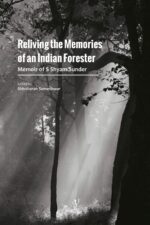
Reliving the memories of an Indian forester: Memoir of S Shyam Sunder
₹450.00Editor: Shiv Someshwar
Shyam Sunder’s memoir is a series of vignettes, from numerous comedic to a tragic few. The life narrated is varied and never short of excitement – being ten yards from a charging tusker or a foot away from a King Cobra; defying orders of the chief minister; being hauled up for contempt of the high court, and discussing with Indira Gandhi the best way to eat avocados. Possessed of wit and passion, the narration lays bare the hubris of popular discourse on noble forest livelihoods, and unflinchingly narrates neglect of rural communities, as well as of forests, at times by the callous imposition of rules and regulations.
Interested readers may write to us at mup@manipal.edu about purchasing the book.
Also available on
-
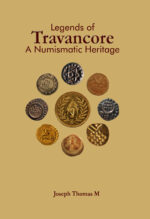
Legends of Travancore – A Numismatic Heritage
₹1,250.00The Kingdom of Travancore in the Southern part of India was a native state in British India which was well known for its progressive outlook. Its enlightened royalty ruled the country as Sree Padmanabha Dasa. They had in place a well oiled administrative mechanism that implemented various programs and reforms, resulting in an overall development of Travancore. Though Travancore was under the colonial rulers, there was a well-orchestrated administrative machinery for coinage. Coins were minted as per the specifications ordered by the periodically issued Royal Proclamations. It is creditable that Travancore retained its independence in its functioning to a large extent. This book is an insight into the coins of Modern Travancore (from 1729 AD) which not only reflects the religious beliefs of the rulers, but also sketches the socio-political atmosphere of the period. Dr Joseph Thomas hailing from Thiruvananthapuram, is a Professor of Urology at Manipal University in India. His passion for collecting coins developed into a serious numismatic pursuit. His special area of interest is the study of the history of Venad and Travancore. His detailed study of the Travancore coins and the various related issues give an insight into the rich numismatic heritage of modern Travancore. He is a Life Member of the Philatelic and Numismatic Association of Thiruvananthapuram and a Life Member of the South Indian Numismatic Society, Chennai.
Interested readers may write to us at mup@manipal.edu about purchasing the book.
Also available on
-
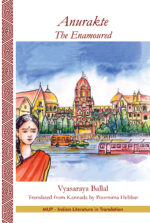
Anurakte- The Enamoured
₹390.00Author: Vyasaraya Ballal Translator: Poornima Hebbar
There are many rags-to-riches stories around the city of Mumbai. However, here is a story of transformation of a woman and her true self in the city of dreams. Set in Mangalore and Mumbai of the late 1940s, Anurakte- The Enamoured is an elegantly written story of a woman and her changing worldview over a period of time. Sumithra, a young woman with ordinary dreams and aspirations, comes to the then Bombay in search of livelihood. Little did she know that her experiences in the city and her zest for an independent life would transform her into a different person. She breaks the shell and resolves not to look back. The book is a poignant tale of love, loss, betrayal, family, relationships and traditions. The culturescape of Mumbai beautifully intertwines with her dreams. It is as much a story of the vibrancy of Mumbai as it is about Sumithra’s journey towards freedom.
Interested readers may write to us at mup@manipal.edu about purchasing the book.
Also available on
-
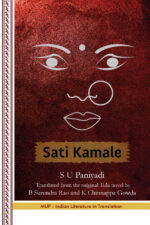
Sati Kamale
₹240.00Author: S U Paniyadi Translators: B Surendra Rao, K Chinnappa Gowda
This eponymous novel is centred on Kamale, who is an embodiment of wifely virtue. For fifteen long years Kamale lives the life of a widow to the outside world, nurturing the hopes of reuniting with the husband one day. Alone in the room, each night she wears her marks of a married woman with the dagger gifted by Umesha next to her. It could be seen as an exposition on the then existing indigenous discourse in India in the 19th century and early 20th century. Kamale, in her rigorous commitment and in retrieving her husband from ‘death’, is fashioned after Savithri in an intertextual reference to Mahabharata’s episode of “Satyavan and Savithri”. The novel might look conservative for the present-day reader, but it is a representative literary work of the time when Paniyadi, among many others, wanted to regain the independent status of the Tulu language which had somehow slipped out of its pedestal.
Interested readers may write to us at mup@manipal.edu about purchasing the book.
Also available on